Credit: Kent Nishimura/Bloomberg via Getty Images
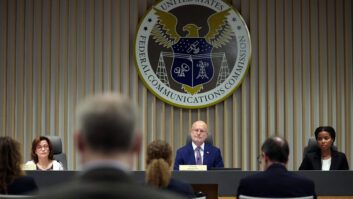
The FCC has officially launched a new review of local broadcast ownership rules.
The commission is required by Congress to review these rules every four years. FCC watchers believe that under a Republican president and FCC chair, the process this time will end with sweeping changes to radio market caps, probably heralding more ownership consolidation.
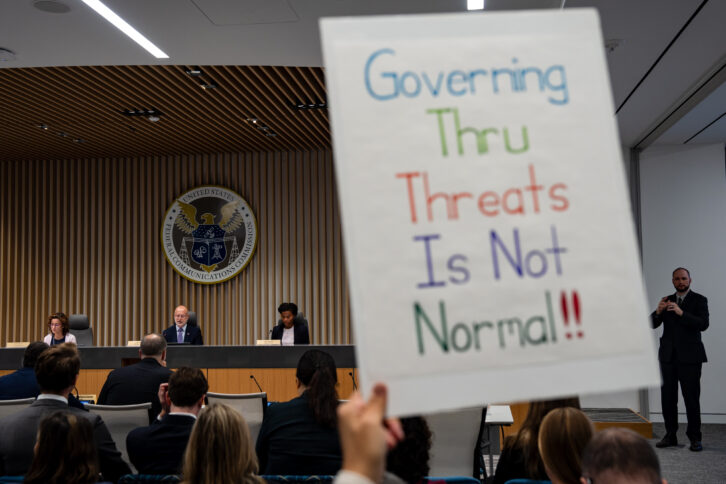
The monthly meeting was interrupted by protestors calling for the removal of Chairman Brendan Carr. The group chanted “fire Carr, the censorship czar,” before they were escorted out of the meeting room.
Judging by Carr’s statements, he remains eager to deregulate radio ownership further by allowing radio broadcasters to own more stations within markets than they can at present.
This Notice of Proposed Rulemaking (MB Docket No. 22-459), launched with a 3–0 vote, officially starts the long-delayed 2022 Quadrennial Review.
Current radio caps were established by Congress in 1996. Critics say they are overdue for an overhaul. The National Association of Broadcasters has pressed the FCC to modify or do away with the limits. It failed to convince the commission at the end of the last quadrennial review.
In a prepared statement, Carr said numerous online audio and video streaming services have emerged, fundamentally changing how broadcast radio and television compete in the media marketplace.
The FCC “intends to take a fresh approach to competition,” he said, “by examining the broader media marketplace, rather than treating broadcast radio and television as isolated markets.”
[Related: “FCC Issues Marketplace Report; Republican Commissioners Scoff”]
He said the commission’s primary goal is to promote investment in local broadcasters who provide trusted news and information vital to the communities they serve.
“Our broadcast ownership rules should reflect these changes. After all, the old regulatory silos have been breaking down for quite some time, so the commission must move forward with a keen understanding of today’s converged markets,” Carr said in the statement.
Commissioner Anna Gomez, the only Democrat on the FCC at the moment, voted in favor of opening the NPRM for comments. But she said that given prior congressional action, she believes only Congress can raise the ownership caps.
“Broadcasters have been losing advertising dollars to digital alternatives for decades, but the rise of various streaming platforms, the decline of cable subscribers and the shift driven by audiences getting news and entertainment through social media applications has been growing for some time and is upending the longstanding model,” Gomez said in her statement.
The commission’s review seeks public comment on whether, given the state of the media marketplace, it should retain, modify or eliminate any of the rules subject to the quadrennial review. These include the Local Radio Ownership Rule, the Local Television Ownership Rule and the Dual Network Rule.
The NPRM describes the media marketplace and asks whether the existing tiers that limit the number of stations a broadcaster can own remain necessary.
If the rules were loosened or eliminated, it asks, would the audio marketplace deliver the same or comparable benefits to consumers, particularly with respect to FCC policy goals of competition, localism and viewpoint diversity?
The proposal also seeks comment on whether the FCC should provide relief that is specific to smaller markets, smaller owners or struggling stations.
The definition of the media marketplace will be a focus. While the commission has treated local broadcast radio as its own discrete market, over the objections of many broadcasters, the FCC now wants to know whether that should be revised.
It asks whether the audio marketplace should include such non-broadcast audio sources as satellite radio, audio streaming services, webcasting, podcasting or other programming platforms as substitutes for broadcast radio.
In addition, it asks whether radio’s free, over-the-air availability or local nature make it unique or difficult to substitute in the audio marketplace with respect to fulfilling the commission’s traditional public interest objectives of competition, localism and viewpoint diversity.
It also wants to examine the impact of social media and whether advertisers view satellite radio and streaming services as substitutes for broadcast radio.
If the FCC were to revise the market definition beyond the traditional focus on local broadcast radio service, the NPRM asks what non-broadcast sources should be included in the analysis.
Carr has made good on his promise to roll back many regulations through his “Delete, Delete” initiative. The ownership review is likely to provide a significant opportunity to follow through in a substantial way by relaxing market caps.
The chairman has harshly criticized the 2018 quadrennial review led by predecessor Jessica Rosenworcel.
Carr wrote at the time: “Despite a record bursting with evidence of a vibrant media marketplace, the commission continues to advance the fiction that broadcast radio and broadcast television stations exist in markets unto themselves.”
The NAB believes ownership reform and more consolidation will allow broadcasters to expand program diversity and benefit listeners. The association has proposed eliminating all restrictions on radio station ownership in Nielsen Audio markets 76 and below and in unrated areas. For the large markets 1 through 75, it has proposed removing restrictions on AM station ownership and allowing broadcasters to own up to eight FM stations in a market.
At present, in a market with 45 or more radio stations, one entity may own eight stations, with no more than five in one service (AM or FM).
In a market with 30 to 44 stations, an entity may own seven, with no more than four per service. In a market with 15 to 29 stations, a broadcaster may own six, with no more than four in a specific service. And in a market with 14 or fewer, an entity may own five with no more than three of the same service, as long as it does not own more than half of the stations in the market.
A comment period on the FCC NPRM will ensue once the notice is printed in the Federal Register.