Radio and television stations across the U.S. relayed a routine nationwide test of the Emergency Alert System on Tuesday afternoon, with initial reports indicating the drill went off without major technical issues.
Conducted by the Federal Emergency Management Agency in coordination with the Federal Communications Commission, the test began at approximately 2:20 p.m. ET. The message itself was 18 seconds in length.
Some stations such as KDKA(FM) in Pittsburgh, as Kenneth Kissel documented, warned their listeners ahead of time.
It was preceded by the standard opening three bursts that contain SAME headers, the sustained alert tone, a message which you can watch below, and the routine closing three bursts.
Delivered through FEMA’s Integrated Public Alert and Warning System as a Common Alerting Protocol message using the Nationwide Test event code, the alert aired in English and Spanish across radio stations, TV broadcasters, cable systems, satellite providers and wireline video operators.
Unlike the previous nationwide test in October 2023, Tuesday’s drill did not include Wireless Emergency Alerts on mobile phones.
“Operational tests, like the one conducted today, allow us to identify and fix potential issues before an actual emergency occurs,” FEMA Administrator Cameron Hamilton said in a statement ahead of the broadcast.
Under the Integrated Public Alert and Warning System Modernization Act of 2015, FEMA is required by law to conduct a nationwide test of the public warning system at least once every three years.
Ahead of Tuesday’s test, the FCC issued guidance reminding broadcasters and multichannel video programming distributors of their obligation to ensure national alerts remain accessible to individuals with disabilities.
Although the test had been scheduled for months, recent high-profile technology disruptions fueled a wave of online rumors linking the alert to impending blackouts. On Monday, FEMA posted on X to dispel the speculation, clarifying that the test required no action from the public.
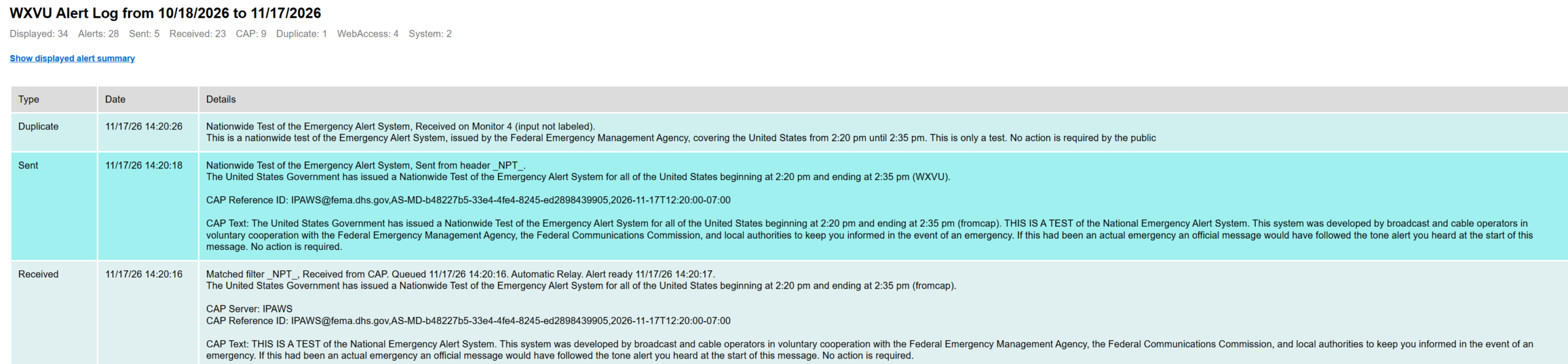
Logging
With the on-air portion complete, attention for radio engineers and station managers now turns to mandatory post-test reporting in the FCC’s EAS Test Reporting System (ETRS):
-
ETRS Form Two: Stations must submit day-of-test reporting data within 48 hours of the alert, making the deadline 2:20 p.m. ET on Thursday, Nov. 19.
-
ETRS Form Three: Detailed post-test filings are due within 45 days of the test, setting a final deadline of Monday, Jan. 4, 2027.
[Do you receive the Radio World SmartBrief newsletter each weekday morning? We invite you to sign up here.]