In this “Future in Focus” series, we’re asking industry thought leaders, executives and engineers to comment on top trends of the past year and what they expect for radio in 2026.
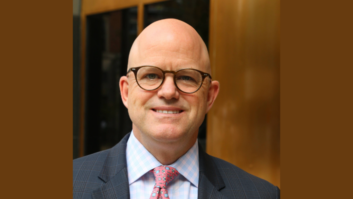
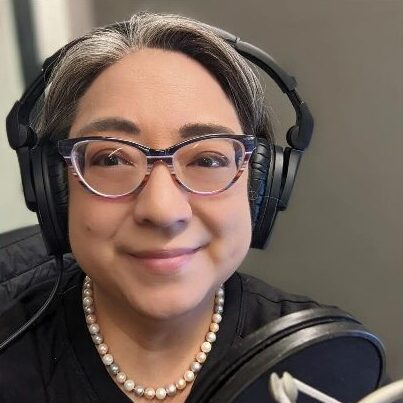
Rima Dael is CEO of the National Federation of Community Broadcasters.
Radio World: What do you think was the most important thing that happened in radio in 2025?
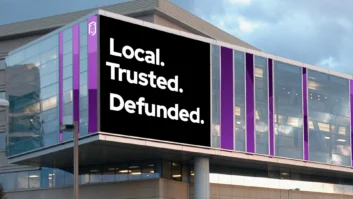
Rima Dael: From the NFCB perspective, the most significant development in 2025 was the destabilization of the public media ecosystem following the defunding and closure of CPB.
This decision forced the entire noncommercial system — especially its smallest, most rural and volunteer-powered stations — to navigate unprecedented uncertainty while stepping into a new level of visibility.
We entered a post-CPB environment that raised urgent questions about:
- public-safety infrastructure and interconnection;
- music rights and compliance; and
- the fundamental definition of “public media.”
For decades, national advocacy and legislative oxygen have centered NPR and PBS. But 2025 made clear that the noncommercial educational broadcast system is far broader and more diverse than its largest institutions. It includes rural, tribal, immigrant, BIPOC-led and fully volunteer-driven stations — many of which serve as their community’s only free, local, trusted source of news, cultural expression and emergency information.
As national conversations focused on the biggest entities, hundreds of small stations mobilized, collaborated and asserted their essential role. The formation and evolution of PMI demonstrated that any future public-media infrastructure must include all who serve the public — not just those with the largest platforms.
In 2025, community radio did not simply endure a crisis; it reshaped the conversation about who belongs in public media and why community-rooted stations remain vital to the nation’s democratic and cultural health.
RW: What technology, business, or regulatory trend will have the greatest impact on radio in 2026?
Dael: Three powerful forces will shape 2026 for community and public radio:
1. Ongoing chaos in federal policy and deep disagreements about the role of regulation
The most significant trend is not technological — it is the governance instability unfolding across federal agencies. There is a profound ideological divide over whether federal policy should regulate industries at all. The current administration’s emphasis on reducing the size and scope of government has created sweeping inconsistency across systems that historically safeguarded the public interest.
This instability weakens structures that uphold freedom of speech and a free press, erodes systems that ensure fact-based information remains accessible to all residents and disrupts the coordination needed for public-safety and civic-information infrastructures.
For community radio — especially in rural and under-resourced regions — this volatility directly impacts emergency readiness, interconnection planning, compliance expectations and long-term sustainability. The dismantling and reassembling of programs, combined with staff turnover and shifting regulatory priorities, creates whiplash for stations trying to serve their communities.
While I remain hopeful, I am concerned that this erosion of public goods may leave communities unprepared during crises, and lives could be at risk as a result.
2. New sustainability models for small, rural, and volunteer-driven stations
Without CPB funding and amid the collapse of many local-news ecosystems, 2026 will require new approaches: shared staffing, regional collaboration, philanthropic investment and civic-information partnerships.
The Rural Research Study launching in January 2026 will be the first national dataset quantifying the civic-information gaps in rural America and the role community radio plays in addressing them. This research will shape policy, philanthropy and infrastructure planning for years to come.
3. The normalization of AI across adjacent sectors
While community radio will adopt AI cautiously and ethically, expectations from listeners, donors, partners and younger staff are shifting rapidly. Stations will need clear protocols for how AI supports writing, accessibility, metadata, transcription and translation.
RW: What will be your main professional goal or project in the coming 12 months?
Dael: My primary focus in the next 12 months is strengthening the national foundation — research, infrastructure, partnerships and advocacy — that will support community radio in the post-CPB era and help broaden the definition of public media beyond NPR and PBS.
1. Launching and delivering the Rural Research Study
This study will map unmet civic-information needs in rural America and quantify the essential role community radio plays within those ecosystems. Supported by the recent grant we received from the MacArthur Foundation, the study will provide long-overdue data that policymakers, philanthropy and civic leaders need to make equitable investments in rural and community media.
2. Advancing PMI and building the future of interconnection
In an environment of federal-policy instability, NFCB’s role in PMI remains crucial. Our goal is to ensure that evolving interconnection infrastructure — digital and eventually broadcast — serves all noncommercial educational licensees, not only large national networks. This includes ensuring equitable access to emergency alerting and distribution pathways.
3. Addressing music rights issues before the next crisis
CPB has prepaid royalties only until the end of 2027. After that, the sector faces significant uncertainty. We cannot wait for the crisis to arrive before acting.
2026 must focus on:
- defining a coordinated approach for community radio;
- assessing cost models and legal exposure;
- shaping national advocacy strategies; and
- ensuring small and rural stations are not left behind.
This is one of the most existential issues on the horizon.
4. Expanding national partnerships and strengthening advocacy for community radio as civic infrastructure
I will continue deepening partnerships with Listening Post Collective, Brevity & Wit, Good Conflict and Free Press through the Media Power Collaborative, while strengthening collaboration between community radio and larger NPR stations.
A core priority is broadening awareness that community radio is a public good and an essential part of the nation’s civic infrastructure — especially in an election year defined by misinformation, civic volatility and ongoing instability in public-safety systems. Community radio remains one of the last trusted, place-based, universally accessible sources of news and connection.
RW: How do you think the industry will be different in 10 years?
Dael: By 2035, public and community radio will be:
1. More interconnected and collaborative
Regional clusters, shared staffing and co-produced content will support long-term sustainability.
2. Supported by diversified investment
Funding models will evolve to include civic-information coalitions, public-safety partnerships, philanthropy and hybrid community-supported strategies.
3. Functionally hybrid: broadcast and digital
Broadcast will remain irreplaceable for emergencies and rural access, while digital platforms will broaden engagement and participation.
4. Led by a more representative workforce
Leadership will increasingly reflect the racial, cultural, linguistic and geographic diversity of the communities served.
5. Recognized as essential civic infrastructure
Community radio will be understood not simply as media, but as a core component of the country’s public-safety and democratic infrastructure.
RW: Anything else we should know?
Dael: Community radio is the nation’s most diverse, community-rooted media network, serving more than 2 million listeners weekly on-air, with growing digital reach. Whether run by ten staff, two staff or entirely by volunteers, these stations provide critical information, connection and cultural continuity.
NFCB has evolved into a networked national backbone — supporting stations through research, leadership development, communications strategy, policy advocacy and infrastructure planning. In a year marked by instability and shifting policy landscapes, community radio continues to serve as one of the most resilient, trusted sources of civic connection.
As we move into 2026, I remain hopeful and resolute. The systems around us may be volatile, but community radio has weathered decades of disruption. It continues to adapt with creativity, courage and deep commitment to the people it serves.
Radio World welcomes comments on this or any story. Email [email protected] with “Letter to the Editor” in the subject field.
Read more stories like this in our News Makers section.