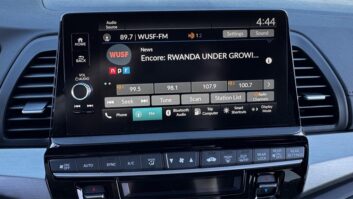
“There is no such thing as a singularly audio-centric dash anymore.”
So says Jeff Jury. But, he continues, this trend not necessarily bad for radio stations.
In a blog post, Xperi’s senior vice president and general manager of connected car takes up the topic of the role of video in the car.
He writes that radio and audio continue to dominate as the most important media in vehicles, but “content is breezily crossing platforms with little regard for traditional formats.”
He observed that carmakers “from Mercedes to BMW” are implementing front passenger screens, “all of which will practically demand video content that can be consumed by passengers when the car is in motion.” Meanwhile, more drivers are sitting in EVs that are being charged, while passengers in driverless Waymo vehicles are free to stream content.
[Related: “Put Radio Back to Being Front and Center in the Car”]
“Video, and even gaming, are also playing their parts in the in-vehicle media ecosystem, and it is highly unlikely that any retreat from today’s screen-heavy dashboard to the limited content sources of old is underway,” Jury writes.
Xperi, of course, offers video and audio technologies that serve this evolving space, as we have reported. So Jury’s blog post gives insight into how the company is approaching these topics.
He encourages broadcasters not to think “audio-first” or “video-first,” but content-first.
“Consumers often search for content, then channel — and if there is one thing broadcast radio can excel at, it is providing relevant, locally-oriented content.”
He said most radio stations actually have been crossing platforms for years in social media. He notes the use of video content on the websites of “radio icons” such as KROQ and KDKA.
“Perhaps another way to view the in-vehicle video opportunity is to think of the in-dash infotainment platform as you would the website — already rich with metadata, lyrics, visuals, with video an extension of that.”
Jury said Xperi research shows that consumers prefer short-form video content of about 20 minutes. He says this means broadcasters “don’t have to worry about competing with slickly produced streaming movies or series. “In fact, if TikTok is emblematic, the shorter and more informal, the better.”
For stations that don’t have a lot of resources, he suggests using video clips of a local politician being interviewed in the studio. It need not be fancy.
“Many of today’s top podcasts also broadcast video (think Joe Rogan or Good Hang with Amy Poehler or Club Random), with broad acceptance of their varying levels of sophistication — some Zoom-basic, others with higher production values.”
Jury concludes that a radio programming manager’s mandate is to “make content compelling enough to find, engage and maintain an audience — video simply offers an extra tool with which to do this.” He says strong opportunities exist for radio stations to leverage their existing video content and explore new uses.
Comment on this or any article. Email [email protected].