Broadcast radio’s place in the connected dashboard is no longer guaranteed. Keeping that place will require unified industry standards and relentless education of automakers.
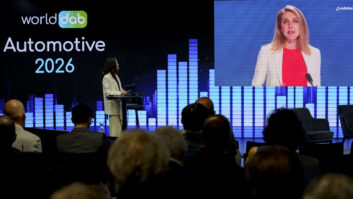
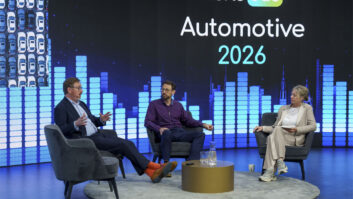
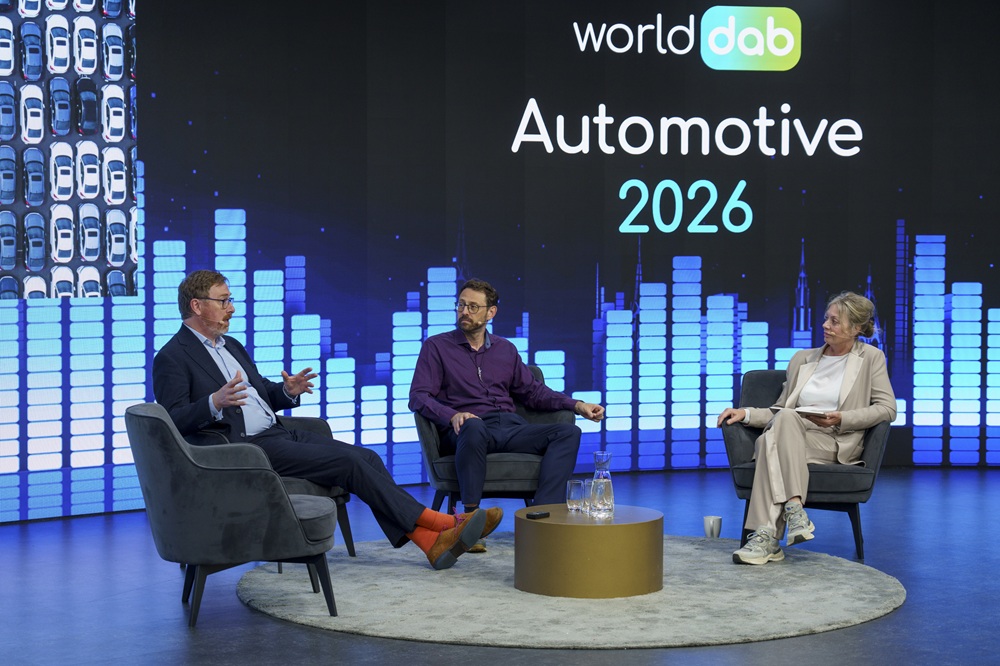
That was the message delivered during WorldDAB Automotive 2026’s closing session on June 11 in Frankfurt, Germany.
The one-day event was hosted by WorldDAB, which promotes the DAB/DAB+ digital radio standard.
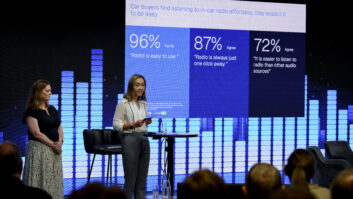
Radio today competes against streaming apps for in-vehicle real estate. In this competitive context, “Radio can’t be taken for granted,” warned Gregor Pötzsch of CARIAD, VW Group and chair of the WorldDAB Automotive Working Committee.
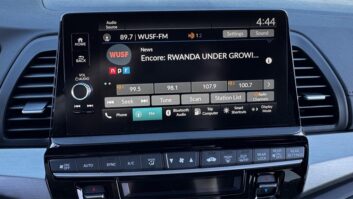
If access to broadcasting is buried beneath multiple touchscreen menus, frustrated drivers will switch to easier-to-access audio sources.
“If you can’t find it, you can’t use it,” he said.
To address this problem, WorldDAB’s user experience guidelines provide automakers and broadcasters with clear, research-backed design rules for delivering the best possible in-car digital radio interfaces.
“The purpose of the UX guidelines is to channel all of the experience and all of the knowledge that we’ve got in this organization and from hundreds of broadcasters into a piece of education for car manufacturers,” said Nick Piggott, RadioDNS vice president and vice president of WorldDAB.
These rules work in tandem with Radio Ready, a broadcaster-driven advocacy initiative campaigning globally to secure dashboard prominence, which Piggott likened to the “chefs” of the operation.
“You need to give the developers, you need to give the product managers more detailed instructions of what specifically do you need to do, and that’s the purpose of the guidelines documents,” he said.
To keep pace with evolving technical demands, the WorldDAB Automotive Working Committee recently upgraded its rules from static documents into a dynamic, paginated website.
“It makes it much easier for us to expand it because when we started with user guidelines, we were very, very heavily focused on physical layer presentation,” said Piggott.
Meanwhile, as voice control becomes a standard dashboard feature, broadcasters must supply precise metadata to car manufacturers and voice assistant platforms to ensure their stations remain discoverable.
“If a broadcaster wants their radio station to be reliably found by a driver making a voice request for it, they’ve got to provide all of the information to make that a successful identification,” Piggott added.
Additionally, complex or confusing station labels can lead to severe driver distraction, making intuitive search options a critical safety necessity.
“You don’t want to scroll through 100 [DAB] stations … the selectability and the variety is very good, but you can’t have your eyes for 10 minutes on the screen,” said Pötzsch.
When technical display errors do arise between over-the-air signals and complex automotive media setups, the committee runs investigative workshops to isolate missteps.
“We’re trying to find out what went wrong,” Piggott said, adding that the group focuses on solutions rather than assigning blame.
Ultimately, protecting radio’s place in the dashboard requires cooperation and unity across public networks, commercial stations, chipset makers and global automakers.
“It’s about bringing together the technical expertise, broadcaster needs, automotive reality with one goal, improving the radio experience for the driver,” concluded Jacqueline Bierhorst, president of WorldDAB.