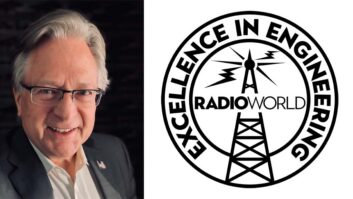
Francisco Montero has retired. And the Fletcher, Heald & Hildreth broadcast law firm, which was founded in the 1930s and where Montero was co-managing director with Kathleen Victory, has closed.
We asked Montero, 66, to reflect on his career and look ahead to the most pressing issues in the current broadcast regulatory environment. He also tells how he nearly became a nominee to fill a vacant seat at the FCC.
Over nearly four decades, he has seen many commissioners come and go. The same with broadcast rules and regulations. But the nature of current politics and the regulatory environment in Washington is notably different from when he began his career.
He studied at the George Washington University Law School, where he served on the George Washington University Law Review. He did his undergraduate studies at the University of Michigan.
Montero served as director of the FCC’s Office of Communications Business Opportunities during the Clinton administration. While at the FCC, he was responsible for working to create business opportunities for entrepreneurs and tech and telecom startups.
He returned to the private sector in 2000 as a partner with Shaw Pittman LLP before joining Fletcher, Heald & Hildreth in 2003. A frequent advocate for Hispanic and Spanish-language media in the U.S. and Latin America, he’s been prominently featured as a speaker at many broadcaster conferences and conventions since then.
Radio World: Your law practice is in the process of winding down operations. Where does that stand?
Frank Montero: It is essentially done. I recently participated in panel discussions at both the NABOB and Forecast Conferences, and I plan to continue public speaking and writing on broadcast and legal issues, but my law practice in the traditional sense has wound down.
Honestly, it was a touching and emotional process. So many clients expressed appreciation for our relationship over the years and sadness, but also excitement about my retirement and plans.
I have developed close friendships with many of my clients, and in some cases, I have worked with many generations of the same family.
RW: What are you telling clients who seek legal advice?
Montero: Several of my younger colleagues will be continuing their careers representing broadcasters and other telecom clients. In many cases the clients already know these attorneys, as I made a real effort to introduce them to my colleagues in anticipation of my eventual retirement.
It has been a smooth transition. I have always believed that older attorneys should introduce their clients to the next generation of lawyers who will eventually represent them, a concept that makes sense but that can be difficult in execution.
RW: How has what a communications lawyer does changed through the years?
Montero: In some instances, there have been huge changes, but in others it is largely the same. When I started in the late 1980s it was still the era of broadcast comparative hearings. Broadcast law was largely focused on hearings and administrative litigation.
But in the 1990s and 2000s the FCC switched to spectrum auctions. Hearings mostly disappeared, and the practice became far more transactional. Suddenly, to be a broadcast attorney you needed to negotiate and draft commercial contracts.
The broadcast ownership rules were dramatically more restrictive then, with one AM/FM combo permitted in a market. In 1992 that was raised to two AMs and two FMs provided they didn’t exceed 25% of the market control.
FCC filings were all on paper, and FCC inspectors frequently appeared at stations to inspect the paper public file and general operation.
Having the filings go digital and accessible online put many FCC regional offices and broadcast firm paralegals out of a job. In contrast, the process of negotiating agreements is generally the same, and we still work very closely with RF engineers on signal modifications.
RW: What about the regulatory atmosphere in Washington? What do you make of the political divisiveness?
Montero: The mood in Washington is unquestionably divisive, but with a few notable exceptions there’s generally nothing new under the sun. Things were pretty divisive in the Clinton years with Newt Gingrich in the House.
Even the FCC’s efforts to intimidate broadcasters and the media because of their editorial content is not entirely unprecedented. Both Johnson and Nixon threatened the FCC licenses of critical news outlets. But I think the intensity and the overtness of these efforts are new.
This FCC is so clearly an instrument of the White House. This is understandably troubling to many broadcasters.
I don’t believe this is a left versus right issue. Many conservative and religious broadcast groups are justifiably troubled by this trend, because once you open that door, it is hard to close. In Washington, what goes around comes around.
RW: Did political discord change your job?
Montero: I consider myself an advocate for my clients, regardless of their political leanings. I have represented clients across the political spectrum. In that respect, my practice was not impacted. However, I was involved in representing certain broadcasters against investigations by the current FCC that I believe were politically motivated.
RW: What are the most pressing regulatory issues for radio broadcasters?
Montero: Certainly, market ownership caps are a big one. As I predicted, the FCC will finally be addressing them in their December meeting. I believe FCC Chairman Pai would have addressed radio caps, but the administration changed with the 2020 elections.
If you consider how the 1996 Act changed radio, I think relaxing the market caps now could also change the radio landscape.
However, I also think that the lifting of sub-caps — how many AMs versus FMs can be owned in a market — could further diminish AM values. Owners could dump AMs if the sub-caps are lifted.
Separately, I think the current FCC’s efforts to control editorial content are significant and troubling. Whether it be under the guise of the public interest obligation, challenging license renewals or Enforcement Bureau investigations, this is an issue that impacts all broadcasters across the political spectrum.
RW: These are challenging times for the radio broadcast industry. Can the FCC deregulate the industry to prosperity? And what might that mean for small mom and pop operations?
Montero: I don’t think the radio industry can ever go back to what it was in the 1990s. I am an advocate for radio, but there is a slow degradation of the industry’s competitive and economic strength that cannot be denied, and that trend will likely continue.
I don’t see any cliffs … but industries must evolve with the times. The FCC could certainly extend the life and relative prosperity of some radio groups through ownership deregulation.
Traditional mom-and-pop operators are disappearing in large part because their children are not interested in running the stations. However, I do think there is a place for small foreign-language, religious and niche broadcasters on AM and in smaller markets.
The barriers to entry there are lower and the prices and operational costs are more manageable.
RW: Do certain career memories stand out?
Montero: In the late 1980s I joined the former broadcast law firm of Fisher Wayland. There I learned from broadcasters the importance of finding your niche.
My niche was Spanish-language broadcasting. As a young associate only three years out of law school, I invited myself to the first informal gathering of Spanish-owned radio stations. I was scared to death, but from that meeting we formed AHORA, the American Hispanic Owned Radio Association, the very first trade group for Latino radio in the U.S., and they retained me as their Washington counsel.
It was my first client. In 1995, while still an associate, I testified before the House Ways & Means Committee, along with then-FCC General Counsel Bill Kennard, in favor of keeping the minority tax certificate policy, which promoted minority ownership in broadcasting.
I knew Kennard from our work representing minority-owned broadcasters and minority small business investment companies that provided capital to those broadcasters. Later still, when he became FCC chairman, Kennard asked me to join him as a political appointee at the FCC.
After the 2000 election, when Gloria Tristani’s FCC seat opened, California Governor-elect Xavier Becerra, while still in Congress, proposed my name to fill her seat at the FCC.
Because it was a Democratic seat, I had to meet with the Senate leadership. While I was at the 2001 NAB Radio Show in New Orleans, I was asked by Senators Hollings and Daschle to meet with them, so I quickly flew back to D.C. the following day.
However, the meetings were cancelled because the day of my interview was Sept. 11, 2001.
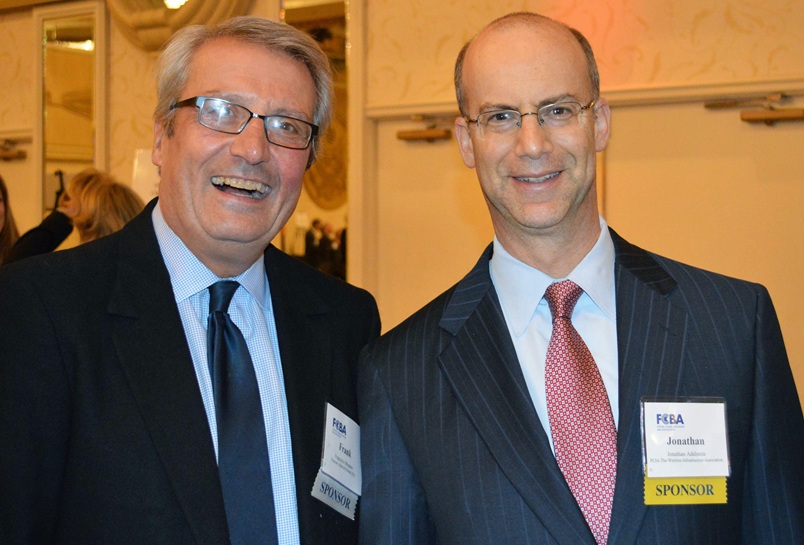
George Bush eventually nominated Daschle staffer Jonathan Adelstein.
RW: What are you most proud of?
Montero: There so many great initiatives in which I am proud to have participated.
Certainly, one is the creation of AHORA and helping organize and promote policy initiates to assist Latino broadcasters across the U.S. In that respect, I owe thanks to Jim Winston, counsel for NABOB, who helped me on countless occasions.
In 1994 while leading AHORA, I successfully lobbied the Small Business Administration to repeal their “Opinion Molder Rule,” which had been preventing the SBA from giving broadcasters loans and loan guarantees.
In the late 1990s, decades before Chairman Pai’s AM Revitalization initiative, I represented the Association of Community AM Stations, or ACAMBA, to change the FCC’s rules to allow AM stations to use FM translators. Today FM translators are widely considered to be essential for AM.
I’m proud of my law practice and the work I have done representing many state broadcast associations and participating on informative panels and webinars for state association members.
I also assisted in petitioning the IRS on behalf of BEDA, the predecessor of the National Alliance of State Broadcasters Associations, for a ruling opening the door to Non-Commercial Sustaining Announcement / Public Education Partnership programs, or NCSA PEP — a lifeblood for state associations. I believe the state broadcast associations provide an invaluable service to the broadcasting industry.
In addition, I’m proud of my academic work on broadcast lending and the collateralization of broadcast loans, as well as my work as an adjunct professor at the George Washington University Law School.
RW: Which FCC chairs have you admired most through the years?
Montero: Is there a standout? That’s a hard one. Certainly, at the top of the list would be Kennard, Michael Powell, Mignon Clyburn and Ajit Pai.
For years I have heard complaints that presidents never appoint a broadcaster to the FCC. There have been chairs, like Al Sikes, who held broadcast interests. I think the closest to true broadcast advocates I have seen during my career are Jim Quello; William Kennard, who literally represented broadcasters in private practice and created the LPFM service; and of course Ajit Pai, who genuinely loved radio and especially AM radio.
RW: How do you plan to stay busy?
Montero: I will be offering consulting advice and counsel to clients and my former colleagues. I also hope to continue public speaking and writing. I have always enjoyed that.
I have also been approached by clients about the possibility of contributing to their programming content with advice and viewpoints on news and public affairs programs.