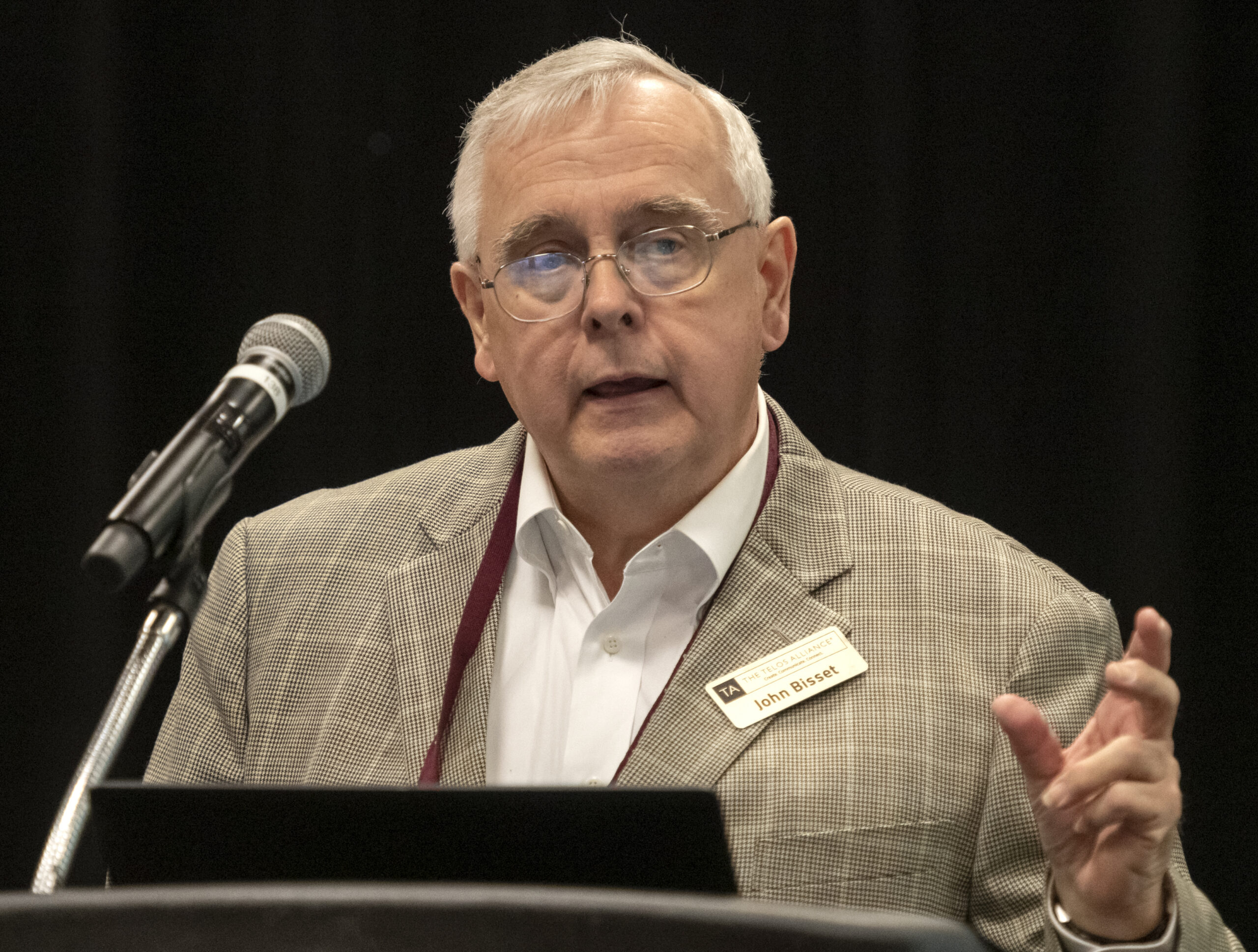
John Bisset, who dedicated his career to the broadcast industry as a skilled engineer, consultant, sales executive and educator, and who authored Radio World’s popular column Workbench, has died after a period of illness. He was 73.
He spent 55 years in the industry. In his later career, Bisset served a who’s who of equipment manufacturers, including Harris Corp., Dielectric, Broadcast Electronics, Nautel, Tieline, Elenos and Telos Alliance.
His technical knowledge made him uniquely qualified to understand product design, but his ability to communicate, his hallmark, not only made him an asset in sales but as a teacher.
And that has been the hallmark of Workbench.
Every edition delivered hands-on, real-world engineering tips where readers learned something new. A testament to Bisset’s ability to build a vast industry network, ideas poured in from readers and contacts who wrote to him regularly.
Tips earned Society of Broadcast Engineers certification credit, again, a testament to Workbench’s standing.
“One of the fun things about this business is the long-term relationships you make, even though you may not talk to these people for years,” Bisset once wrote.
Radio World Editor in Chief Paul McLane said the column will continue, as Bisset wanted, with a new author to be announced later.

The first Workbench appeared in Radio World on Aug. 8, 1990. Bisset, who was Radio World’s technical editor at the time, began authoring the column on Nov. 7 of that year.
In his very first Workbench column, Bisset offered this piece of advice: “I’d like to encourage you to look around your plant to see what you’ve built that could help someone else. We all know of those little insignificant projects that may appear to be ‘just common sense.’ However, we’ve also all been in the position where we can’t see the forest for the trees.”
He authored approximately 920 Workbench columns over his career. Readers routinely told Radio World that Workbench was their favorite section of the publication.
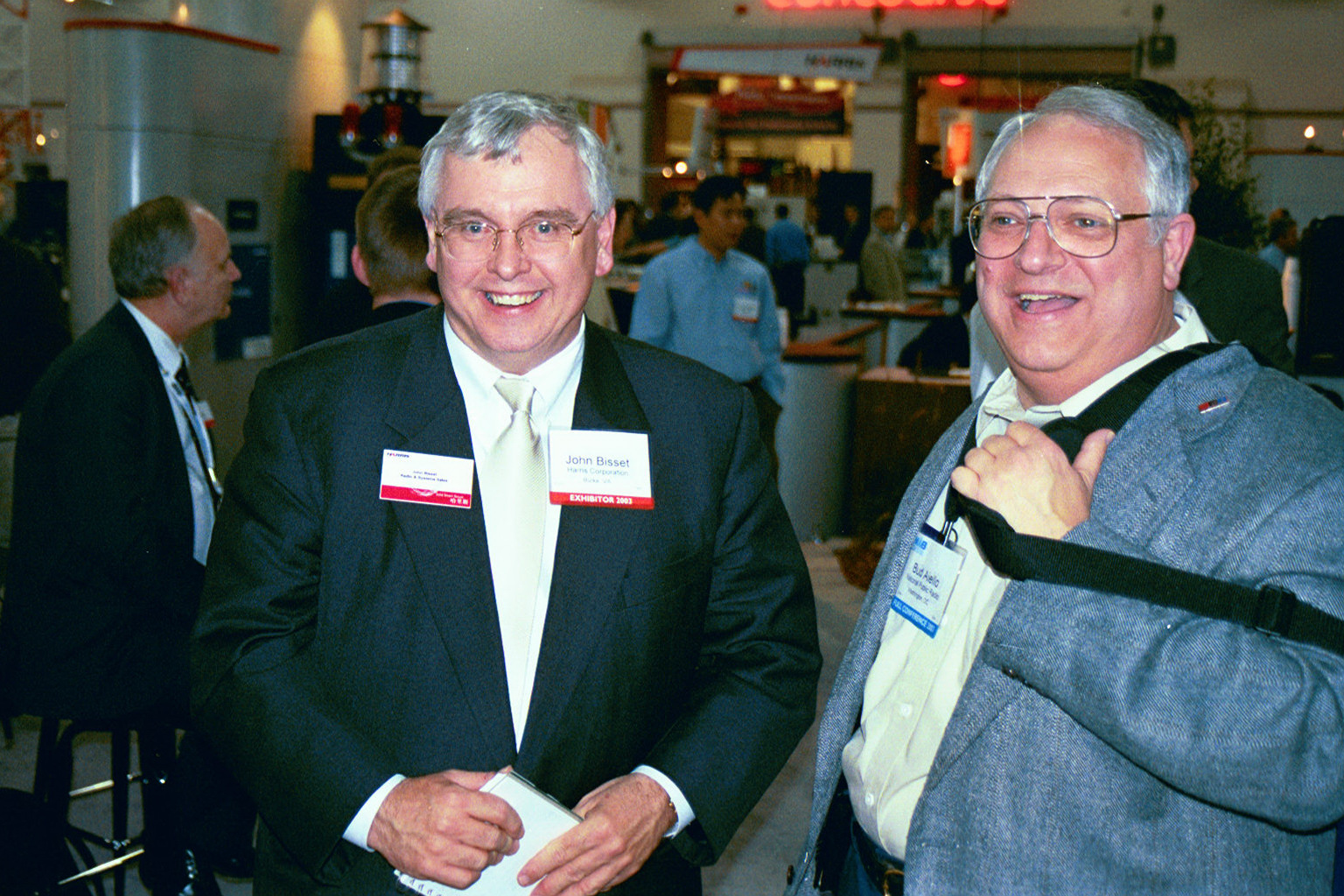
Bisset told Paul McLane in 2020 that he was especially proud of the column’s popularity among programming and management readers. He understood the power of working the ladder.
“Make friends with your group’s personnel manager,” Bisset would write. “They can be an ally.”
Or, take them to your transmitter site, as Bisset once suggested in 2003. “Not only will it give them some perspective of the work you do, but you’ll earn a little more respect when they see the inside of a transmitter or phasor.”
There was, and still is, a resounding consensus among those who worked with him most of just how highly Bisset was regarded.
“He’s the same gentleman I have always known,” Marty Sacks of Telos Alliance told us in 2020. “The service he has provided to so many, including me, all these years through his Workbench columns have truly been a labor of love.”
In 2007, SBE honored Bisset with its Educator of the Year Award.
“John Bisset is an ‘engineer’s engineer,'” Frank Baptista wrote on his LinkedIn page following Bisset’s 2009 installation of an FM and HD Radio transmitter at UMass Dartmouth. “Anyone who has been a broadcast engineer for any length of time will know that he is considered one of the experts in the industry.”
He also understood his role as an advocate. A broadcast engineer, whether full-time or contract-based, is so often misunderstood. The tips and tricks included in Workbench sometimes needed the support of higher management to pull off.
[Email your thoughts about John Bisset so we can share. Send to [email protected].]
“It is really important to let the people above you, the managers, the owners, know that you are taking care of their facility and are doing a good job with it,” he once told Kirk Harnack’s This Week in Radio Tech. “You’re saving the station money and you’re keeping it on the air at the same time.”
Some of the nuggets made us laugh. An almost understated simplicity was Workbench’s calling card. But every now and then, if you paid close attention, John would insert a prescient piece of wisdom that would resonate through any walk of life.
“Time. In this business, it can control us,” he wrote on May 9, 2007. “If time gets out of hand, it can destroy us.”
As a director of engineering told John early in his career: “’No radio or TV station is worth dying for.’ Your most important job is to work safely and return to your family at the end of the day.”
John often wrote in Workbench that he was fortunate to have been mentored by chief engineers as he worked his way up the ranks. Some of Bisset’s favorite memories included early AM radio improvement efforts and demonstrating Delta Electronics’ Splatter Monitor to the Federal Communications Commission with colleague Tom Wright.
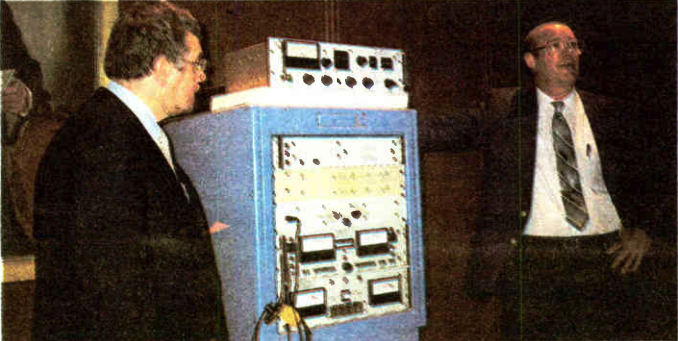
Known as an accomplished chief and contract engineer, Bisset presented and moderated an all-day Radio Transmitter Workshop at the NAB Radio Show from 1997 to 2003, as well as three additional workshops at the spring NAB Show. He was also a frequent presenter at SBE Ennes Workshops around the U.S. and at chapter meetings.
Bisset co-founded Multiphase, a successful broadcast engineering service company, in 1990. He went on to serve as regional RF sales manager for Broadcast Electronics.
At Dielectric, he directed the completion of several product initiatives, including the Dielectric Pattern Viewer. During his tenure at Harris Broadcast, he earned three sales awards and sold 55 transmitters in a single year, setting a company sales record.
The road to a life in radio
In a July 2018 Workbench, Bisset reflected on an early motivator of his fondness for tinkering with equipment.
“With the move by utilities to underground service distributions, you don’t see many aerial cable splicing tents anymore; but as a young boy, I watched a phone tech strap on his climbing spikes and belt and ascend the pole outside my house,” he wrote. “He assembled a platform and tent and crawled inside.
“As a little boy, I found this fascinating. I ran inside and ran a piece of string between the radiator and end table, and built a similar structure with my TinkerToys. A couple of tissues and tape completed my tent — and then I dispatched my plastic army men inside the tent to get to work.”
He was born Oct. 31, 1952 as John Paul Bisset. At age 10, he appeared on Willard Scott’s “Bozo the Clown” show in Washington, D.C. There he got his first taste of broadcasting.
John recalled going home afterward and, with the help of his father, rigging up his own version of Bozo’s TV studio, using cardboard boxes with pie tins as lights dangling from the ceiling. He used several boxes to model as television cameras, alongside empty fruit cans to serve as mock-up lenses.
As McLane detailed in a 2020 feature celebrating Workbench’s 30th anniversary, at age 12, Bisset constructed a pirate Top 40 radio station in his home, using money from his paper route to purchase equipment. He hooked a Lafayette mic mixer up to two turntables and fed a reel-to-reel deck into a Lafayette wireless AM transmitter, covering a two-block radius.
His first professional job came at age 16 at WFAX(AM) in northern Virginia, serving the Washington market.

“Program Director Roy Martin hired me as a summer relief announcer when I was 16,” Bisset recalled. “I worked there part-time through high school and college, and joined the full-time staff after graduation.” Around that time, he received training in technical writing from an influential teacher, professor Joey Horobetz.
Bisset said he was later inspired to become a Christian while playing religious programming on a station. “Becoming a Christian gave me tremendous encouragement,” he would say later.
He was eventually promoted to WFAX chief engineer. That same year, he and fellow engineer Henry Stewart launched a contract engineering business.
He earned an AAS in Broadcast Engineering Technology cum laude from Northern Virginia Community College, as well as an AA in communications/liberal arts cum laude from the institution.
From 1980 to 1988, he managed the engineering services department at Metroplex Communications’ 730 AM (it held the WPKX, WRMR and WCPT calls during that time) and 105.9 FM (WVKX/WCXR) that served the Washington, D.C., market. He then joined Delta Electronics in Alexandria as sales manager for its broadcast products division.
[Read memories from colleagues.]
Bisset had already begun contributing to Radio World in the late 1980s.
“Perhaps the biggest pitfall in any studio or transmitter installation project is the lack of adequate documentation,” Bisset wrote in the Feb. 1, 1988 edition of Radio World. “It’s not that we engineers don’t have good intentions, but somehow we never have the time or the manpower to produce detailed wiring diagrams, wire running lists or equipment layouts.”
Around that time, Radio World founder Steve Dana sought to expand the publication’s tech content. To his credit, Bisset was teaching a college-level broadcast engineering course part-time, and so it was a natural fit.
Over the years, the column evolved, but from the early days dealing with tube-type transmitters and, to software updates and computer-aided drawing tools, the mission was the same.
John had continued to write Workbench columns until he went on hiatus this summer to tend to his health. He leaves behind his wife Diane.
And over those 36 years of writing for Radio World, in which we savor every word and mourn his loss greatly, we remember one everlasting piece of advice the next time you are at a transmitter site:
“Sometimes you’re the windshield, sometimes you’re the bug,” John wrote on Sept. 1, 2001. “Good planning can make the difference.”