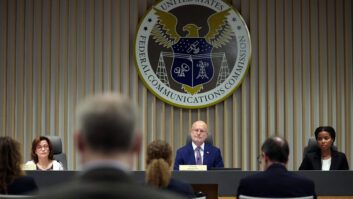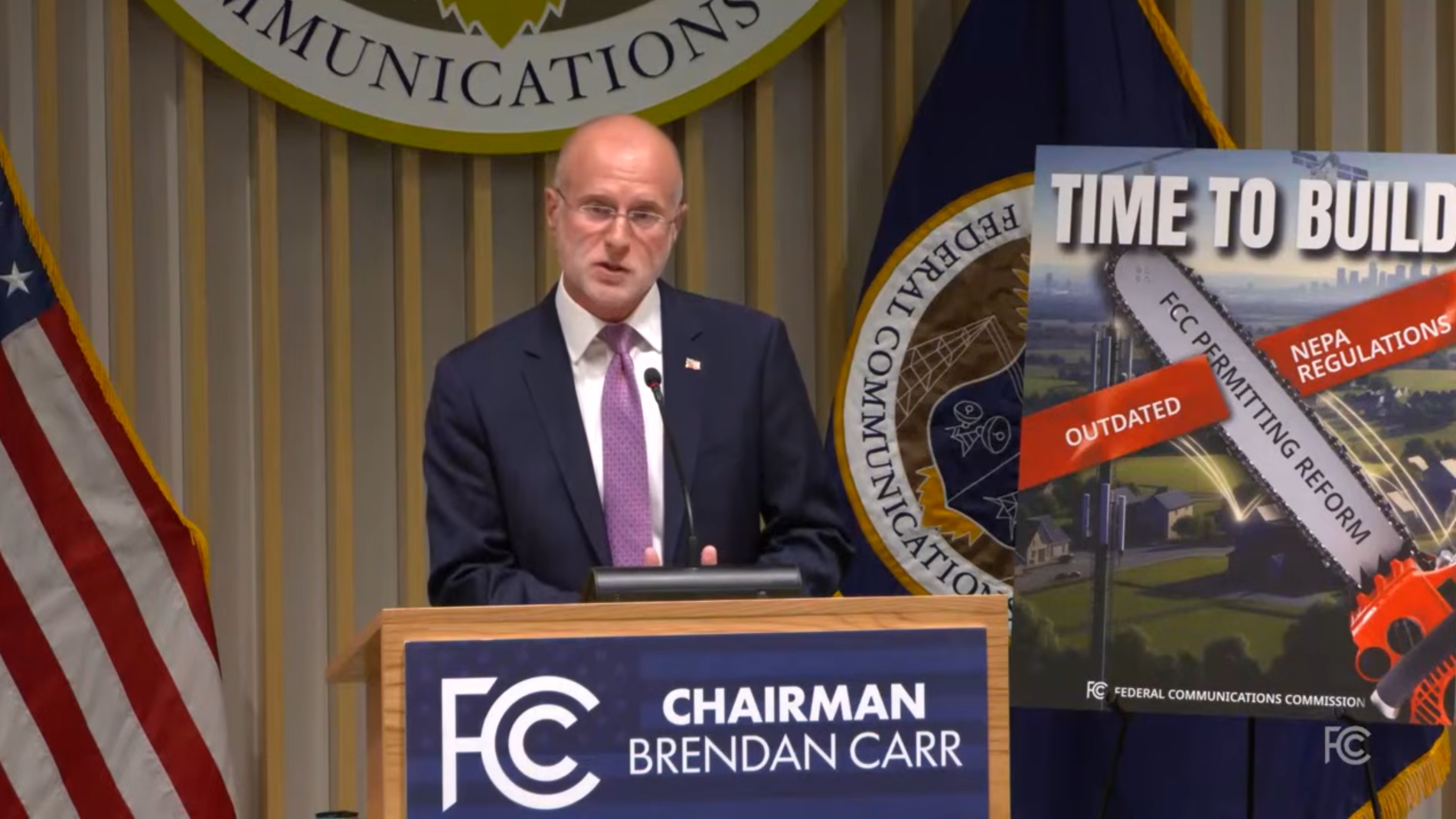
As it marches onward in its push for deregulation, the Federal Communications Commission has voted to rein in its approach to National Environmental Policy Act regulations. The commission believes its action on Wednesday will cut billions of dollars’ worth of red tape and promote infrastructure investment.
The vote, taken at its September open meeting, significantly revises its procedures for determining if constructing communications facilities, including broadcast towers, will affect the environment, according to those familiar with the changes.
“(The new rules) will ensure NEPA serves as a tool for informed decision-making rather than a barrier to investment, innovation and connectivity,” the FCC stated in its announcement.
Chairman Brendan Carr said all three branches of the federal government have acted to roll back “wayward” applications of NEPA.
(Read the FCC’s report and order.)
He cited Congress’ amending of the NEPA in 2023 to make it clear that the law’s environmental procedures apply to major federal actions only.
“Today’s vote and related reforms are expected to save over $2 billion in compliance costs while zeroing out over $7 billion in economic harm,” Carr said.
Major Federal Actions
After the FCC originally included this draft in its September report and order, communications attorney David Oxenford wrote on the Broadcast Law Blog on Sept. 13 that the commission’s rollback would result in an environmental review process for broadcast activities only when the construction of a new tower requires an ASR.
And so the commission clarified Wednesday that private wireless projects using geographic-area and site-based spectrum licenses do not constitute MFAs, or Major Federal Actions, provided they do not require an Antenna Site Registration.
Carr and Commissioner Olivia Trusty voted to affirm the changes with the only Democrat on the commission, Anna Gomez, dissenting.
According to the FCC, the rules adopted will:
- Determine that the actions associated with space-based operations, including the launch, deployment and operation of space stations, are not Major Federal Actions.
- Codify the statutory definition of MFA, the prerequisite to trigger federal agencies’ NEPA obligations in the commission’s rules and clarify which commission actions are MFAs.
- Outline that deployments of facilities in connection with geographic area spectrum licenses, site-based spectrum licenses, unlicensed or licensed-by-rule wireless services, and satellite earth stations do not qualify as MFAs to the extent the deployments do not require antenna structure registration.
- Revise the commission’s NEPA rules to ensure they comport with the amended NEPA statute and accelerate the federal permitting process.
- Streamline other aspects of the commission’s NEPA rules, including the commission’s requirements for categorical exclusions, environmental assessments, environmental impact statements, joint agency actions and emergency situations.
“Bureaucratic NEPA reviews have no place across a range of innovative space-based activities regulated by the FCC,” the release stated.
Carr said during the meeting that adopting the final rules confirm the FCC’s NEPA regulations do not apply to private wireless infrastructure decisions made by private companies.
Gomez said she strongly supports efforts to streamline environmental review requirements to ensure that infrastructure deployment can occur in a timely manner. But the FCC should honor the purpose of the statute that Congress has tasked it with implementing, Gomez said.
“In this item, the commission establishes new standards for what constitutes a Major Federal Action at the FCC. In doing so, it carves out many of the projects the commission authorizes by virtue of spectrum licensing.
“While the need for streamlining review processes is clear, we cannot abdicate our responsibility with regard to our licensees. I believe our proposed NEPA rules allow our interpretation of MFAs to swallow the rule,” she said.
Some environmental advocates argue that “the FCC has not rigorously followed NEPA’s guidelines,” according to a Q&A on the FCC’s NEPA process from the nonprofit Environmental Health Trust.
But in her own statement, Commissioner Trusty said that “in some cases, environmental reviews have added as much as five years to the completion timeline for a broadband build.”
The commission also decided to seek additional feedback on reforming the FCC’s historic preservation rules by unanimously voting to adopt a Notice of Further Proposed Rulemaking.
It will seek additional comment on the agency’s National Historic Preservation Act framework, including how the commission’s licensing of spectrum relates to the definition of an “undertaking,” which is the trigger for NHPA review.
[Do you receive the Radio World SmartBrief newsletter each weekday morning? We invite you to sign up here.]