The 25th anniversary of the Sept. 11 terror attacks is approaching. Radio World is presenting a series in which people share their memories.
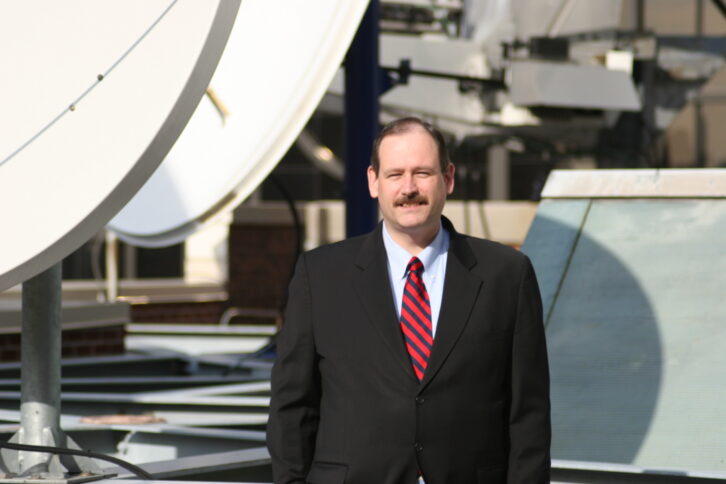
Conrad Trautmann was the senior VP of engineering at Westwood One and Metro Traffic. His office and the main satellite uplink site were at the CBS Broadcast Center at 524 West 57th Street in New York City.
Radio World: What is your first or most vivid memory of that day?
Conrad Trautmann: I got off the subway at the Columbus Circle station at 8th Avenue and ran into Constance Lloyd, who was the general manager of CBS Radio News. We walked the two blocks together between 8th Avenue and 10th Avenue.
It was a beautiful day. When we walked into the lobby of the building, the large screen television had the image of the World Trade Center on fire just after the first plane had hit.
I remember us both commenting that it looked like it was going to be a busy news day today and after badging into the building she sprinted to the newsroom while I headed towards master control.
RW: Was your own daily radio workflow affected?
Trautmann: Yes, in many ways.
Rising to the top of the list was the loss of telephone service, including POTS and leased lines, such as ISDN and T-1s. At the time, much of Westwood One’s long form programming was back-hauled to and uplinked from New York. Back then it was primarily brought in over the T-1’s using Intraplex shelves. We used ISDN for short-form feeds.
When the towers came down, the main central office for New York Telephone downtown was damaged and we lost all of our connectivity with the exception of one single T-1 that went between the CBS News Washington Bureau and New York. We later learned it was routed through a different central office.
Getting news reports into the newsroom was a challenge without phone service. A lot of our news got on the air because of that diverse link that stayed up and stories being fed to Washington and then up to New York.
Having the uplink at the same site as the main newsroom was an advantage, since we had direct connectivity between our main news studio and the uplink system.
I remember getting many, many requests to authorize satellite receivers to give affiliates access to our news services. Normally, only news affiliates had access, however, that day we gave the news feeds to any station that wanted it.
For Metro Traffic, we had an ENG helicopter in the air that stayed up as long as it could and used the Flir gyro-stabilized nose camera to provide video to our local affiliates. Many of those affiliates provided camera video to the national networks, so our video was being broadcast nationwide.
After the chopper ran out of fuel and landed, of course all aircraft were grounded and we ended up using video from our traffic cameras at the Empire State Building for coverage.
Chris Tobin, who was the Westwood One VP of engineering in New York, was very resourceful in trying to solve problems as they arose.
Watching the events of that day unfold on video didn’t seem real. I remember we went to the roof of the broadcast center to look downtown to see the smoke rising as a way to validate that it really happened.
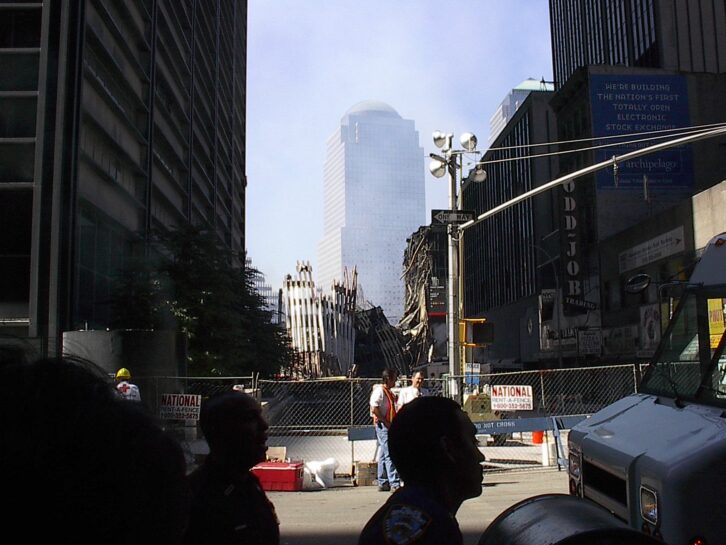
Several days later, the two of us went downtown to get a look for ourselves. I took a few photos with a digital camera. I remember staring at the wreckage and not being able to fully take it in, since it seemed so unbelievable.
RW: Did you lose someone you knew personally in the terrorism attacks?
Trautmann: I didn’t. But the New York chapter of the Society of Broadcast Engineers lost six broadcast engineers who were on site at the time of the attacks.
The engineers who died at the World Trade Center that day were Robert Pattison, Steve Jacobson, Isaias Rivera, Gerard “Rod” Coppola, Bill Steckman and Don DiFranco. You can read about them in this Radio World story from 2011.
We welcome memories of that day from readers. Email [email protected] with “Letter to the Editor” in the subject field.