This special Signal Spot combines a summer road trip travelogue with a few excerpts from a yet-to-be published book I’ve been working on about the history of the smooth jazz radio format. I hope you enjoy this piece!
The name, “smooth jazz,” was conceived in a Chicago hotel in 1989, so the story goes.
Frank Cody and Allen Kepler were conducting what they would later deem a “face-off” in their work for radio consulting firm Broadcast Architecture. These were one-on-one interviews with listeners of a specific radio station undergoing market research.
That summer, Chicago’s 95.5 WNUA(FM) had enlisted a research startup co-founded by Cody and Owen Leach to conduct the study.
For a yet-to-be-published book I’ve been working on for several years, Kepler told me that the research team was trying to determine what listeners called the music they heard on WNUA.
The blend of contemporary jazz, new age and soft rock at the time did not have a solid identity. WNUA was even using a “smooth rock” positioner at the time.
But a woman in her 40s, who had been a loyal listener from the day WNUA picked up the format in August 1987, did not hesitate.
“WNUA plays ‘smooth jazz,’” she said, according to Kepler.

For better or worse, the name stuck — for both devoted fans and those who pan the genre as, well, anything but actual music.
At its peak in the late 1990s, a smooth jazz outlet could be found in nearly every U.S. radio market.
Perhaps only a select few stations truly did well, WNUA certainly being one of them.
But right around the time of the financial crisis, terrestrial radio turned its back on the format almost everywhere.
There were several reasons for the sharp collapse: aging demographics, a music mix some felt was getting stale and, perhaps most of all, the pivotal switch in ratings measurement methodology from diaries to people meters.
Many of the same core musicians, however, are still active, touring and even mixing with the biggest names in pop music.
And every now and then, smooth jazz goes mainstream again. Pablo Torre — whose podcast has featured “scoops” across all of the major sports — made smooth jazz the subject of his July 23 episode, interviewing Mickey Duzyj, who has been working on a documentary about the genre.
Smooth jazz has always been an unmatched passion of mine. It’s the reason I hope to wrap up a book that chronicles the history of the format on the radio.
While navigating a long summer road trip in July, I still had a thought in my mind: Could I find it anywhere on good old-fashioned FM?
Many miles
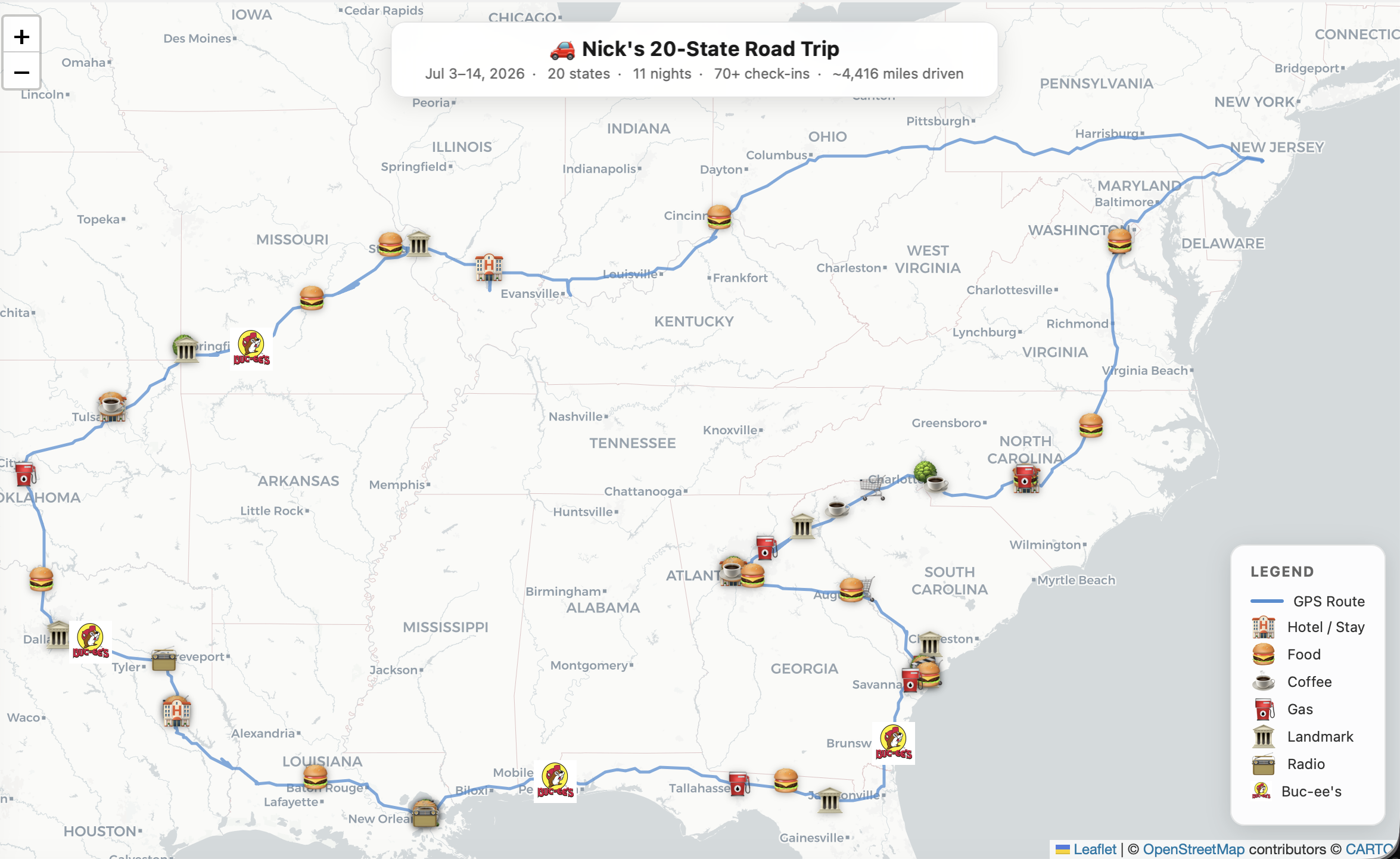
The purpose of our trip was not solely to find smooth jazz, I should make clear.
My mother, Barbara, my brother Bobby and our Airedale Terrier, Judy, all enjoy a good road trip. We had a lot of fun taking a trip into the Deep South last year, so we wondered: Could we take it to another level in 2026?
We departed July 3 from Tabernacle, N.J.

Going south in the month of July means no relief from summer heat. But the temperatures in the Mid-Atlantic that day were the hottest encountered on the entire trip, pushing well north of the century mark.
The only smooth jazz-related outlet along our trip down Interstate 95 was the creative use of 93.5 WTTZ(LP) in Baltimore, “The Maryland Transportation Channel.”
Operated by the Maryland Transit Administration, it is also simulcast on WMVK(LP) up I-95 in Perryville.
Should I find any irony in smooth jazz being relegated to a traffic information outlet?
Atlanta and smooth jazz: A perfect combo
After staying the night in Spring Lake, N.C., we traveled down to Atlanta to meet Bobby, who had flown down early to spend time with a friend.
Atlanta, in 2026, is something of a thriving town for jazz on the radio.
Several people I spoke with for my book project believe that the format’s roots lie in the “ATL.” On Labor Day weekend in 1978, then-WQXI(FM) launched a Sunday night program called “Jazz Flavors.”
Its first host was Fleetwood Gruver, who would go on to become the program director of WQCD(FM) New York, the former “CD 101.9.”
Russ Davis, who would also become an integral part of WQCD, co-created the show with Gruver and followed him as host.
In an interview with Radio & Records, Davis described Jazz Flavors as a mix of straight-ahead jazz with more contemporary-sounding material from the likes of Pat Metheny, Earl Klugh, Grover Washington Jr. and Dave Grusin.
The highly rated broadcast expanded to a nightly show in 1981, airing from 7 p.m. to midnight. Like many of the best things in life, there’s a YouTube compilation available that features Jazz Flavors episodes from 1987–1989.
Davis programmed and hosted the show until he joined CD 101.9 in 1988.
Today, Atlanta has two options that feature full-time jazz, with quite a bit of the smooth variety.
Clark Atlanta University runs 91.9 WCLK(FM), which features a very healthy amount of contemporary jazz.
Selections during the daily morning drive show, “Morning Jazz,” for example, include an hour with artists like Jonathan Fritzen, Blake Aaron, Down to the Bone, Alex Parchment, George Benson, Ryan La Valette and Lee Ritenour — all smooth jazz musicians you’d hear on SiriusXM Watercolors, for example.
Then there are WJZA(AM) and WNSY(FM), the full-time Atlanta smooth jazz simulcast.
Programmed by Art Terrell, who also hosts “Atlanta’s Smooth Jazz” in the afternoons, it relies on a combination of three signals to cover the “ATL”: daytime-only WJZA 1100, licensed to Hapeville) a 101.1 FM translator from Winder and 100.1 WNSY well to the north from Talking Rock.
For my book project, I talked with Ross Block, who programmed the successful 94.1 WSJT(FM) in Tampa when it was smooth jazz. Block now lives in suburban Atlanta.
“We’re a city built in a forest,” he told me. “The greenery in the spring, summer and fall with the hills and mountains in the backdrop — it’s just perfect for this music.”
We zigzagged across Georgia. There was nothing efficient about this trip, other than the fact that we fueled up at four different Buc-ee’s locations over the course of the journey.
In addition to cheaper gas, Buc-ee’s offers a slice of America at its finest at every stop.
We headed east on I-20 into Augusta, which also has a full-time smooth jazz outlet.
Licensed to Evans, 92.3 WAEG(FM) has run the format since 2007. It’s a Class A signal, but it covers Augusta nicely and reliably reaches across the Savannah River into South Carolina.
This time around, however, the station sounded rather neglected to me.
It runs programming from the satellite-fed Smooth Jazz Network, and in the hour-plus that I listened, I did not hear any local mentions or inserts.
While we did not hear it on our journey this time, I’d also like to give an honorable mention to 90.3 WSSB(FM) in Orangeburg, S.C. Operated by South Carolina State University, it features a healthy amount of smooth jazz in regular rotation.
A panhandle ride back in time
We spent three nights with family near Hilton Head, S.C.
Our next stop was New Orleans. There were two ways we could have traveled.
The slightly quicker route, according to Apple Maps, was to cut across central Georgia en route to Auburn, Ala., and then connect with I-85 and ultimately I-65, which would take us down to I-10, bypassing Florida.
The longer route was to simply take I-95 to Jacksonville, Fla., and then head westward on I-10.
I chose the latter, and I’ll admit, the smooth jazz radio highlight of the trip had a lot to do with my decision.
I’d argue that 106.3 WSBZ(FM), licensed to Miramar Beach, is the last “original” smooth jazz station — locally originated and following the same general formula heard on so many stations in the early aughts.
WSBZ is operated by Mark and Renee Carter. They applied for WSBZ’s construction permit in 1993 and its license was granted in 1996.
In 1999, the Carters created an event on the Emerald Coast that has become a flagship for the genre: the Seabreeze Jazz Festival. The show became so big that it moved to Panama City Beach, where it occupies Pier Park every April.
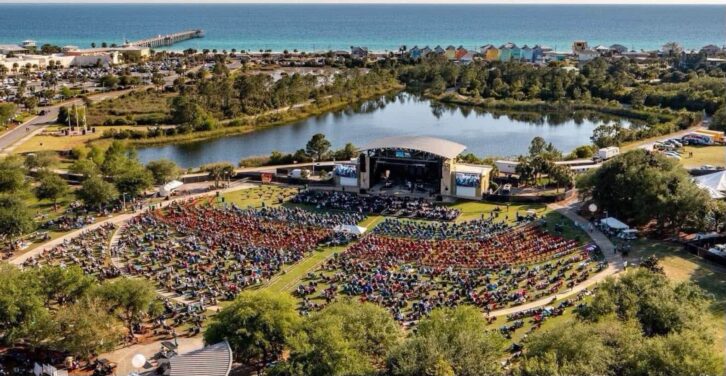
I started hearing “The Seabreeze” between Chipley and Cottondale along Interstate 10, and it lasted until just before East Milton — a nearly 100-mile stretch of highway. For a Class A signal, I was very impressed.
Listening to WSBZ was like taking a trip back to the year 2002.
The jingles, positioning and even the imaging voice of Bill Cochran — the voice heard on WNUA and many other smooth jazz stations during their heyday — brought me right back.
You can stream WSBZ anytime, but hearing it over the air was such a unique experience.
It was well worth the extra 24 minutes of travel time.
Life in the Big Easy
After stopping at our third Waffle House on the trip, we eventually made it to the Big Easy and stayed for two nights.
It’s a destination known for its jazz, and we sought to take full advantage.
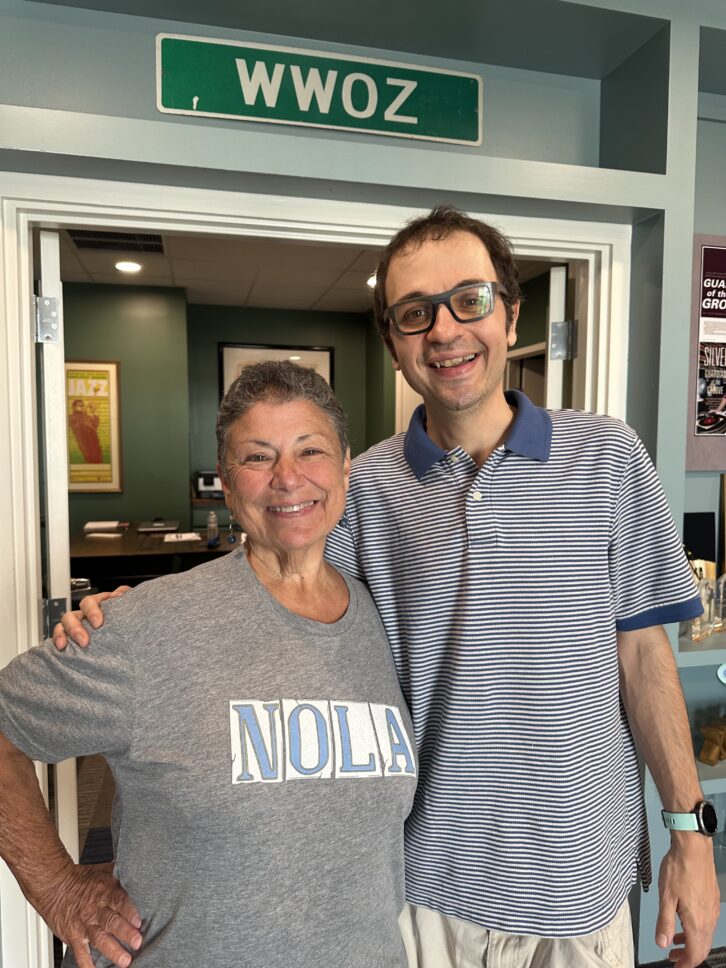
WWOZ(FM) 90.7 doesn’t necessarily feature smooth jazz, but in the city of New Orleans, it is an institution, a window into the vibrant music scene the city offers.
The staff at WWOZ, including Dave Ankers, Beth Utterback and Damond Jacob, went above and beyond to give me a wonderful tour of their fourth-floor Jackson Brewery studios in the French Quarter. The studio offers current radio amenities, but in an accessible way for the station’s many volunteer show hosts.
You’ll be reading more about my visit in Radio World soon.
The WWOZ “Livewire” feature, a daily feature that offers a rundown of where live music is happening each night in New Orleans, directed us to check out the Brass-A-Holics that evening at the “Jazz Playhouse.” It was a complete New Orleans experience.
There’s also an LPFM presence for smooth jazz in New Orleans: 95.3 WNOZ(LP).
I sampled it quite a bit and exchanged emails with Tony Gray, the station’s general manager.
Recently, the station hosted a New Orleans Jazz Getaway with keyboard artist Brian Culbertson.
“Brian told me, man, this is how smooth jazz radio used to sound!” Gray recalled.
Bittersweet grooves
Talaya Trigueros, I believe, is the one on-air personality who defines smooth jazz.
Some might say she had a hand in personally designing the format. Her longevity, which is remarkable, is just one of her many qualities.
She connected with this music at KRE(AM/FM) in Berkeley, Calif., in 1977, which ran a blend of jazz well ahead of its time before transitioning into KBLX and adopting the rising “Quiet Storm” format.

She moved south to Los Angeles in 1984, joining Lawrence Tanter’s version of the Quiet Storm at KUTE(FM).
KUTE changed formats in 1987, but her time there opened the door to Los Angeles’s KTWV(FM), “The Wave” — the new adult contemporary format (as the genre was then known in the industry) that everyone else would try to emulate.
Talaya spent 30 years in The Wave’s midday slot, even outlasting its transition away from smooth jazz.
In 2020, Talaya joined SiriusXM’s Watercolors, where she is heard weekdays from 3 p.m. to 9 p.m. Eastern.
If you listen to this aircheck of Talaya from the 1990s on KTWV, she doesn’t sound a day different today.
Somewhere between Elton and Ragley — in portions of western Louisiana I vaguely recalled from listening for distant FM radio signals during E-skip openings to that region from New Jersey — we were traveling on U.S. Route 190 toward Texas.
I had Watercolors playing, and Talaya began her July 11 shift solemnly with some sad news: Rodney Franklin, the pianist and composer, had died too soon at the age of 67.
Unfortunately, it’s a type of news that has become far too familiar in the smooth jazz world lately.
But it was also an occasion for Talaya to play my favorite song from Franklin. It brought me right back to CD 101.9 in the early-to-mid ’90s, which often featured his April 1980 track that sparked a dance craze in the U.K., “The Freeze.”
The track is simply called “The Groove.”
Texas two-stepping
We spent a night in East Texas in Nacogdoches.
There was no smooth jazz to be found there, but Nacogdoches was one of those towns that made all the miles on a road trip feel worth the hassle — from its cool Main Street to the kind of barbecue you simply can’t find in Jersey.
Part of the reason we stopped in East Texas was to visit a museum that should be high on every radio geek’s list: the Texas Broadcast History Museum.
It was worth the jaunt up to Kilgore, and I’ll share more about my visit in a separate story.
I will say for now that the tour Warren Willard gave me was a total highlight. With everything from studios and cameras to vintage TV sets and radios, there’s something in Kilgore for anyone interested in broadcasting.
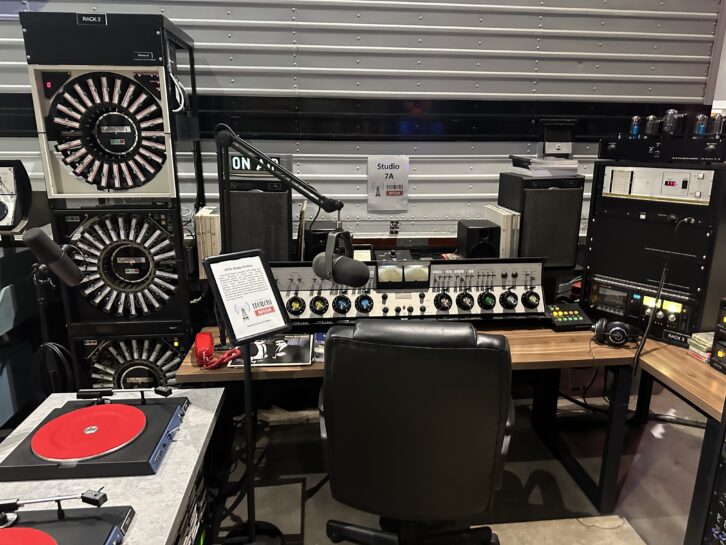
We jetted through Dallas, itself once a hotbed for smooth jazz through KOAI, and headed northward into Oklahoma.
One major regret as we headed north through Oklahoma City from I-35 over to I-44 was missing out on 97.7 KCYI(LP), “97.7 The City,” a 10-watt ERP LPFM transmitting from Edmond. I simply forgot to tune it in.
It’s an ode to Oklahoma City’s former 1990s smooth jazz outlet, “The City,” which originally aired on that same frequency before moving to 97.9 under the call sign KTNT.
I’m unclear how well the signal gets out, sandwiched on the same channel with another LPFM in Midwest City, as well as a translator.
KCYI makes an online stream available. Regardless, I won’t make the mistake next time I’m through OKC.
If only there was an app that could have alerted me to KCYI’s presence.
The state also was the land of the gnarliest weather on the trip — a rather blinding downpour late Saturday evening that lasted most of the way from Oklahoma City to Tulsa.
For the seasoned Oklahoman, though, I’m sure it wouldn’t even warrant a blink of an eye.
A sound in “The Lou”
Interstate 44 took us through Missouri — though we made a diversion to the Tri-State Marker near Joplin to ensure I could add Kansas to my state count.
There are two noncommercial outlets in the Show Me State that offer smooth jazz. Jefferson City’s 88.9 KJLU(FM), operated by Lincoln University, is all-smooth jazz during the week. We rode through on Sunday, so I could not sample its mix, but KJLU has been featuring smooth jazz in its playlist since the 1990s.
The last smooth jazz outlet we encountered was in the home of the Gateway Arch: St. Louis.
Southern Illinois University Edwardsville operates 88.7 WSIE(FM), “The Sound,” a fine representation of the format today.
It took until the I-270/I-44 intersection west of St. Louis to catch a reliable signal from WSIE, as its antenna is near Edwardsville and runs a fairly sharp directional pattern to the west.
But WSIE’s signal stayed with us all the way to our destination that evening in Mt. Vernon, Ill., where I-64 and I-57 meet.
Under the leadership of Jason Church, the station offers a wide variety of contemporary jazz, with plenty of classic jazz mixed in as well.
The last day of our trip entailed the most driving: Mount Vernon all the way back home to New Jersey by way of Illinois, Indiana, Kentucky, Ohio, West Virginia and Pennsylvania.
We arrived home, if you’re keeping score: July 14, at just after 5:20 a.m.
What I learned
It would have been a blast to do this trip about 25 years ago.
Pages of notes might have ensued from all the smooth jazz stations along the way. I counted eight such stations during our marathon journey, not a great ratio for the 4,500 miles covered.
But I also appreciate the fact that there are still FM outlets playing the music in 2026, and the stations that do, seem to understand the importance of serving their community. I think the format is a wonderful fit for a noncommercial outlet these days.
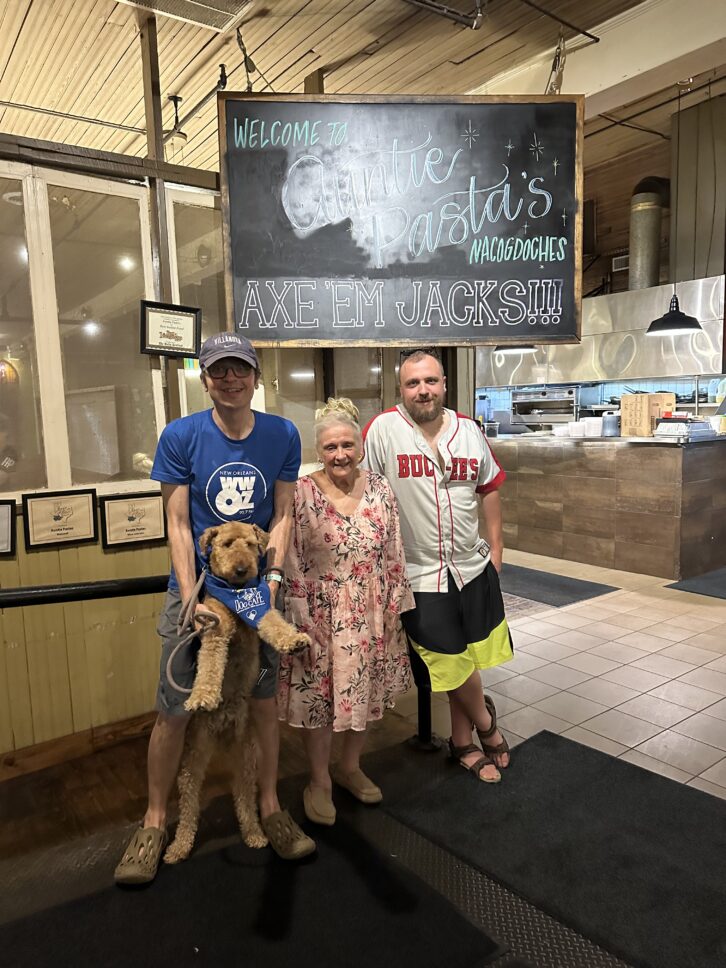
Overall, it was a thrill to travel alongside my mother, and my brother, with Judy in tow, grabbing several states I had never stepped foot in prior.
To me, the summer is a great reminder:
There’s nothing like a great American roadtrip.
Comment on this or any article. Email [email protected].