In this letter to the editor, the author comments on Ira Wilner’s reader letter, “For DX With SDRs, It’s Not the Same As It Was.” Radio World welcomes letters to the editor on this or any story. Email [email protected].
Ira Wilner completely misses the point.
Software Defined Radios haven’t necessarily ruined DX’ing, although they have certainly changed it in some circumstances.
But let’s rewind 65 years ago — proponents of the AM method decried the use of single-sideband modulation as being the end of amateur radio. Not only has amateur radio survived, it has become more effective as a result, thanks in part to SSB.
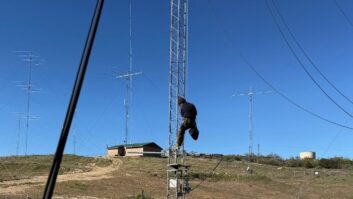
Wilner calls us lazy for not wanting to travel vast distances to operate a radio. I run radios remotely in Anza, Calif., (WA6TQT) and Ramona, Calif., (KN6NBT), saving me a 1,000-mile round-trip drive or Amtrak ride each weekend that I want to participate in radiosport contests using antenna farms I can only dream of in the San Francisco Bay area.
As an avid pirate radio listener, the K3FEF WebSDR enables me to hear those stations — mostly low power on the east coast — that are not accessible on the left coast because we are still in daylight when many of those stations are operating.
In California, we have been encountering a number of non-amateur beacons invading the 80/40 meter bands lately. SDRs like KFS and UTAH enable us to triangulate the directions these beacons are coming from. At 3327.4 kHz, just below CHU on 3330 kHz, there is a “DW” beacon that has been running for years. Only using the KFS SDR am I able to even hear it; other stations around California and SDR radios are unable to hear it.
[Related: “The World Is at Your Mouse Click”]
During radio contests, we use internet spots enabling us to tune our radio to the frequency of stations that are important to us. Using an SDR, I can listen to my transmitted signal to understand how I sound to other stations and where around the globe I am being heard.
On Monday and Thursday evenings I join friends on the Redwood Radio Roundtable on 3380 kHz. I often run remote from Ramona, but atmospheric noise there sometimes makes legible copy a challenge. Because most of the RRR members can be heard on the KFS SDR, I keep that as a backup receive option.
I still use a classic ICOM R-71 receiver as well as an ICOM 7000 for SWL’ing. I augment these with a pair of older Yaesu transceivers, and access to a bunch of WebSDRs all feeding to a host of vintage equalizers and audio filters, massaging the audio in ways that SDR-based DSP circuits cannot do.
In summary, DX’ing is about listening to stations distant from me, regardless of what kind of receiving apparatus is actually used to accomplish that goal. The fascination of DX’ing is here to stay, no matter how we go about it.
I have written extensively about using SDRs at my blog.
— Ron Fitch, WQ6X, president Amateur Radio Club of Alameda, Calif.
[Check Out More Letters at Radio World’s Reader’s Forum Section]