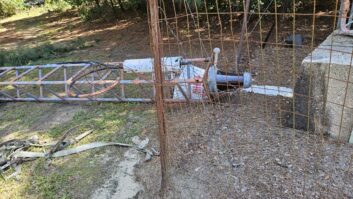
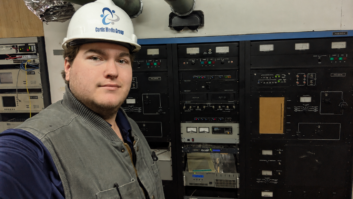
As Tropical Depression Chantal swept through the Carolinas in early July, one AM radio station in Chapel Hill, N.C., experienced severe flooding to its transmitter site.
Branded as 97.9 The Hill, WCHL(AM) broadcasts on 1360 kHz, formerly with 5 kW during the day and 1 kW at night, covering roughly 25 miles. The locally-owned commercial station serves the Chapel Hill community — home of the University of North Carolina at Chapel Hill — in addition to the neighboring town of Carrboro and the greater Orange County area. The station also has an FM translator with an ERP of 250 watts.
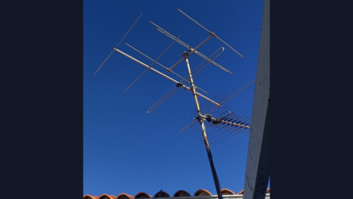
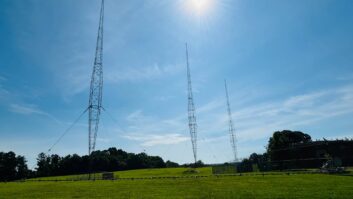
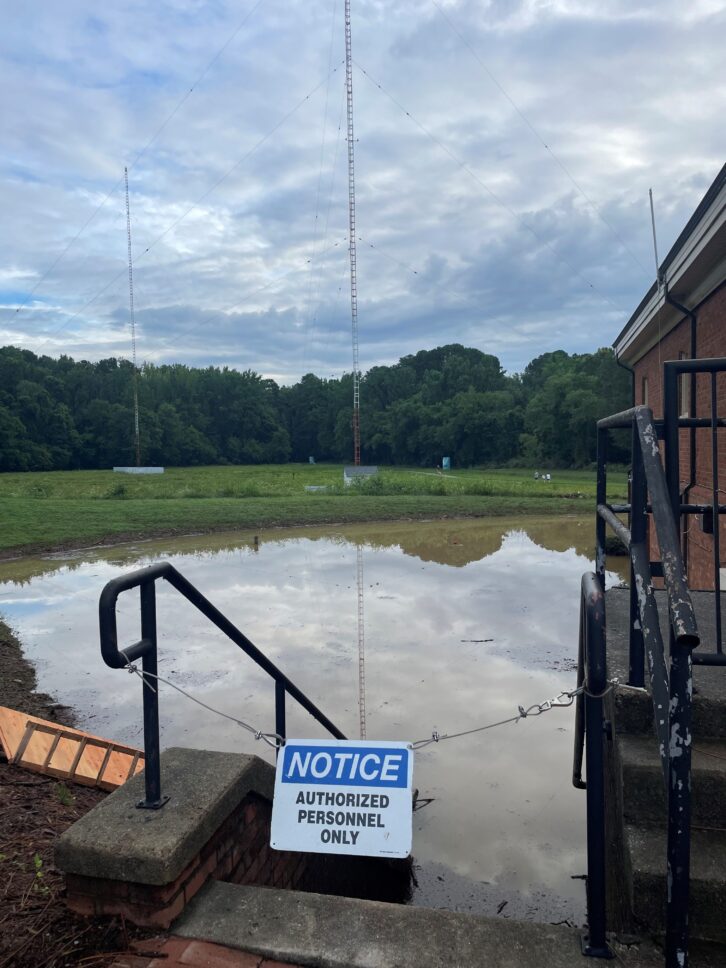
WCHL’s AM transmitter site — which consists of rented building space and two AM antennas — has sat in a field along the Lower Booker Creek Trail in Chapel Hill since the early 70s.
As a result of a flood that occurred in 2000, where WCHL had 24 inches worth of water in its transmitter room, a man-made berm was installed between the tower field and the building. Because the transmitter room is located in the basement of what is now a dentist’s office, a pump was put in place as well as generator to run the pump if there was no power at the site.
The berm acts as a raised barrier, which had proved very effective in mitigating flooding over the last two-plus decades; however, when water rose quickly enough to breach the berm, five feet of water ended up pooling in the basement.
Aubrey Williams, WCHL’s general manager, said the damage was significant.
“All told, it looks like we probably lost about $150,000 worth of equipment,” said Williams. “Right now we are looking through our options, and I think that we can feasibly get back online in a capacity that we feel good and confident about for somewhere in the vicinity of $40–50,000.”
The flooding was unprecedented for the Chapel Hill community. Since 1891, there were only three instances when the town got more than six inches of rain in a 24-hour span: Hurricane Fran in 1996, Hurricane Floyd in 1999 and Hurricane Florence in 2018. The Southeast Regional Climate Center reported that Chapel Hill got roughly eight inches. Overall, the preliminary property damage estimates in Chapel Hill from the floods are around $27 million.
[Related: “Here’s How Broadcasters Are Aiding Texas Flood Recovery Efforts“]
While the transmitter building should have been protected by the berm, the historic amount of rainfall proved to be too much, and the standing water destroyed nearly everything — including two 5,000-watt transmitters.
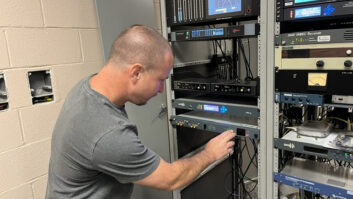
“This was different from 2000 where we were dealing with 1970s and 80s vintage tube transmitters, which are fairly simple beasts,” said WCHL Chief Engineer Jim Davis. “We’re now dealing with solid-state transmitters with all sorts of surface mount components on circuit boards that were under water. So the decision was made that, because the landlord needed us to get out of there, we were basically going to scrap everything.”
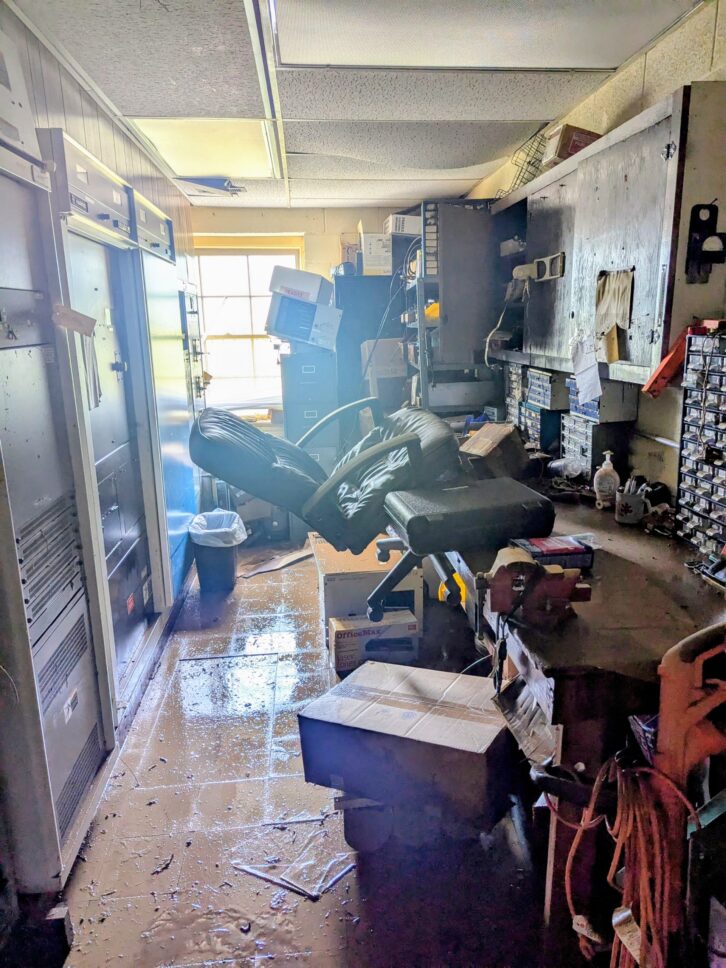
Since the flooding on July 6, all the damaged equipment has since been moved out of the basement … which wasn’t an easy task considering the transmitter building was at the bottom of a hill thanks to the berm.
“You should have seen this transmitter. It was humongous,” said Williams, speaking to the equipment’s mass exodus from the building. “It was taller than me and three times as wide. It took up most of the room.”
Davis said that “humungous” transmitter was a Harris DAX-5 from 2004 and “a very, very satisfactory transmitter at that.” He said: “for going on 21 years, it gave us very little trouble. I’m sorry to see it go.”

He continued: “We are now running with a small backup transmitter at a power of four watts into the daytime antenna, and we have filed an STA with the FCC to continue operating like this while we come to a conclusion as to how we’re going to rebuild the AM and if we’re going to rebuild the AM long term.”
When it comes to natural disasters hitting radio stations, Davis said “this is not my first radio.” Having been with WCHL since 1967, he is also the interim chief engineer for the Radio One cluster in Raleigh. In times of crisis — whether it be flooding, fire or otherwise — Davis said having support from the engineering community is everything.
“It’s a matter of people pulling together, and it’s mostly a matter of having people that you can call on when you need help,” he said. Fortunately, Davis had more than a little help in the form of electrician Steve Guth and fellow local radio engineers Gary Saber and Robby Delius.

When asked about Davis’ work to restore station operations, Williams said: “Jim Davis is my hero. Honestly, I don’t know what I would do without him. It’s been really hot here. It’s been 90-plus degrees and 100 percent humidity — just brutal conditions — and Jim has been out on site assessing and reporting. It has not been easy work.”
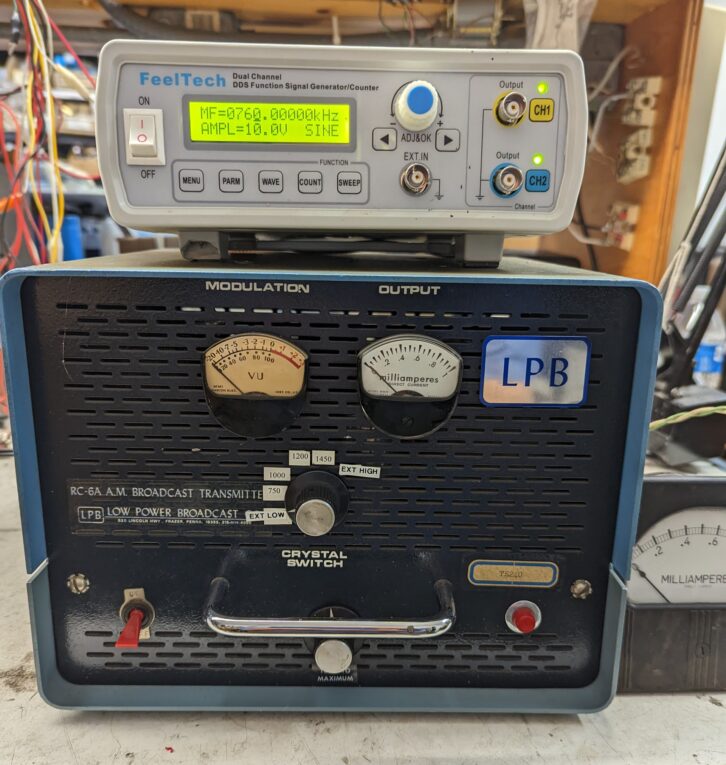
While WCHL’s FM translator continues its normal operations, to comply with FCC Rules the station’s AM signal is now running off a modified LPB RC-6A four-watt transmitter that Davis got on eBay years ago.
“It is frequency agile, I can put it anywhere from 540 to 1600 kilohertz and it puts out a decent sounding signal,” said Davis. “It’s an old low-power broadcast transmitter that was used for carrier current college stations. And so, it being a tube transmitter, it’s also very forgiving of what type of antenna it runs into. Luckily, our day antenna system with a little drying out provided a decent match to the transmitter.”
[Related: “Connecting Currents on Campus“]
Looking ahead, Davis notes that WCHL will have to substantially slim down its operations.
“Right now my next step is, I have a purpose-built solid-state transmitter which will boost the power to about 15 watts,” he said. “Being a solid-state transmitter, it’ll sound a little better. And we’re looking at our STA. We’re looking at probably dropping the nighttime directional operation because of the rather extensive damage to all the facing equipment.”

Located just a half mile away, the radio station’s studios and office were unharmed, as was the FM tower off of Jones Ferry Road. Williams said the station’s broadcast was uninterrupted despite the AM frequency going down — continuing its streaming operations and coverage on Chapelboro.com throughout the flooding and its aftermath.
Williams said WCHL hasn’t been overly communicative about the damage it sustained because the station’s number one priority is to fulfill its role as a public service.
“We are very much in service to this community, and while we have sustained damage ourselves, we’re operational, all of our staff is safe and their families are okay, and we have a safe place to come to work and to do our jobs every day,” she said.
“There are people in our community who are just really suffering and have lost a lot. And so we have tried to shine the light on those in need more than on ourselves.”
The station has launched a GoFundMe page with a goal of $25,000 to help rebuild. In the last week, the campaign has raised approximately $3,500.
“We’re so grateful for the support of our listeners and this incredible community as we work to get 1360 AM back on the air,” said Williams.
We still need your help!
Our AM broadcasting equipment was destroyed by Chantal’s flooding, and we need your help to replace it.
Consider donating at the link below. Support local news and radio!https://t.co/OyYTuojQva
— WCHL & Chapelboro (@WCHLChapelboro) July 29, 2025
Editor’s note: The author used to be assistant news director at WCHL.