The Federal Communications Commission permits the use of HD Radio subchannels to feed fill-in translators. But the FCC has historically only permitted noncommercial FM stations to broadcast programming sources from other noncom stations, including those subchannels.
One religious broadcaster in Colorado is trying to convince the commission otherwise.
Educational Communications of Colorado Springs, Colo., which operates the religious KTLF Radio Network including 90.5 KTLF(FM) “The Light” in Colorado Springs, believes that if a HD Radio subchannel itself is not airing commercials, then it is a suitable primary programming source.
Thus far, the FCC remains steadfast in keeping to its policy.
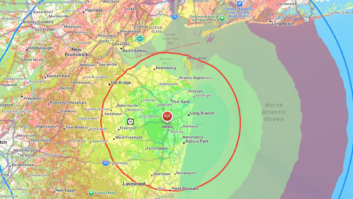
In June, KTLF applied for a waiver for its 90.7 translator, licensed to Littleton, to change its programming source to relay 99.5 KQMT(HD3). Currently, the translator receives its programming from 91.1 KLDV(FM) in Morrison, a K-Love affiliate.
On June 26, via email, the FCC denied KTLF’s waiver request.
KTLF has since filed a petition for reconsideration to the commission. The outlet felt it was owed more of an explanation by the Audio Division as to the reason behind the denial.
It also argued that by broadcasting a subchannel that airs noncommercial programming, regardless of whether the HD Radio station itself is in the commercial band, the relay fits the spirit of FCC’s rules.
The waiver and subsequent petition was first reported by Inside Radio.
Request denied

In the FCC’s ruling, the Audio Division wrote simply to KTLF: “We have denied this request in the past and we are in agreement that this will not change.”
KTLF’s petition, dated July 15, contended that such a waiver denial required more specifics from the commission.
Because there was no “reasoned analysis,” the religious outlet argued that the FCC ruling was in violation of the Administrative Procedure Act.
(Read KTLF’s petition for reconsideration.)
The petition from KTLF emphasized that the purpose of the prohibition of a noncom facility to carry programming from a commercial facility “would be inconsistent with the realities of the situation.”
It also said that the FCC could put a grant on the translator license requiring that it only broadcast noncom programming, even if it is from a commercial source, so long as the programming received was noncommercial.
Public benefit
In its initial waiver request, KTLF explained that because the fill-in translator currently relays K-Love outlet KLDV, the change would provide programming by the licensee of the translator instead.
KTLF also said that the change would better fill-in poorly covered arrears by the station’s originating NCE signal of KTLF. Additionally, it said a benefit would be that the station’s programming costs would be lowered.
“Proceeding in this manner would preserve the spirit and intent of the rules, as well as serve the public interest to allow ECCS to carry forward with programming on K214FB (the translator’s previous callsign) of its choice, consistent with the rules,” KTLF wrote in the petition.
[Do you receive the Radio World SmartBrief newsletter each weekday morning? We invite you to sign up here.]