We’re a little over two months from the reserved-band noncommercial FM translator filing window, and the FCC’s Media Bureau issued guidance Thursday that LPFM applicants, in particular, will likely welcome.
In the updated guidance that we break down below, the Media Bureau clarified the principal community contour for determining diversity of ownership points. Applicants who are the proposed assignee or transferee of the station in question for which the NCE translator wishes to relay may also apply in the filing window.
Finally, translators that aim to rebroadcast NCE or LPFM stations in a time-share agreement may also file in the November window.
The noncommercial FM translator filing window opens on Nov. 4 at 12:01 a.m. and closes at 6 p.m. on Nov. 17. Form 2100, Schedule 349 for filing an FM translator construction permit is now available for data entry in the FCC’s license and management system.
According to the commission, estimated time for completing the form is between 60 and 90 minutes, so plan accordingly. The Media Bureau offers guidance on how to use the form.
Point system
In the event mutually exclusive applications proceed to a point system evaluation, the FCC awards a maximum of seven merit points based on four criteria.
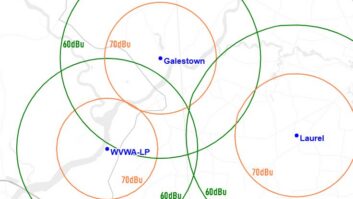
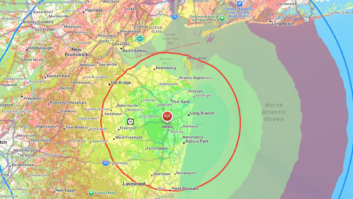
The Media Bureau clarified that for determining the two available “diversity of ownership” points, the principal community contour for full-service commercial FM, NCE FM and LPFM stations is the 70 dBu contour. The bureau acknowledged it erroneously listed the contour as 60 dBu its June public notice announcing the filing window, which was pointed out by REC Networks.
The problem with using 60 dBu contour for LPFM stations, in particular, is that, to qualify for a translator in the first place, an LPFM must have overlap with the 60 dBu contour of its parent LPFM station to be permissible. That’s not longer an issue after the Thursday public notice.
“REC welcomes these clarifications and appreciates the work of the Media Bureau staff on working on the issues and clarifying the diversity point rule as it was originally intended back in 2000,” Michi Bradley wrote on REC’s Substack.
As a result, to qualify for the two diversity points, an NCE translator applicant must certify that the 60 dBu contour of its proposed translator does not overlap with the 70 dBu contour principal community contour of any full-service or LPFM station, or the 60 dBu contour of any non-fill-in translator in which it holds an attributable interest. That restriction also includes overlap with the 5 m/V contour of any attributable AM station.
Additionally, to qualify for three points as an “established local applicant,” an entity must have been continuously local and established in the community for at least two years prior to filing.
Because the FM translator service carries no formal community of license coverage requirement, the bureau addressed requests to define local eligibility. It clarified Thursday that an applicant must propose to provide at least a 60 dBu signal to some portion of its proposed community of license to qualify for localism points.
Existing applicants and timeshares
FCC rules require each applicant in the upcoming window to be the licensee or permittee of the existing NCE FM, noncommercial AM or LPFM station the translator intends to rebroadcast.
The Media Bureau clarified Thursday that a proposed assignee or transferee of a primary station may also file for a translator, provided the underlying assignment or transfer application is already on file with the FCC when the translator application is submitted. The applicant must also request a rule waiver. Translator filings submitted under these conditions will count toward the proposed assignee’s total application limit.
Finally, NCE or LPFM stations operating under time-sharing agreements may file applications in the upcoming window. Translators authorized under these filings may only operate during the specific time slot granted to the primary station under the agreement.
Time-sharing permittees or licensees can agree to time-share a proposed FM translator station, provided they file separate applications, the Media Bureau said.
(Read the FCC’s public notice on the reserved band FM translator station window.)