Sometime within the last two years, according to representatives from the National Association of Broadcasters and Xperi, the Federal Communications Commission changed how it interprets the maximum digital power FM stations are permitted to broadcast.
Representatives from both organizations met with the FCC Media Bureau on Oct. 29 to seek clarification.
Jeff Detweiler and Paul Peyla of Xperi, Ashruf El-Dinary representing the National Radio Systems Committee and David Layer and Larry Walke from NAB met with Media Bureau officials to discuss whether FM hybrid digital broadcasts are truly capped at a total maximum power of –10 dBc.
Xperi is the parent company to the HD Radio technology, the authorized U.S. hybrid digital radio standard.
(View NAB and Xperi’s presentation for FCC Media Bureau officials.)
According to a Nov. 2 ex parte filing, NAB and Xperi described what they characterized as a “seeming change” in 2025 that limits the ability of certain HD Radio stations to get the most out of their digital operations.
HD Radio service modes
First, a primer: If a station is transmitting its HD Radio digital sidebands at –10 dBc, they are operating at 10 decibels below the analog FM carrier’s ERP — or 10%. Originally, –20 dBc was the digital power limit when the HD Radio technology was first launched, which is 1% of the analog ERP.
But HD Radio stations operate in different service modes. That’s the heart of the matter for NAB and Xperi. Most stations in the U.S. operate in standard MP1 mode, which provides 96 kbps of bandwidth across 10 frequency partitions per sideband.
Other stations use extended modes such as MP3, offering 120 kbps, or MP11. The extended modes add digital subcarriers closer to the host analog carrier. We’ve covered a few such implementations.
For more than a decade, according to NAB and Xperi, the FCC based digital power grants on NRSC guidelines. Under Table 4-4 of the NRSC standard, shown below, stations authorized for –10 dBc operation that used the MP3 mode were permitted a total digital sideband ERP of –9.2 dBc — a slightly greater power level.
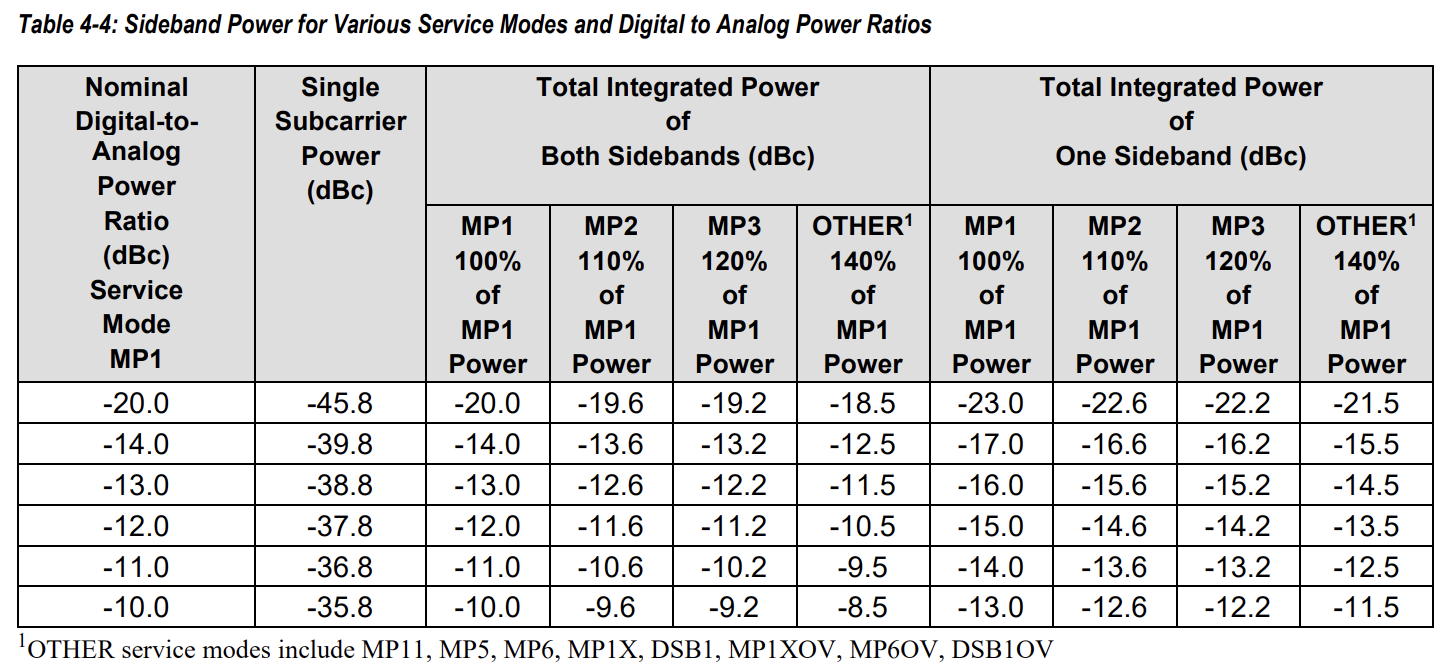
NAB and Xperi said that the additional power is so that the added subcarriers did not suppress the power of the primary carriers.
But in a February 2025 grant letter for increased digital power to KBSU(FM) in Boise, Idaho that the parties used as an example in their presentation, the commission took a different stance.
“If the station operates using the extended hybrid modes, the licensee must adjust the total digital sideband ERP in accordance with our rules. We note that the total digital sideband ERP may never exceed 1.75 kW (–10 dBc),” the commission stated in the letter.
NAB and Xperi argued that operating at the higher total levels specified in the NRSC table does not cause harmful interference to first-adjacent analog stations.
According to the NAB and Xperi presentation, because extended subcarriers are placed inward toward the station’s own analog signal, they sit farther from adjacent channels and — the parties feel — are attenuated by receiver IF filters.
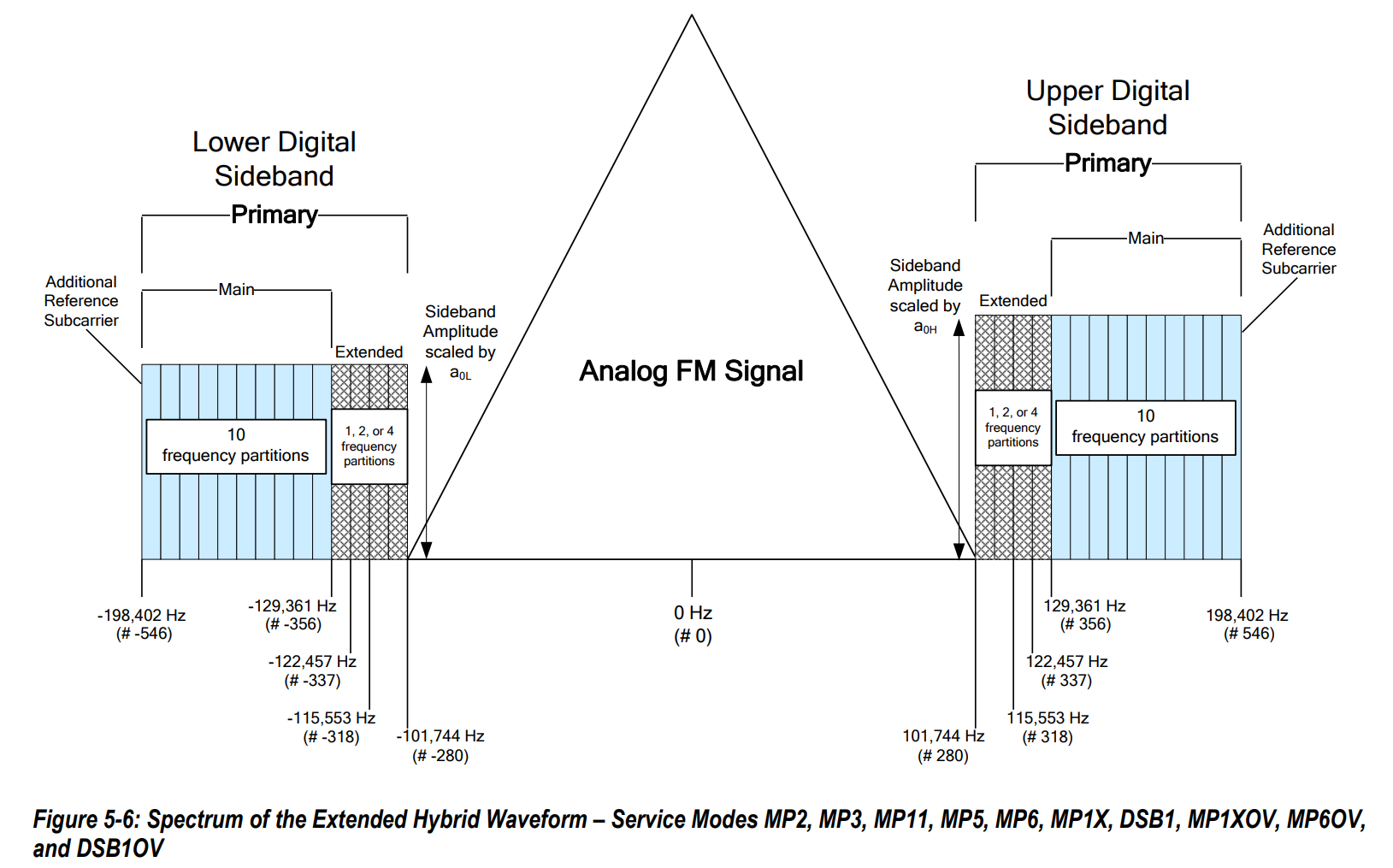
The joint presentation warned that holding total digital power constant while adding subcarriers forces a reduction in individual subcarrier power. It could, the parties explained, result in reduced digital coverage and more frequent blending from digital to analog in fringe areas.
In 2024, NAB and Xperi petitioned the commission to update its rules to reflect this system design and consistency with the pre-2025 grant letters.
Aviation update
At the meeting, Layer also provided an update on discussions between commercial broadcasters and aviation stakeholders studying potential HD Radio signal impact on the Aeronautical Radio Navigation Spectrum.
In the past, the Air Line Pilots Association International raised concerns about possible interference to navigation systems used by pilots from 108.0 to 117.975 MHz.
As a result, stations from 107 MHz and above must seek experimental authorization to transmit IBOC signals with asymmetric power levels.
According to NAB, aviation representatives have completed compatibility testing and plan to meet with NAB and Xperi in the coming month to review the results.