This is one in a series about global trends in radio.
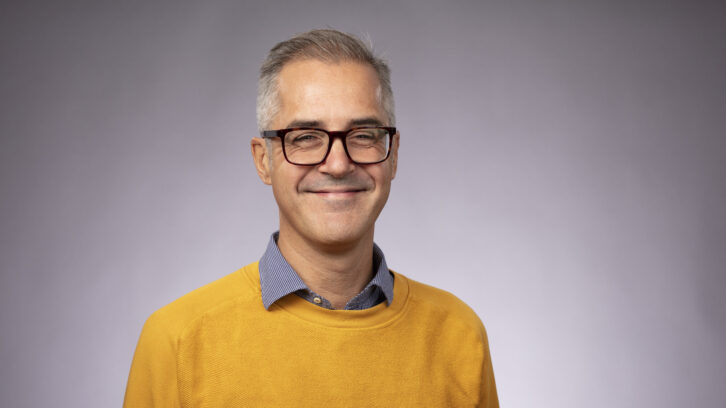
Tomas Granryd is head of digital partnerships for Sveriges Radio based in Stockholm, and vice-chair of Radio Ready. He answered our questions in June.
Radio World: What is Sveriges Radio and what is your role there?
Tomas Granryd: It is Sweden’s public service radio broadcaster. We provide independent journalism, culture, music, entertainment and companionship for audiences across Sweden.
Radio remains very strong in Sweden. Sveriges Radio reaches more than 7 million people in an average week and has a share of listening of around three quarters of the Swedish radio market.
I work with partnerships at Sveriges Radio, with a particular focus on how our audio remains available and easy to use in new listening environments, especially in the connected car.
I also co-coordinating Radio Ready for Connected Cars, a European collaboration between public service and commercial broadcasters. Its aim is simple and practical: to help make sure that radio, broadcaster apps and voice-controlled access all work well for listeners in modern car infotainment systems — easy to find, easy to use and clearly connected to the broadcaster.
RW: What do you consider key recent advancements for radio technology globally?
Granryd: I still believe broadcast radio has a strong future for many years to come. Its biggest advantage is still its simplicity. Broadcast radio has very low thresholds for listening: It is free at the point of use, does not require a log-in, does not depend on a mobile subscription, does not track you and collect a lot of data, and does not ask the listener to make a lot of choices before the experience starts.
That matters more than we sometimes admit. A large part of radio listening is ritualized. It is connected to time, place and habit: the morning routine, the kitchen, the workplace, the car. In those moments, the listener does not always want to search, select and optimize. They want to be connected to a trusted flow that someone else has curated.
Globally, DAB+ is important in several European markets, especially where governments, broadcasters and the car industry have aligned around it. Norway and Switzerland are clear examples of countries moving away from FM for national services. At the same time, FM remains highly relevant in many markets because it still delivers reach, resilience and simplicity.
IP distribution is clearly where much of the growth is, through apps, smart speakers, connected cars and on-demand listening. Over time, IP will carry more and more of the audio experience — there is no doubt about that. But that does not make broadcast irrelevant overnight.
The most interesting development is how the strengths of both can be combined: IP as the expanding future environment for audio, and broadcast as a simple, robust and trusted way to reach listeners at scale.
I also believe voice control will become much more important. So far, the major technology companies have often made it too complicated, focusing on large ecosystems while underdelivering on the basic user need: “I ask for something, and the right thing starts.” If the next phase of voice and AI gets that right, the interface may become much simpler: You ask, and you get the audio you meant, from the source you trust.
RW: Describe the broadcast infrastructure in Sweden, and how it is changing.
Granryd: Sweden is still primarily an FM country for radio, and I expect that to remain the case in the near future. Commercial radio is looking to expand on DAB+, and Sveriges Radio has DAB+ transmissions in some areas, but there are currently no strong signals that Sweden is about to move into a large-scale DAB+ transition and move away from FM comparable to Norway.
That means FM continues to carry a very important part of the public service mission in Sweden. It is robust, widely available, easy to use and especially important in the car and in situations where public information matters. In a more uncertain geopolitical environment, broadcasters and societies also need systems that are resilient and can always reach the public. In that respect, FM is still very hard to beat today.
In Sweden, the main change is happening around how people find and use radio, rather than in the broadcast network itself. Radio is increasingly part of a wider digital audio environment: apps, podcasts, streaming — all served on different interfaces like connected car dashboards, voice assistants and smart devices.
So the key question is not only “FM or DAB?” It is also: How do we connect the strength of broadcast with the richness of digital services?
RW: As you mentioned, a couple of countries have tried to move away from FM. Will this trend expand?
Granryd: It may accelerate in some markets, but I do not think it will happen everywhere in the same way.
Many countries are looking at DAB+ or have tested it. Sweden is one of them. But there is a very big difference between testing DAB+ and deciding to switch off FM. Norway’s transition required long-term political commitment, industry alignment, coverage, receiver availability, public communication and a willingness to manage all the practical consequences for listeners. That is a major step.
So yes, I think more countries will move further into digital broadcast. But I do not think FM switch-off is simply a technology decision. It is a societal decision. It requires the state, broadcasters, network operators, manufacturers, retailers and audiences to move together. Without that alignment, FM will remain highly relevant.
RW: Why are hybrid delivery platforms important?
Granryd: Hybrid delivery allows us to stop thinking in old silos. The listener does not care whether a service reaches them through FM, DAB, IP, an app or voice. They care that it works, that it is easy to find, and that it comes from the source they intended.
If we define hybrid delivery as the connection between broadcast and IP, it opens up an area that is still not fully explored. Broadcast gives us reach, resilience and simplicity. IP gives us metadata, visuals, search, personalization, catch-up, recommendations, podcasts and deeper engagement. Together, they can create a richer and more seamless radio experience.
One example is the work in Radio Ready for Connected Cars. The initiative looks at the connected car experience as a whole: radio, broadcaster apps and voice-controlled access.
A core idea is that the radio experience in the car should not be a dead end. If the listener is listening to an FM or DAB station, the car interface should be able to guide them naturally to the broadcaster’s app or preferred digital destination.
In simple terms, broadcast can become the front door to more content the listener already loves. It can help audiences discover podcasts, catch-up, local news, program pages and other digital services from the broadcaster. You could describe it as a kind of “plus menu” built on the trust and simplicity of radio.
RW: Will broadcasting remain relevant in the long term?
Granryd: Broadcasting will remain relevant for a number of years, but in the very long term it may of course disappear as a technical distribution form in some markets. The important thing is to separate the technology from the behavior it has created.
What I believe in very strongly is the ritual of radio, today mainly defined through broadcast — the fact that someone has curated a flow for you. The fact that you do not have to make detailed choices all the time. The fact that radio can start without effort — for example when you start the car.
Of course, AI may become very good at creating personalized flows in the future. It may be able to understand context, mood and habit in ways that feel surprisingly natural. But today, I still think human curation and the human presenter beat algorithms and AI-generated flows in many listening situations. There is something powerful in knowing that a real person, with judgement, timing and presence, is guiding the experience.
Maybe that will remain important because we seek human connection. Maybe technology will change that more than we expect. We will see. But for now, the trusted voice, the live moment and the shared public experience still play a very important role in people’s daily rhythm.
That behavior has a future. It may be carried by FM, DAB, IP or something else. But the underlying public need remains: Sometimes I want to choose exactly what I want; sometimes I want someone I trust to serve me something relevant, live and human.
Broadcast is still our lowest-friction form of listening. Digital should not simply copy FM. It should make live audio more useful. The future is not linear vs. on-demand. It is a connected audio experience where each form does what it is best at.
RW: Other thoughts?
Granryd: One point I think is underestimated is the gap between how some technology companies think audiences behave and how radio audiences actually behave.
A lot of digital product thinking starts from the assumption that the best experience is always personal, chosen and optimized by the individual. That is true in many situations, but not in all.
The personal bubble is not always the listener’s preference. There is also a deep human attraction in the shared, the simultaneous and the curated.
This may be less obvious in video, where individual choice has become dominant. But in audio, it remains extremely strong. Radio works because it can be personal without being personalized. It can feel intimate while still being shared. It can be in the background and suddenly become important. It can be effortless and still meaningful.
The second point is trust. As AI becomes part of search, discovery and audio interfaces, broadcasters need to make sure trusted sources do not disappear behind generic answers, unknown sources or platform-driven recommendations. If a listener asks for Sveriges Radio, BBC, Radio France or another broadcaster, they should get that broadcaster’s own service or chosen source — not an imitation, not an unrelated third party, and not a generic AI substitute.
This is an excerpt from the free ebook “Global Radio Update.”