Large radio groups have historically been nearly unanimous in their support of relaxing — or doing away with entirely — the ownership caps that limit the number of stations a single company can own in a single market.
But now some small-market broadcasters are also joining in with their endorsement.
In comments filed during the commission’s review of the current ownership review cycle, five ownership groups said that the increased flexibility would allow smaller radio companies to pool resources, bolster emergency operations and invest in more local content.
[Related: “Seven Radio Companies to the FCC: Lift Ownership Caps”]
They also cited increased competition in the marketplace from a plethora of audio and digital services, such as Pandora, Spotify, Sirius XM, YouTube, Alphabet, Meta, Apple and Amazon; none of which existed in their current form when the Local Radio Ownership Rule was enacted decades ago.
As the list of competitors has grown into the audio space once dominated by radio broadcasters, they have also siphoned off advertising revenue that once belonged exclusively to broadcast radio, the groups said.
Unshackled
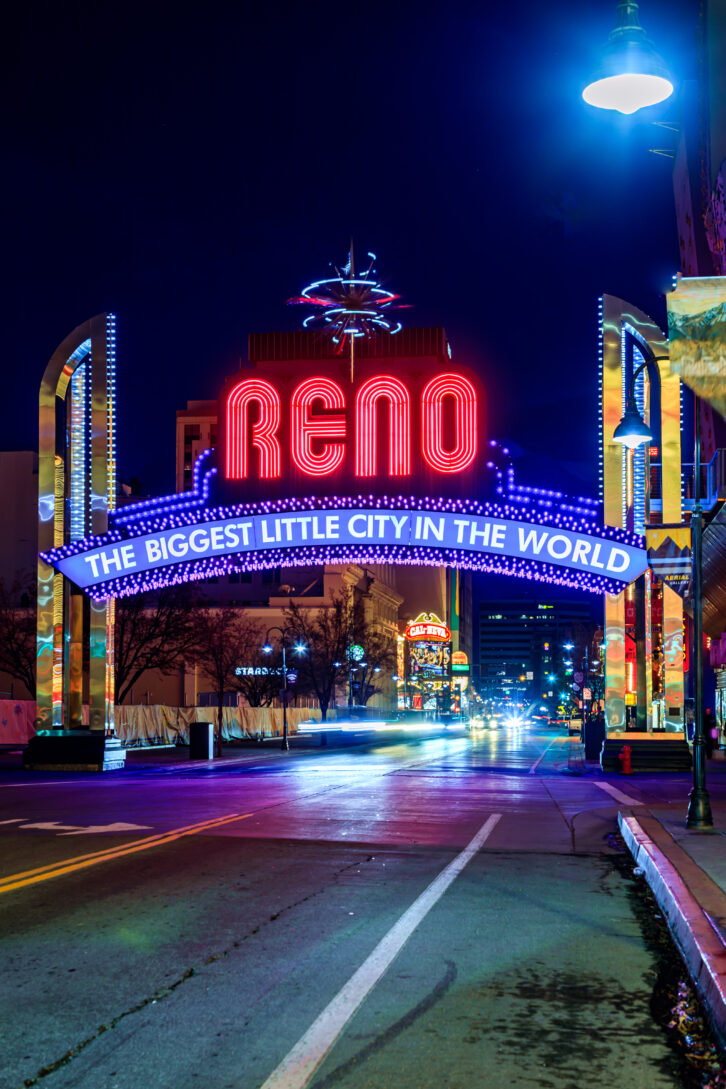
Reno Media Group and Americom Limited Partnership, commonly controlled companies, said the ownership limits must be eliminated, or at a minimum, substantially revised, due to shrinking revenue shares for radio broadcasters.
The broadcast companies, which operate a cluster of radio stations in Reno, Nev., said that today’s stark realities cry out for multiple ownership reform “that will remove the shackles from local radio broadcasters” and allow them to compete in the broader audio and 21st century marketplace.
Reno Media Group and Americom told the FCC it has seen sharply reduced advertising billings amid the rapid rise and popularity of digital streaming, including a year-to-year decline of approximately 23% from 2024. The groups said the pace of decline has also accelerated.
Acquiring more stations within a market, Reno Media Group and American said in recent comments, would give owners a way to compete effectively moving forward, by “harvesting the economies of scale and savings inherent in consolidating operations,” while also reducing aggregate costs.
In addition to revising the radio ownership caps, Reno Media Group and Americom urged the FCC to revisit the current over-the-air radio “product marketplace” to include non-broadcast audio services such as digital platforms since “radio’s competitors operate without restrictions comparable to those imposed on radio.”
The FCC declined to do so during the 2018 quadrennial review, the groups said, which is why broadcast radio is still currently defined as a “unique market” by the FCC. They argue that the concept that radio is a marketplace unto itself is an out of touch viewpoint.
“Consider only the hundreds of channels SiriusXM brings to car radios,” the companies wrote, “or the essentially limitless audio libraries Spotify, Apple Music and Pandora make available to online users.”
One hand tied
Meanwhile, Seven Bridges Radio, which owns an AM/FM combo in the Jacksonville, Fla., said it believes that relaxation of the radio subcaps is a step that the FCC should take to make the competitive circumstances of radio broadcasters better.
“Making this modest regulatory change (tiny in comparison to the influx of powerful new competitors), would give radio additional opportunities to expand, react to competitive market conditions, and provide the truly local programming that listeners expect and deserve,” Seven Bridges wrote.
In similar comments, Cromwell Media, which owns and operates radio stations in several small markets and in Nashville, Tenn., argued for change, saying that the commission’s ownership rules are “woefully” out of date.
“Given the artificial ownership restrictions placed on radio broadcasters, radio stations face these massive corporations with one hand tied behind the back,” Cromwell wrote. “They are prevented from achieving the economies of scale they desperately need.”
It said the commission’s severely outdated treatment of radio as a “siloed market” affects broadcasters and local citizens in markets of every size, but is especially hard on smaller and midsized markets.
“Those markets need strong local radio so that citizens can receive vital local information,” Cromwell wrote. “Yet, under the current ownership restrictions, smaller communities often find local radio stations struggling and unable to provide the level of service these communities need and deserve.”
AM-specific regulations
In Richmond, Va., where Mobile Radio Partners operates four AM stations and three FM translators, owner Michael Mazursky told the commission there should be no ownership caps on AM radio stations.
He also asked the FCC to make the AM band more useful to the public.
“I think there are many technical upgrades that can help AM radio operators like myself be more financially successful with new technology ideas to utilize the AM bandwidth,” Mazursky said in recent comments.
Currently, in a market with 30–44 stations, an entity may own seven stations, with no more than four in AM or FM. In a market with 15–29 stations, a broadcaster may own six, with no more than four in one band. And in a market with 14 or fewer, an entity may own five with no more than three in one band, provided it does not own more than half of the stations in the market.
Comments in the FCC’s ongoing broadcast ownership review cycle can found online at the commission’s website.
[Do you receive the Radio World SmartBrief newsletter each weekday morning? We invite you to sign up here.]