In this “Future in Focus” series, we’re asking industry thought leaders, executives and engineers to comment on top trends of the past year and what they expect for radio in 2026.
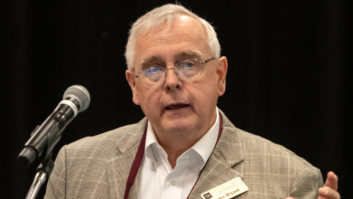
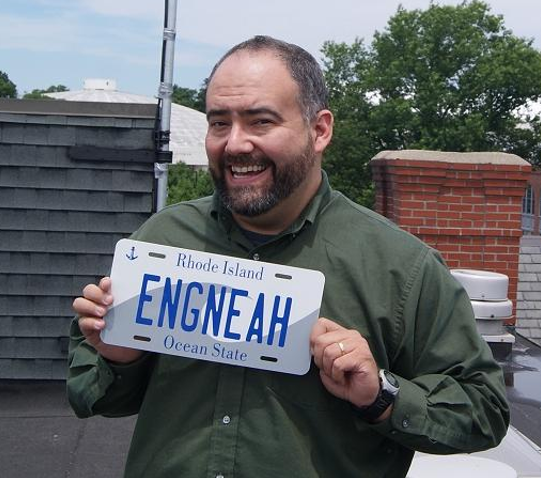
Aaron Read is minority owner of the L and R consulting firm based in Watertown, Mass.
Radio World: Quite a bit happened in radio and media in 2025. You work with a wide variety of stations, from commercial to LPFM. What had the most lasting effect?
Aaron Read: It’s easy to say the rescission of the Corporation for Public Broadcasting; It has put a lot of my clients into much tougher situations, financially and exacerbated a severe talent drain already in progress. But the biggest would be the fact that the AI bubble hasn’t popped yet. It will, and soon, but until it does, there are hordes of consultants screaming about how every part of radio needs to embrace AI, like, yesterday, when in reality the entire industry should be actively promoting itself as an antidote.
Putting aside the myriad reasons why AI doesn’t work, the core value of radio is the theater of the mind that creates a personal connection, which leads to an instinctive level of trust between the listener and the airstaff. AI is, quite literally, anathema to all of that: It’s untrustworthy, it’s wildly impersonal and it’s plagiarism software that produces oceans of substandard projects.
RW: What trend in terms of technology do you think is going to have the greatest impact in radio in 2026?
Read: This is more technology-adjacent, but deregulation. It blows my mind that it is still being flogged as the “sole savior” of an industry that “cannot compete” with “big tech.”
Saying radio cannot compete with social media, but should because they both involve advertising, is like saying Alaska Airlines cannot compete with snowglobe manufacturers, but they should because they both involve snow. Radio is about building a relationship with their audience. Social media is about exploiting their audience.
RW: You stepped into a full-time consulting role yourself in 2025. How did the year treat you, and what would you recommend to any engineers considering such a move?
Read: Pretty well, all things considered, although I certainly wouldn’t say no to another regular client or two! The number one thing I would recommend is that starting a successful consultancy — at least in radio — is to look at it as the culmination of a long career building not just a knowledge base, but also a reputation. You need to develop a lot of “weak ties” with people you can turn to for help and who, in turn, can turn to you for help.
Also, remember that being a consultant means you’re not just a radio engineer anymore: You’re in marketing, you’re in accounting, you’re in HR and many other fields that are all just as critical to running a business, even if you dislike them. I am fortunate that my partner, Michael LeClair, is very good at many things I am not — and vice versa — so we mesh well as a team.
RW: What will be your main professional goal or project with L and R in the coming 12 months?
Read: I’m hopeful three factors will come together that will benefit us: First, a lot of engineers are retiring every year now, so there are openings. Second, many stations are facing nasty budget crunches, so a contractor may seem more attractive than a full-time employee. Third, not only is the need for quality engineering at many stations large, it’s growing as stations are rediscovering that chasing digital pennies is not a winning strategy while there’s still a lot of radio dollars out there. Okay, maybe it’s “quarters” instead of “dollars,” but it’s still a lot more than pennies!
RW: You work with a number of public radio stations. What is the current climate like, and do you see college radio as thriving?
Read: Public radio is at something of a crossroads. The death of CPB means the idea that public radio is supposed to lose money is coming to an end. That means a lot of very rural stations are going to completely go out of business. Alaska, in particular, is going to be very hard hit. But you’re also going to see a lot of small, mid and even some larger market outlets that have been content to put out mediocre content for decades and float around going right into bankruptcy. Budgets will need to be tightened. Endless spending on podcasts that make no money? Gone. Zillions of translators and repeaters for towns of 100 people? Gone. Large social media presences and apps that cost a lot of money but don’t bring in any members? Gone.
As for college radio, I have seen a lot of thriving going on, but also a lot of failure. The two camps are diverging. Interest in college radio, based on my own anecdotal research, hasn’t been this high since the 1980’s. The late 90’s and early 2000’s — I graduated in 1998 — were a real nadir. The kids in high school and college who care about media and especially journalism haven’t been this informed in a long time. They are hungry to do things with their campus radio station. The best-performing stations are the ones that have either a prominently-featured studio in a high-foot-traffic area on campus, or they have a reasonably decent journalism program. Those stations are thriving and have as many as 200 active student volunteers every semester.
On the other hand, there are stations where the “basement radio” studios are hidden away. There’s no real presence on campus. Stuff breaks and isn’t fixed. There’s not even a hint of a related class curriculum. These stations are doing very badly, if not dying. Many are still selling their licenses. Or more often, they’re just giving them away or handing in the license to the FCC since station values have crashed in recent years and these little Class A and D FM stations aren’t worth more than a few thousand dollars on the open market.
RW: How will our industry be different in 10 years?
Read: I think the question [that] needs to be asked is if these social media/high tech firms are finally regulated into the ground the way railroads, steel and oil were in the early decades of the 1900’s. Will Section 230 finally be removed? All of these things would have a seismic impact on the radio industry, too.
No matter what, I like to think that radio will finally exhaust its ability to keep Wall Street happy and the idea of mega-ownership will implode. Concordant with that, I think we’ll see a return to the fundamentals of good radio. It won’t be smooth. The fundamentals will never again be as profitable as things were back in the 50’s through the 80’s. And we’ll see plenty of naysayers claiming that only being 60% as valuable means playing to radio’s strengths of being the opposite of big tech is automatically a losing strategy. Perhaps it is, but it sure has got a better chance than so many others keep trying to do, and failing every year since 1996.
Radio is still 1000 times as efficient a means of distributing quality information/content to a wide audience over any other media, social or otherwise. And when one factors in the many hidden costs of internet delivery, radio is also considerably cheaper, too. That’s not ever going to change so long as radio is a one-way information flow and internet is a two-way flow. The internet has a lot of advantages, but we’ve forgotten that it’s not like radio doesn’t have its advantages, too.
RW: Anything else we should know?
Read: I wish our industry had more faith in itself. There has never been someone claiming that “radio is dead, digital is all that matters” who didn’t have a vested financial interest in you believing that statement. Radio may not be the juggernaut it was, but it’s still got plenty of life in it.
If only so many of the people involved with it weren’t trying to kill it.
Radio World welcomes comments on this or any story. Email [email protected] with “Letter to the Editor” in the subject field.
Read more stories like this in our News Makers section.