During Radio World’s late-summer conversation with Joe and Jeff Geerling, the dynamic father-and-son duo who combine broadcast engineering and software development expertise, a funny thing happened: An impromptu podcast broke out.
As we discussed with the Geerlings the convergence of traditional RF tools and IT management, we asked them about two topics on the minds of station managers and engineers this fall: cybersecurity and AI.
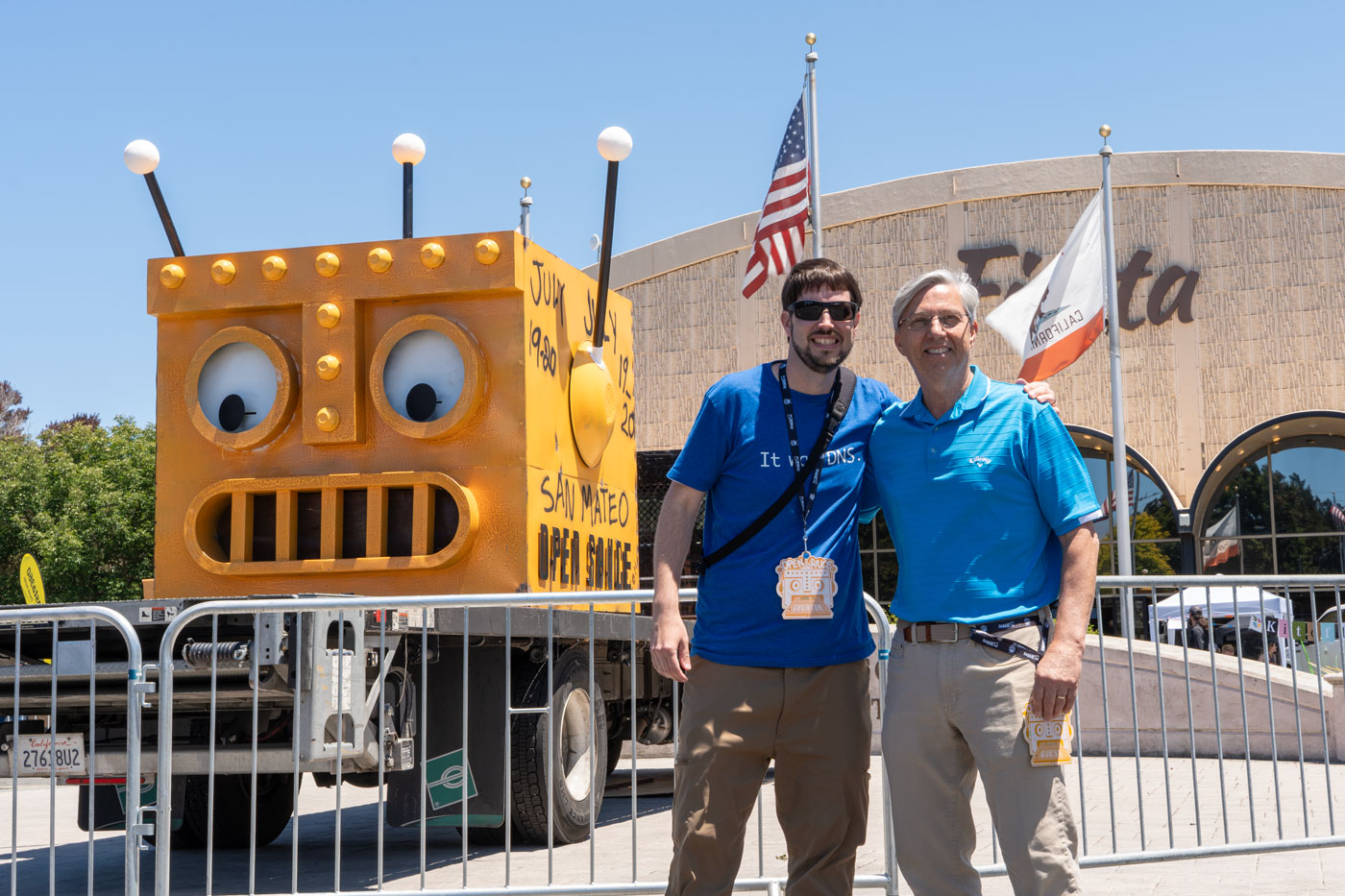
Finally, in such a competitive landscape, Joe and Jeff offer one simple piece of advice to radio station operators: Stay small.
And a reminder to check out our September story on what makes the Geerlings tick.
Secure your network
Joe’s grandfather was born in 1900. When he was 82, Joe recalled, he made a remark about the velocity of changes he saw over his lifetime following the industrial revolution.
“When he was born, there were really no cars. He saw streets pop up, buildings, airplanes, rockets, air conditioning. In his mind, how could anyone see as much change as he did?
“Well, I’ve seen a whole lot change too in my lifetime, and with the tools we have, I don’t think it’s going to slow down,” Joe said.

An engineering veteran, Joe has spent decades protecting physical transmitter buildings. He sees network security as a natural extension of the job.
“Every time you connect something to the internet, you should be thinking about security,” Joe said. “I think the majority of engineers always had that mindset, protecting the plant. So this requirement is welcome. You have to do something.”
But recent FCC mandates regulating IT and security in the audio chain have opened a window of concern for smaller stations.
“You’re never going to get high-end Cisco gear at a small tower site,” Joe explained. “By protecting the EAS first, everybody is going to make sure they have a router with a complicated password and that’s probably going to solve 95% of the problem.”
Jeff, meanwhile, grew up in the dawn of the internet age. It would be a delight to shop with him at a certain computer retail outlet.
Taking advantage of the conveniences that running audio over IP offers requires configuration ahead of time. Network security has become a fundamental part of most businesses.
Is radio a laggard?
Jeff pointed out that the engineers who built the legacy systems still running today were RF experts, not IT professionals. Thinking about digital security requires a different mindset.
“There is still gear running from the early 1990s that doesn’t use encryption,” Jeff warned. “If they get physical access or into your network remotely, it’s game over.”
Even today’s broadcast software carries baggage. Joe observed how some on-air automation systems still demand administrative privileges to run simply because that is how they were coded 20 years ago.
Use it, don’t let it use you
Then there is the elephant in today’s tech room. AI.
Both Geerlings view the AI boom through a nuanced lens. For Joe, it brings back memories of broadcasters relying entirely on the AP teletype wire.
“When I first started, it wasn’t unusual for stations to ‘rip and read’ off the AP teletype,” he recalled. “They would tear off the story and read it on air without thinking about relating it to their audience.
“For me, AI is the same thing. You need to make sure you are using it and that it isn’t using you.”
Joe sees potential for AI as an internal tech support knowledge base. But he draws a hard line at replacing on-air talent.
Jeff uses AI as a sounding board for his software development but he is wary of large-language models that slurp up creator content and summarize it without attribution.
He’s seen fluctuations in visits to his blog and realizes the proliferation of AI slop plays a part.
“And worse, these AI tools take the things I write, summarize them and just give people the little nugget they want,” Jeff said.
Still, he admits the tech is impossible to ignore. He describes it with a clever analogy.
“I think of it like a drill,” Jeff said. “I have a manual hand drill where you crank the chuck. Now, you have battery drills you only have to charge once every six months. AI is similar for me.”
Jeff does not perform as much software development as he used to. He looks at AI from a content creator perspective. But he knows other developers who will burn as many as two million AI tokens a minute — tokenmaxxing as it is known in some circles — spending around $500 a day.
“I think it goes back to what my dad said,” Jeff explained, “you work with it and check, rather than saying, ‘give me this thing’ and immediately shipping it. It’s like the news. Grabbing a summary and pasting it directly only on your website is much different from helping to identify themes within an article.”
Small is cool
Our chat could have gone on for much longer. The pair offered well-spoken, articulate takes on all the topics we covered. Nothing was off limits. Midterm general election predictions, anyone?
But with their uniquely different perspectives looking at radio, it felt like the most opportune time to ask the Geerlings to gaze into their crystal ball: What is over-the-air radio’s path to stay relevant?
A desire for genuine human connection tied directly into Joe’s primary advice for smaller broadcasters.
“Stay small. Small is cool,” Joe advised. “Nobody was going to sit there and say, ‘I’m going to play the same thing as St. Louis’s big rock station, won’t that be cool?’ Listeners could already hear the big stations. Small stations had to be local and if they stopped, they would die.”
As we’ve heard previously, operating a small-town radio station might offer the chance to run a “boutique” style business. Despite his busy schedule with video creation, Jeff has those feelings. He even told us that running a small station would be a dream gig.
But the barrier to entry, he said, ends up a detriment.
“When I look at the licensing fees and the companies that you’d compete with just to get a tiny slice of the pie, it’s just discouraging,” Jeff said.
But despite the red tape and the uncertain future of the AM band, the Geerlings are optimistic about the underlying technology and the medium itself.
“I think that there’s always room for broadcasting with RF just like in TV,” Jeff concluded. “The only way it can die is if the industry kills it, not if people stop listening. People stop caring if the industry doesn’t care.”
If the father-and-son duo in St. Louis are still infatuated with the medium, that feels like the best vote of confidence we could have.
[Do you receive the Radio World SmartBrief newsletter each weekday morning? We invite you to sign up here.]