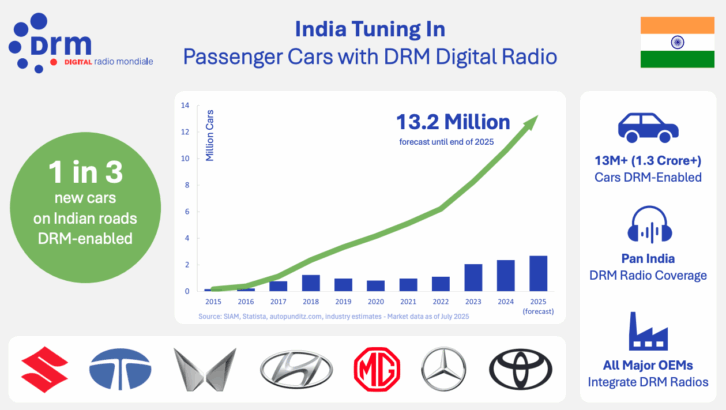
As India edges closer to allowing digital radio on the FM band, Digital Radio Mondiale is highlighting the growth in the number of vehicles in the country that can receive DRM signals.
The Digital Radio Mondiale Consortium said that as of July approximately 12 million passenger cars on the road are equipped with DRM receivers. It said this is expected to rise to 13 million by the end of this year.
Context
Terrestrial radio broadcasting in India is delivered in medium-wave (526-1606 kHz), shortwave (6-22 MHz) and VHF Band II (the so-called FM band, 88-108 MHz).
Public service broadcaster All India Radio airs nationwide digital radio services in the medium- and shortwave bands using DRM. (Read a 2024 report from DRM about the standard’s use in India.)
This month the broadcast regulatory body in India released recommendations to allow analog FM band stations to add digital services, as reported by the Economic Times. TRAI recommended that India adopt a single digital radio technology standard for the FM band but it did not specify one.
Over several years, advocates for both Digital Radio Mondiale and HD Radio have made pitches for their respective technologies to be selected.
“Selection of technology among the two technologies suitable in VHF Band-II for deployment in India … may be done in consultation with the industry, including radio broadcasters and radio receiver manufacturers,” TRAI wrote, as reported by the website IndianTelevision in an article that explains TRAI’s suggested structure for auction prices and license fees. Whether the Ministry of Information and Broadcasting will follow that advice is not yet known.
The TRAI document also recommended that a single digital radio technology standard should be adopted in the country for introduction of digital radio broadcasting in VHF Band II. And it said that digital radio services should be commenced in simulcast mode, enabling the broadcast of one analog, three digital and one data channel on the assigned spot frequency. Existing analog FM radio broadcasters would be permitted to migrate to simulcast mode on a voluntary basis.
DRM on the road
According to a press release from the DRM Project Office, adoption of DRM is being driven primarily by in-car listening, “a key factor in the success of India’s ongoing digital broadcast rollout.”
“As India celebrates a decade of digital radio progress, the growth of DRM integration in the automotive sector stands out as a globally-exceptional success story,” it said. “From the first factory-fitted DRM receivers launched nearly 10 years ago to today’s thriving ecosystem, the momentum has only accelerated.”