The author is vice president of sales for Burk Technology.
In today’s landscape, where transmitter sites face increased physical, environmental and cybersecurity threats, a modern remote-control system can serve as a first line of defense, helping to safeguard vital broadcast infrastructure, often with minimal human intervention.
Security and surveillance integration
Broadcast remote-control systems now offer a coordinated approach to site security, combining monitoring capabilities with real-time response tools. They allow broadcasters to manage alarm reporting with a high degree of precision.
Multiple customizable email and dial-out lists can be configured to notify site engineers, station management or security personnel, depending on the nature of the alarm. Alarm-specific messaging ensures that each recipient receives relevant information without unnecessary noise. Audio annunciators or local sirens can act as immediate deterrents to intruders, activated automatically when certain alarms are triggered.

Surveillance video, integrated into custom views, can be monitored alongside telemetry data, enabling engineers to visually confirm disturbances from anywhere. These views consolidate a variety of remote-managed security equipment and environmental data into a single, actionable interface.
Motion detectors provide interior and perimeter surveillance, while numeric keypads allow controlled access and enable or disable alarms. Door sensors monitor transmitter buildings, microwave sheds and ATUs. Even sound sensors offer security insight — a drop in background noise might indicate a failed fan, while unexpected noise at an unmanned site could point to an intruder.
Environmental monitoring can be seamlessly integrated into the same system. Parameters such as smoke, flood, temperature and humidity can be tracked continuously. Combined with built-in timers, these sensors enable complex event correlation. When a door opens, a timer can begin that must be canceled at an interior keypad to avoid triggering an intrusion alarm.

Fault management for RF systems can minimize risk of damage to costly site infrastructure. Burk’s Arcturus Antenna Site Management system detects VSWR and reflected power faults rapidly, using three-strike logic and fast shutdown to safeguard high-value shared assets like combiners and antennas in multi-tenant sites. Continuous monitoring of forward power, VSWR, transmission line temperature and pressure ensures real-time visibility into system performance. These readings are displayed alongside other critical parameters on custom site control screens, giving engineers the tools needed for proactive maintenance and rapid response.
[Related: “Burk Arcturus Serves Washington’s WAMU”]
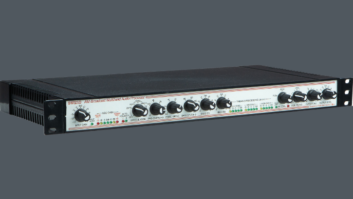
Modern remote-control systems such as the Burk ARC Plus benefit from an underlying architecture based on distributed intelligence with centralized oversight. Each site-based control unit independently manages local resources, allowing normal operations — including timed events and on-air fault recovery — to continue uninterrupted even if central communications are lost.
Engineers can configure automated responses using intuitive drag-and-drop flowchart editors. Virtual channels compute values such as transmitter efficiency or heat rise in real time. Alarm and status conditions initiate immediate, predefined actions, and a broadcast-friendly calendar interface allows scheduled events like day/night mode transitions to occur without manual intervention.
Cybersecurity and network access control
As remote sites become more connected, securing digital pathways has become as vital as protecting physical access.
Remote-control systems should support a broad set of network access security measures that align with common corporate IT policies. These may include strong password protocols, firewalls, VPN access, encryption, source IP filtering and network segmentation.
A particularly effective model involves linking all remote sites into a private network through Virtual Private Network (VPN) tunnels, shielding them from exposure to the public internet.
Systems such as Burk’s Arcadia consolidate communications to all sites over a single secure web link using Transport Layer Security (TLS). Depending on organizational preference, this centralized server can be cloud-hosted or maintained on-premises.
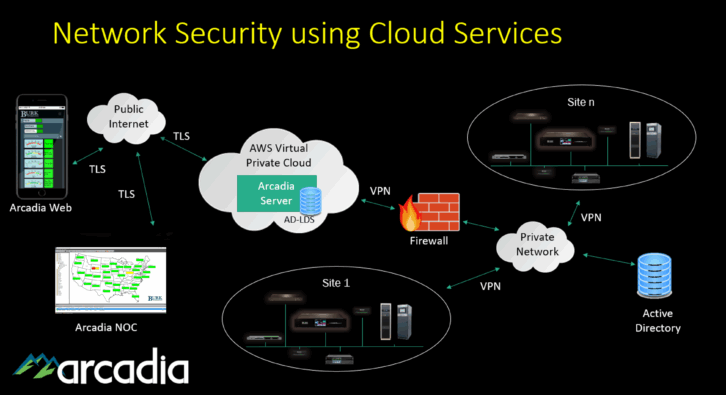
Authentication mechanisms should be equally robust. User access may be tied into the organization’s Active Directory infrastructure or handled through the built-in AD-LDS system. Access can be restricted not just by user but also by site and even down to individual control and monitoring channels, ensuring that engineers and staff only interact with resources relevant to their responsibilities.
This same architecture can extend beyond the transmitter site to the studio itself. By incorporating studio infrastructure into the remote-control system, engineers gain full visibility over air signals, IP streams, UPS systems, IT equipment and environmental conditions — especially valuable during unstaffed hours.
In an era where transmitter site threats are evolving and engineering teams are often stretched thin, modern remote-control systems can provide a centralized, intelligent solution for maintaining security, safety and operational integrity.