There are many variables to consider to ensure tower site safety. Air quality for workers should be among them. But with a tower being a naturally high, stationary target — have you considered animal droppings?
NATE — The Communications Infrastructure Contractors Association, has released two new safety documents for spreading awareness. The Wildfire Smoke Protection Chapter and the NATE Biological and Animal Excrement Awareness Guideline are available now on the association’s website.
A membership with NATE is needed to access the wildfire smoke chapter, or it may be purchased separately. The excrement awareness guideline is free for all to download.
“By addressing both biological and environmental hazards, NATE continues to provide our members with the tools needed to perform their work safely, efficiently and responsibly,” Brian Bicknese, NATE’s director of safety and education, said in a release.
Radio World has highlighted some key takeaways for engineers and site managers and we’d recommend accessing the documents in their entirety for more useful information.
Wildfire smoke awareness
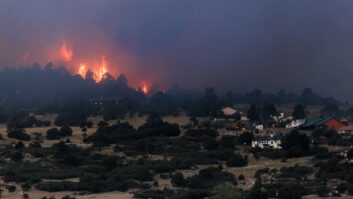
NATE said that the Wildfire Smoke Protection Chapter establishes procedures to protect workers from wildfire smoke exposure. This has become a prominent issue, with several high-profile fires occurring near large tower sites — such as at Mount Wilson this past January.
Tower sites, which are often remote and elevated, can experience rapidly changing smoke conditions. NATE recommends monitoring the Air Quality Index (AQI) at all times.
Each state has specific action levels. In California, for example, N95 masks should be provided if the AQI exceeds 151. If the AQI exceeds 500, N95 respirator use is mandatory and work suspension may be needed.
To minimize exposure, NATE recommends moving tasks indoors or into enclosed vehicles with filtration when possible. On days when the AQI is elevated, climbs should be rescheduled to early mornings or another day altogether. If that can’t be avoided, NATE recommends rotating crews to reduce overall exposure time.
Animal excrement
Bird and rodent droppings aren’t just gross to think about — they present potential health hazards and can corrode equipment.
The same holds true for roaches and other insects.
NATE’s Biological and Animal Excrement Awareness Guideline recommends that site workers assume all droppings are hazardous. They recommend use of N95 respirators or better, gloves and disposable coveralls during cleanup or inspections.
Animal waste is also acidic and corrosive. At a broadcast site, it is capable of degrading paint, metal surfaces, feedlines and antenna housings, which can potentially leading to RF safety issues or signal degradation.
Schedule regular inspections for nests or accumulations, especially under radomes, platforms and guy anchor points. NATE also recommends to use deterrents or barriers to prevent nesting and avoid equipment corrosion.
[Check Out More of Radio World’s Tech Tips]