The author is a broadcaster and director of Radio Romance in Santiago, Chile.
AM radio is facing a crisis that can no longer be explained simply by declining audiences. The deeper problem is technological, economic and regulatory.
Without clear pathways to evolve, many stations risk disappearing. I am writing here about stations in Chile, but the discussion will have resonance anywhere AM radio is used.
For decades, AM radio was one of Chile’s most important communications platforms. It informed communities during earthquakes, accompanied listeners through the night, carried sports, news, music and conversation, and reached places other media could not.
Today, however, AM broadcasters are competing in a radically different ecosystem with technology that has lost much of its commercial appeal and, in many places, its listening convenience.
What should an AM station do in order to survive? The answer seems obvious: migrate.
Migration does not necessarily mean abandoning radio or erasing its history. It means allowing broadcasters to test new technologies, explore other bands, integrate effectively with digital platforms and find sustainable models that can preserve their role.
The alternative is much harsher: disappearance.
Chile should address this as a communications policy issue, not merely as a series of isolated problems affecting individual stations. When a broadcaster faces economic distress, loses access to a transmission facility or is forced to suspend operations temporarily, public policy should at least ask what tools exist to help a legitimate broadcaster adapt.
Today, Radio Romance is off the air on its terrestrial signal. We maintain only a minimal digital presence, with a basic music stream, so that Radio Romance does not disappear completely.
But this stream does not replace the radio station we built, nor does our current website reflect the full reality of what Radio Romance was and what we want to rebuild.
For a broadcaster, silence on the dial is extraordinarily painful.
Radio Romance has a history, an identity, an audience, thousands of hours of content and, above all, the determination to continue. What we do not have today is a technological bridge that would allow us to move from an AM model that has become increasingly difficult to sustain toward a viable future for broadcasting.
Other communications technologies have gone through managed transitions. Television moved from analog to digital. Telecommunications networks evolved. Mobile technology changed repeatedly. The answer to technological obsolescence has rarely been simply to let operators disappear.
Radio deserves the same discussion.
Chile has seen experimental broadcasting experiences involving AM operators and the lower FM band. If such experiments exist, it is reasonable to ask what criteria govern access, how another broadcaster may apply and what mechanism allows a traditional AM station to present a serious technology-transition project.
This is not about giving frequencies away.
It is not about eliminating technical requirements or ignoring the state’s legitimate role in managing scarce spectrum.
It is about something more basic: making the rules known and giving broadcasters an opportunity to be assessed under them.
We have asked the regulator for an opportunity to present and evaluate experimental alternatives that could offer a different technological path.
Our experience is bigger than the future of one station.
It reflects the situation of an industry that needs answers.
An AM broadcaster should not have to choose only between remaining indefinitely on an increasingly difficult-to-finance platform or disappearing.
There should be a third option: evolve.
Broadcasting also has a characteristic that is easy to overlook when viewed only through financial metrics: when a media outlet disappears, a voice disappears with it. A company may close, but when that company is a media outlet, an editorial, cultural and social window closes too.
That is why the future of AM is also a question of media pluralism. We do not need to preserve technologies artificially out of nostalgia. Nostalgia is not public policy. But technological change should not eliminate media outlets that still have experience, audiences, content and a willingness to continue simply because no bridge was built to the next technological environment.
That bridge deserves serious discussion.
The human dimension
Further, the disappearance of AM radio has a human dimension that can hardly be measured in numbers.
For decades, every station was surrounded by an entire ecosystem of technicians, operators, engineers, broadcasters, journalists, producers and collaborators who made it possible for a human voice to travel hundreds of miles.
Many devoted 30 or 40 years of their lives to this profession. Today, when an AM station ceases operations, they do not simply lose a job. They discover that the knowledge and experience accumulated over a lifetime have fewer and fewer places where they can still be put to use. Behind every transmitter that goes silent are professionals, collaborators, and families confronting the gradual disappearance of the working world to which they once belonged.
On the other side of the receiver, something equally painful is happening.
Thousands of adults and older listeners grew up with these stations. For decades, they listened in their homes, cars, workshops and across the countryside. For them, radio was never merely a means of communication. It was companionship, routine, familiarity, and memory.
Saying that these audiences can simply move to the internet does not solve the problem. Many older adults are unfamiliar with apps and digital platforms; others, even when they know how to use them, cannot find the voices and programs that became part of their lives.
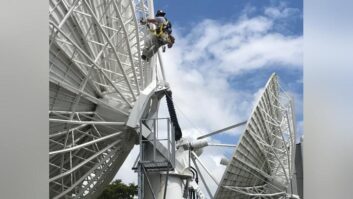
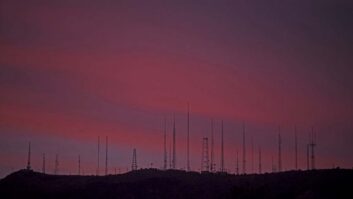
There is also a profoundly symbolic image: enormous antennas and transmitting facilities standing motionless in fields. Places once alive with technicians at work, transmitters operating day and night, and signals traveling across vast territories are now falling silent, often with little realistic possibility of ever being used again.
It is the gradual end of an entire ecosystem: people, professions, trades, listeners, memories, antennas and transmitters.
When an AM radio station goes off the air, the silence is not confined to the dial. It also remains with those who devoted their lives to making that radio possible — and with those who spent a lifetime in its company.
What next
The solution may involve experimental technologies, new spectrum arrangements, digital broadcasting, hybrid radio and online distribution, and regulatory mechanisms that allow existing broadcasters to submit credible transition projects.
The important first step is to acknowledge the problem.
For much of AM radio, time is no longer measured in decades.
It may be measured in years — and for some operators, perhaps months. The question Chile should be asking is simple: Do we want to manage the disappearance of AM radio, or manage its transformation?
Those of us who have spent our lives in broadcasting are not asking for privileges.
We are not asking anyone to give us a frequency. We are asking for the opportunity to transform. Because when technology changes, there are ultimately two paths: migrate or die.