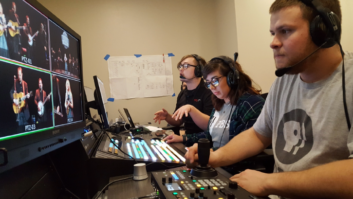
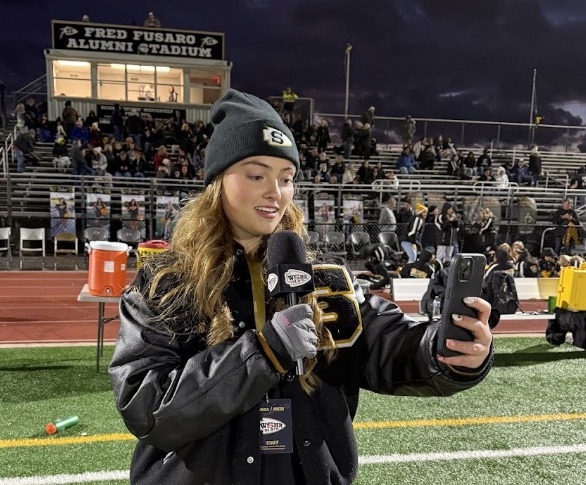
On a cool, rainy fall night at Fred Fusaro Alumni Stadium, I paced the sideline during a Sachem varsity football game, listening to our students broadcast the quarterfinal playoff game while I watched their simulcast livestream on YouTube TV.
The actual game was happening right in front of me, but that’s not the point.
Our student media game day production crew was operationalizing a dream I’ve had for 18 months: to create a multiplatform media network that inspires students, informs the community and keeps Sachem on the map as a leader in student media, journalism and communications.
My story began in 2000, when I was a freshman at Sachem High School South, writing for the now-defunct Sachem Harbinger student newspaper. I fell in love with telling the story of our school community and have not stopped since.
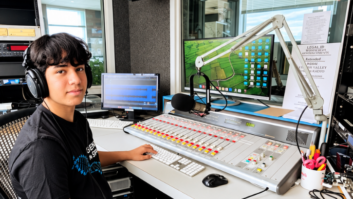
At 15, I found my voice in the WSHR studio at Sachem High School. Sitting in that studio, speaking into a microphone and knowing someone in my community could hear me gave me confidence.
In 2025, I returned to lead the station through a contract with my company, Ark Technology Consultants. I’d run newsrooms, led digital editorial operations and developed multiplatform storytelling strategies for companies large and small. I arrived with ideas, a hungry drive and a personal attachment to those airwaves.
Special feeling
I wanted students to feel what I felt when I first walked into that studio, the same feeling my Ark partners, Matt Pomara and Tino Pattigno, felt when they were on-air at WSHR as kids. We had the people, the product and a process. I wanted to see how far we could take it.
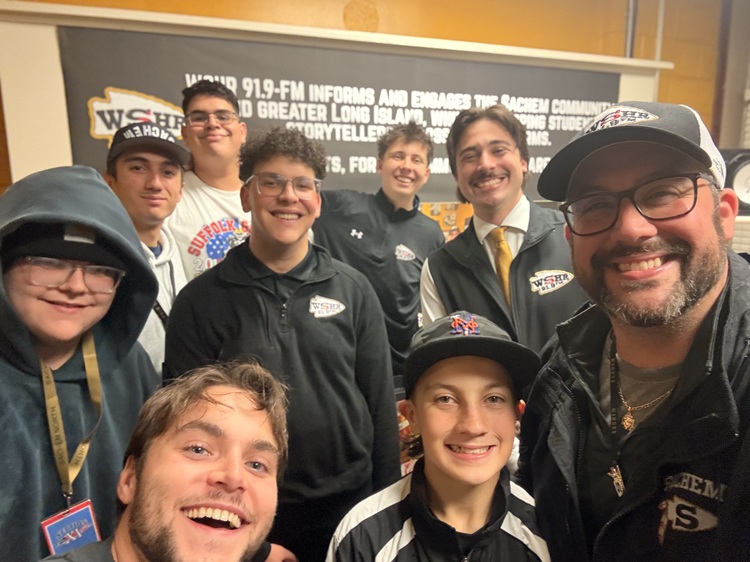
WSHR serves the Sachem school community on Long Island, with students at Sachem North and Sachem East high schools. Our district encompasses towns, villages and hamlets, giving us a shared audience with plenty of stories to tell.
We established three goals: Give students opportunities to grow and love Sachem. Inform the community. Make our community proud.
The operating philosophy was direct. Full speed, every day. News happens at night, on weekends and during school breaks. Building a relevant local media operation meant embracing that rhythm while giving students meaningful opportunities to participate.
Early on, I defined WSHR as a media network. FM radio would anchor an operation that also reached people through social media, digital reporting, video, photography and podcasts. Students could enter through whichever form of storytelling interested them and discover other parts of the business along the way.
We also needed to look the part.
We rebranded WSHR with a new logo and put it everywhere. In the buildings. We launched social media channels and put longform content on Apple and Spotify.
We are only as strong as our brand, and every story gives us an opportunity to build recognition and trust. Students needed an identity they could represent with pride. Our audience needed to recognize who was doing the reporting.
For radio managers thinking about recruitment, those entry points matter. A teen interested in photography or social videos can become curious about audio, live production and broadcasting when opportunities are within reach. We have to give young people reasons to walk through the door.
Early successes
In our first year, approximately 25 students participated across both high schools.
We introduced social media reporting, sideline coverage and visual storytelling. Students joined the reporting process for district social media accounts powered by WSHR. We launched a podcast network for longer audio stories and features.
We have more than a dozen live student radio programs throughout the week. We were also featured on Fox 5 NY and in the New York Post.
Our work earned about 15 awards, including radio and television recognition from the Press Club of Long Island, the local professional chapter of the Society of Professional Journalists.
Alyssa Tappin, one of our student leaders, earned individual honors, including recognition as Long Island’s top high school journalist. She is now a freshman studying media at the University of Alabama and is already working with Crimson Tide Productions.
Invitations to cover the NBA Draft and the Long Island Ducks expanded our students’ sense of what was possible. Their reporting could take them into professional sports environments.
Only a few months into our second year, participation has grown to 65 students. Our social media work generates more than 1.5 million impressions per month. That reach gives students a tangible sense of their audience and gives WSHR a daily presence in the community, wherever people encounter our reporting.
We have reestablished live high school sports broadcasts and added video streaming and simulcasting. We became the official media partner of the Suffolk County chapter of the National Football Foundation. We launched a production studio for longform video projects and are producing our first full-length documentary about the history and sustainability of Lake Ronkonkoma, the largest lake on Long Island.
We also promoted four students into management roles.
Chase Biesiadecki is sports director. AJ Bracero is creative director. Elio Portillo heads the studio. Patrick Coursen serves as executive producer and head of photography.
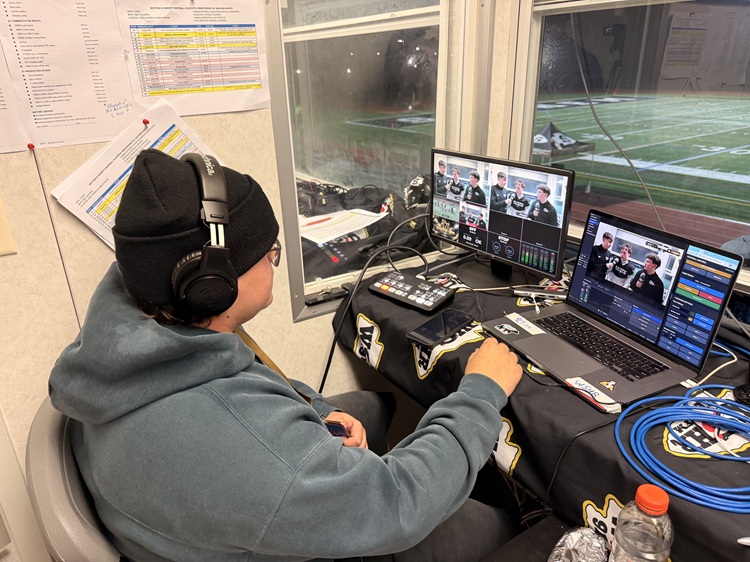
Students need responsibility, room to make decisions and an understanding that their contributions affect the entire operation. A title carries expectations. It also tells a young person that someone trusts them.
We run meetings no different than I did as the VP of News 12 Networks and we make decisions with the school community in mind.
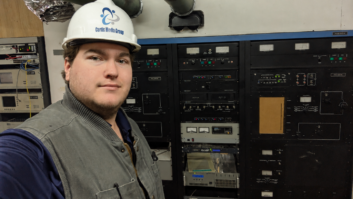
For engineers and technical managers, live sports and simulcasting offer a valuable teaching opportunity. Students encounter the relationship between editorial ambition and technical execution. A broadcast depends on audio quality, dependable connections, coordination and preparation.
That creates an opening to introduce the skills behind a successful broadcast. A student drawn to calling a game may discover an interest in production. Another may find satisfaction in understanding how sound travels from the field to a listener. Access to that process helps them imagine careers they may never have considered.
Responsibility to community
WSHR also gives the community a dedicated place to see and hear its own stories. With 65 students and two newsrooms, we can cover school life with the depth and consistency that come from being there every day.
Young reporters know their schools. They recognize stories, have access to people and bring curiosity to subjects adults might overlook. With guidance, they can provide meaningful local coverage while learning how journalism works.
That’s why WSHR received the 2026 Bob Greene Public Service Award from the Press Club of Long Island, the region’s highest media award.
Journalism education, news literacy and ethics belong at the center of this work. Publishing for a real audience brings real responsibility. Students need to understand accuracy, fairness and the trust attached to the station’s name.
We’re not reinventing the wheel; we’re working extra hard in what many call a “dying industry.” No, media is not dying; it’s evolving, and we’re trying to stay ahead of the curve.
I have led teams whose work earned Emmy Awards and Murrow Awards, taught journalism at Hofstra for 17 years, six of those years as the director of graduate journalism, and served as national president of the Society of Professional Journalists. Helping these students bring WSHR to the forefront of community journalism and student media in the tri-state has become one of the most meaningful responsibilities of my life and career.
I know what access to a microphone can do for a young person. At WSHR, we are giving students a place to begin, people who believe in them and a community that needs their voices. Every time a student discovers the confidence to tell a story, I recognize something of my own beginning.
So if you see me pacing back and forth on the sideline smiling and looking at my phone, just know it’s me marveling at the quality of our student reporting, game-day production and the story we’re collectively telling. There’s nothing better.