Radio World’s “Guest Commentaries” section provides a platform for industry thought leaders and other readers to share their perspective on radio news, technological trends and more. If you’d like to contribute a commentary, or reply to an already published piece, send a submission to [email protected].
The author is CEO of the National Federation of Community Broadcasters, which has been serving the nation’s community radio stations since 1978. NFCB commentaries are featured regularly at Radio World.
Defunding public media doesn’t punish NPR — it guts the emergency lifelines that small towns and Tribal communities depend on.
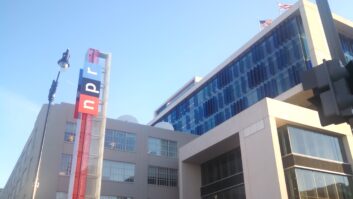
The Senate’s vote to rescind $1.1 billion in federal funding for public media has been framed as a rebuke to NPR. Critics argue the network lost its impartiality, and some have welcomed this cut as an overdue reckoning.
But NPR is not the real casualty here. Rural America is.
The National Federation of Community Broadcasters (NFCB) represents nearly 200 community radio stations across the United States. Most of these stations are not affiliated with NPR or PBS. They are hyper-local, often 100% volunteer-run operations serving small towns, Tribal nations and rural communities. They operate on shoestring budgets, powered by donated time and secondhand equipment.
For these stations, federal support through the Corporation for Public Broadcasting (CPB) is not ideological — it is survival.
According to CPB and GAO reports, up to half of rural stations could go off the air without federal funding. And when those stations go silent, so do the emergency alert systems communities rely on during wildfires, floods, tornadoes and other emergencies.
This is not theoretical. AM/FM radio remains the most reliable medium in a crisis (FCC, 2018). When cell towers burn, when the power goes out, when internet networks fail, people turn to battery-powered radios.
In many rural and Tribal regions, these community stations are the only real-time source of life-saving information.
The recent debate about NPR’s editorial choices should not be used to justify dismantling this critical civic infrastructure. The $1.1 billion Congress has clawed back will not significantly impact NPR executives or national programs, but it will devastate tiny community stations that have no other safety net.
These stations are staffed by neighbors, teachers and retirees. They air high school sports scores, weather alerts and local music alongside emergency notifications. They provide connection in places where isolation is real — and in moments of crisis, they save lives.
The next time a wildfire roars through Montana, a hurricane floods a Gulf Coast town,or a Tribal community issues evacuation orders, some people will turn their dials and hear only static.
Federal investment in public media is not a luxury. For millions of Americans, especially in rural and Tribal communities, it is a lifeline. Once those radios go silent, turning them back on will not be easy.
[Also by the author: “Public Media Is a Conduit for Public Good“]