Story has been updated after the Senate approved the rescissions package early Thursday morning. The U.S. House subsequently also approved the bill.
A side deal between a U.S. senator and the White House, intended to save up to 35 tribal radio stations, preceded Senate approval of the rescissions package on Capitol Hill that will claw back $1.1 billion in funds from the Corporation for Public Broadcasting. The House must yet vote on the final package.
According to the website NOTUS, an agreement between Sen. Mike Rounds of South Dakota, a Republican, and the Trump administration salvages $10 million in fiscal year 2026 funding for 14 tribal radio station grants in rural areas.

Congress has until Friday to pass the overall legislation under a special rescissions process, according to The Hill. That process allowed the Senate to approve the funding cuts with a simple majority vote. The package, which includes cuts in foreign aid, passed the Senate in the early morning hours on Thursday, 51–48.
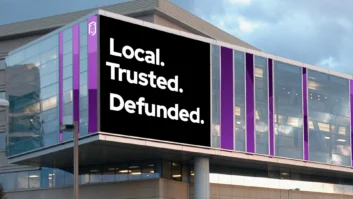
If the rescission package becomes law it will eliminate two years of pre-allocated federal funding for CPB, which helps support local public radio and television stations. CPB has said the cuts would hit hardest in more rural and underserved communities.
Patricia Harrison, president/CEO of the Corporation for Public Broadcasting, called the vote “a decision with profound, lasting, negative consequences for every American. … Without federal funding, many local public radio and television stations will be forced to shut down.” She said that rather than dismantle public media, the government should fund and strengthen it. “The path to a better, more trusted public media is only achievable with continued federal support and constructive reforms.”
The organization American Public Television Stations reacted Thursday: “As the rescissions package moves back to the House for its final consideration, we urge the House to oppose the package and the elimination of public media. If this package passes the House, all funding to local stations will be cut off starting Oct. 1, 2025 and the Corporation for Public Broadcasting will shut down.”
Sen. Rounds had voiced dissent over the package. However, the report from NOTUS says the senator changed his stance after striking a deal with the White House.
The agreement, according to the Round’s office, will redirect money from the Interior Department’s Green New Deal to help approximately 35 radio stations in 11 states that broadcast onto tribal lands and were at risk of being hurt by the rescissions package.
Rounds argued that cutting funding for tribal stations could disconnect some of his constituents from one of their few sources of news.
“They wouldn’t have survived without this,” Rounds told NOTUS. “They provide emergency services information for some of the most rural parts of our country and some of the poorest counties in the United States.”
The senator says he sought “assurances that tribal broadcast services in South Dakota continued to operate, which provide potentially lifesaving emergency alerts.”
There are skeptics of the deal. Native Public Media questioned the long-term effects of the revised package.
“Tribal radio stations operate on tight budgets. Most cannot apply for competitive federal agency grants while also maintaining daily broadcast services,” said Lois Tayler, president and CEO of Native Public Media. “Asking them to pivot to climate funding, without a clear and dedicated pathway, sets them up to fail.”
NPM’s network includes approximately 57 Native radio stations, according to its website.
Separately, America’s Public Television Stations President/CEO Katie Riley says the group was deeply concerned by the deal to continue some funding for tribal public media stations.
“The reported administration’s promise to reallocate funding from the Department of the Interior to provide one-time support to tribal public media stations is at best a short-term, half-measure that will still result in cuts and reduced service at the stations it purports to save, while leaving behind all other stations, including many that serve native populations.
“Simply providing a one-time payment to tribal stations will not ensure they can continue their current service or even survive,” Riley said.
The Trump administration in early May had issued an executive order that instructed federal agencies, including CPB, to cease all funding for NPR and PBS. National Public Radio and several Colorado-based member stations have sued Trump in federal court, arguing the cuts are unlawful and threaten NPR’s financial stability. The White House this week asked for the lawsuit to be dismissed since no federal funding has been withheld to this point.