James Potter, K3NSWI, is with Cutting Edge Engineering of Missouri. He owns numerous wire strippers, ranging from shoddy to premium.
He hates them all.
He says the predefined notches are either too tight, causing him to cut strands, or too loose, requiring multiple tries. And none is great for stripping the outer jackets of multi-pair audio cable or small-diameter coax.
But one day James was clipping his dog’s nails, and it occurred to him to try the clippers on some wire. Voilà!
The blades are razor-sharp and the shape of the handle provides an assured grip. James has stripped everything from #22 telco wire to RG-59 coax with no issues. He said the clippers are particularly efficient on the solid wire found in Romex.
A set from Gonicc is shown in the photo. You will find endless options at pet stores and online, and for just a few bucks. Try it. You’ll like it!

Retrofit supply warning
Electronics has been one of Mark Peterson’s hobbies since childhood. After high school he earned his FCC First Class License, worked on television equipment in the army and had a long career with IBM as a programmer.
Now in retirement, he volunteers his time doing engineering work at WCTS(AM) in Plymouth, Minn.
Mark read Frank Hertel’s power supply retrofit suggestion in this column in June. He warns that he has come across some power bricks where the AC input ground — the green wire — is internally connected to the negative output wire.
If you use two of these (to get the “plus” and “negative” voltage supplies) and connect the positive lead of one to the negative lead of the other, you’ll end up shorting out one power brick. So get out that ohmmeter and test the supplies before proceeding.
A question for readers
A contract engineer writes in to ask: “I’m curious how other engineers feel about surge protectors, where they use them and what products they use?”
I think it goes without saying that most engineers believe in surge protectors. But is there a preference between MOV (metal-oxide varistor) or choke-type? And what brands do you prefer?
If you don’t have a suppressor, speak to your insurance carrier. It may pay for all or a portion of a surge suppressor. If you have one installed, they might reduce your premium, because you are taking steps to mitigate their risk. Just ask them … and also email your thoughts on this question to [email protected].
Pushover
William Harrison, director of engineering for WETA(FM) in Washington, D.C., says transmitter site alerts obviously are important. But a while back, he started experiencing delays in receiving his.
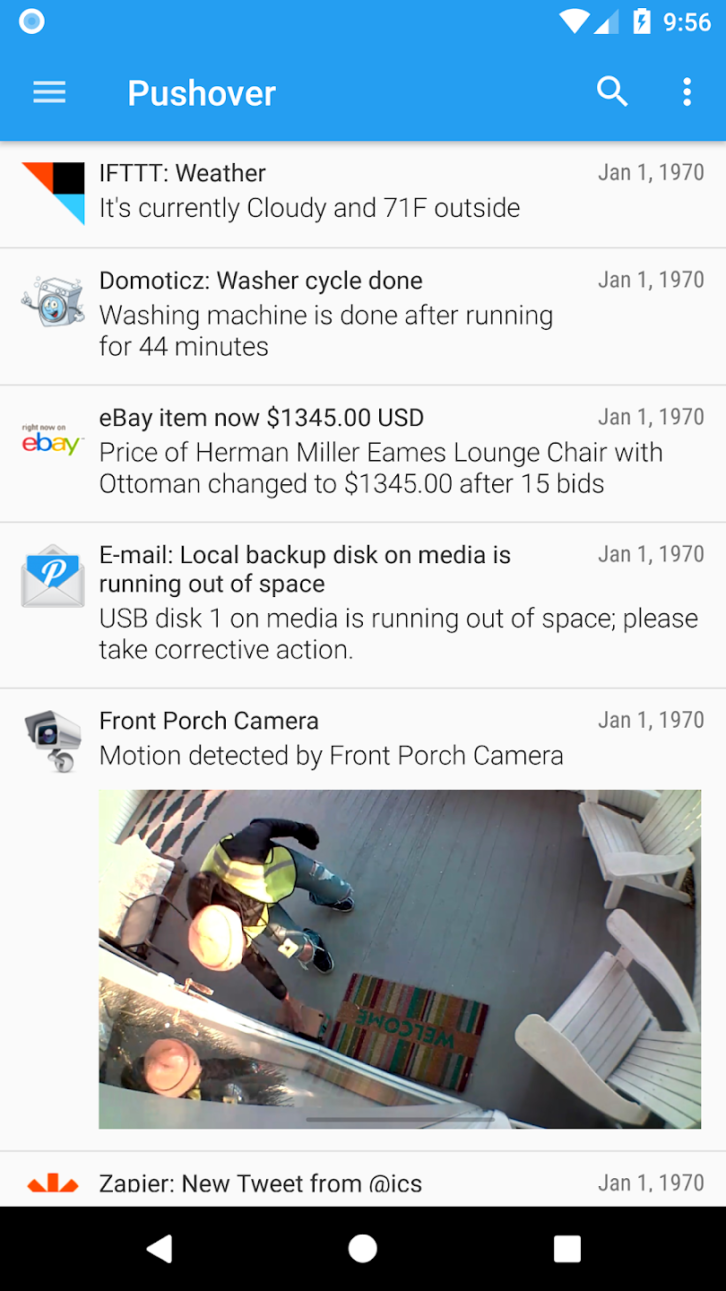
His remote control would generate an alert via email, after which it was supposed to go through a series of filters and rules for forwarding via an email-to-text gateway — in this case, [email protected]. But one day he received a text message roughly 10 hours after the remote control had generated the email. Ten hours won’t cut it for transmitter alerts.
It seems that carriers do not give priority to messages coming through an email-to-text gateway. In fact William says many carriers have disabled these services entirely because of too much spam.
What’s an engineer to do? Enter Pushover, a simple push notification solution for Android, iPhone, iPad and even desktop browsers.
Pushover assigns you a dedicated email address. Anything sent to that address arrives on your device as a push notification.
To use it for yourself or a small group, it’s a $4.99 one-time purchase on each platform (iPhone, Android or desktop) where you want to receive notifications. You can try it for free for a month by downloading the app.
For companies or organizations, a Pushover for Teams service is available for $5 per user per month; it comes with features like centralized management, priority message queuing and priority support.
Pushover has enabled William to keep all of his email filtering rules in place. He now gets his alerts in a much more timely manner than through text message alerting.
Learn more here. The site also provides an API (Application Programming Interface), libraries and programming examples to integrate it into a product or workflow.
Kits are not dead
Dan Slentz found a fun website that sells simple circuits, parts and schematics for building widgets. Take a look here.
Some of the kits include test equipment modules. One that caught his eye is a USB input/output development board consisting of a microcontroller that is compatible with Windows, Mac OS and Linux computers. It allows you to control 16 individual I/O pins. In addition to being used as a USB relay controller, the module can control LEDs or other widgets. It can be programmed to serve as a USB data logger, countdown timer with relay, even a temperature meter/logger.
Find it here. Workbench submissions are encouraged and qualify for SBE recertification credit. Email [email protected].