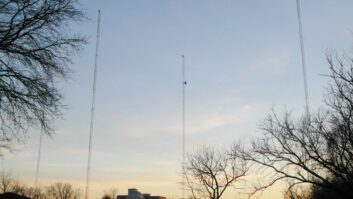
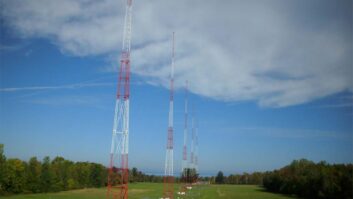
The three guyed masts towered over bucolic countryside in Luxembourg. On Nov. 6, the towers that had once beamed two megawatts of Radio Télévision Luxembourg’s longwave AM service to neighboring France came down in a controlled demolition.
RTL shared this video with us from the dismantling:
The approximately 950-foot structures were operated by Broadcasting Center Europe, the technical services arm of RTL.
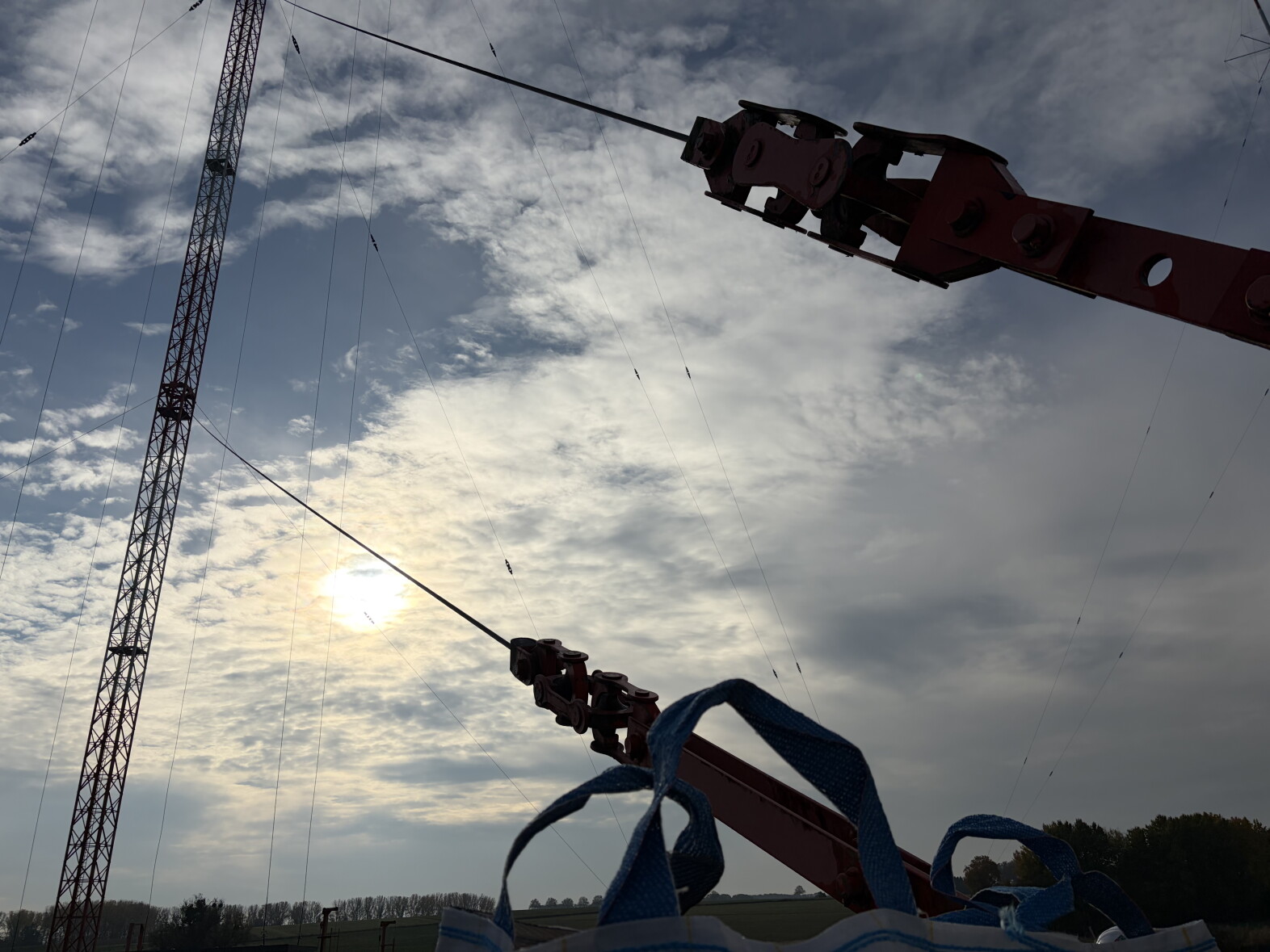
BCE Head of Transmissions Eugène Muller explained to RTL that since each guy cable has two fittings, once those are released, the weight of the remaining cables causes its mast to fall in the opposite direction in an effort to protect the solar panels on site as part of an energy farm.
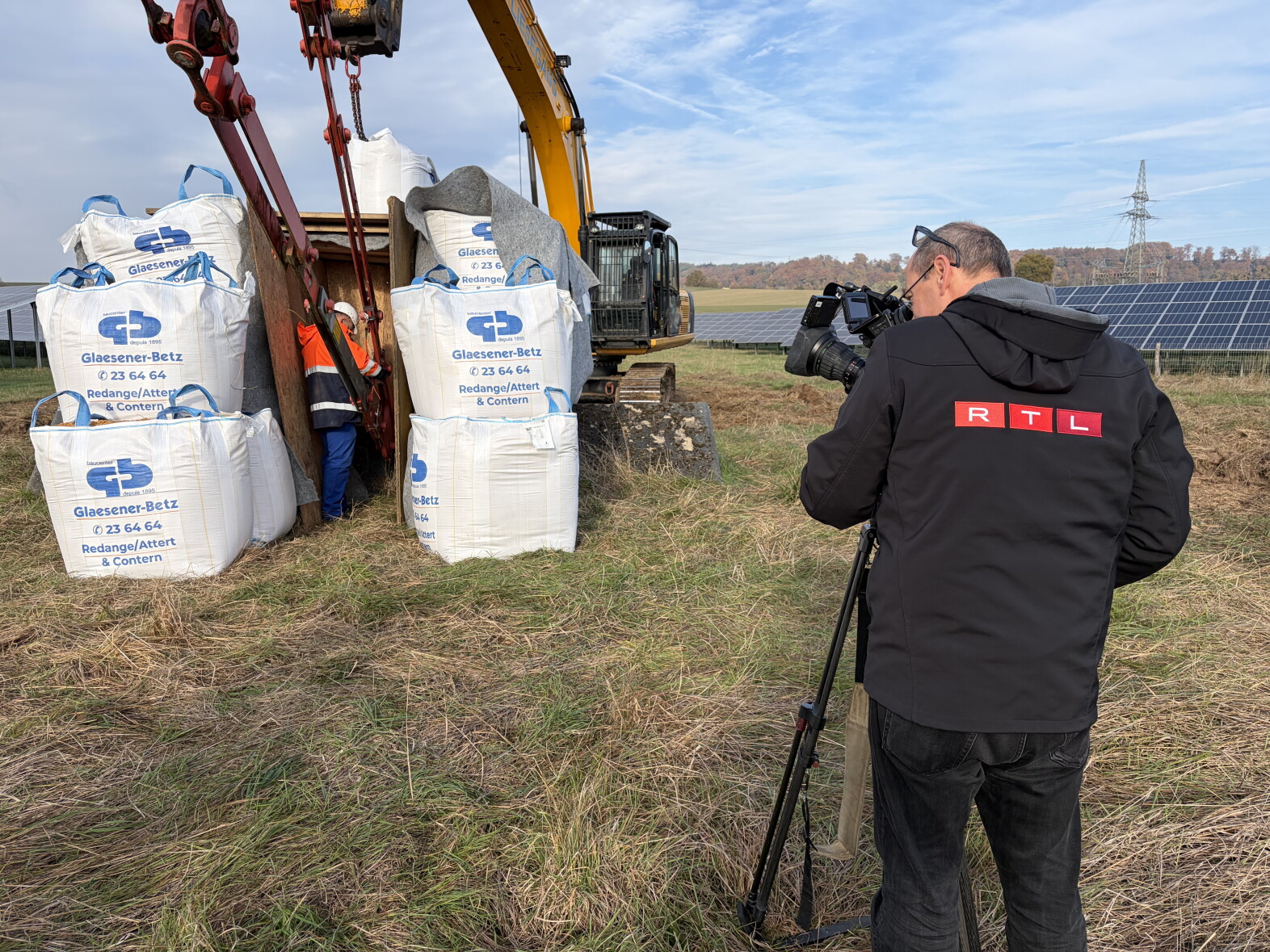
RTL transmitted from Beidweiler on 234 kHz longwave until 2023. Its directional array used three tall guyed masts equipped with cage antennas aimed toward Paris.
When operations began in 1972, the service operated with a transmitter power of 1,400 kW. Its power was raised to 2,000 kW in 1974, which made Beidweiler one of the most powerful stations in the world.
“Beidweiler enabled RTL’s French-language broadcasts to reach across France, ushering in what many remember as the golden age of longwave radio,” RTL said in its retrospective.
The longwave service dates to 1932, when it initially broadcast as Radio Luxembourg from a transmitter site in nearby Junglinster.
The station rebranded as RTL in 1966 before moving its primary longwave transmission site to Beidweiler in 1972.
The original Junglinster site is also credited with the discovery of the “Luxembourg effect.” As described by our friends at the SWLing Post, the ionospheric cross-modulation phenomenon was first observed in 1932, when listeners tuning in to the 60 kW Swiss medium-wave station Beromünster began hearing Radio Luxembourg’s 250 kHz longwave signal faintly riding on top of Beromünster’s 653 kHz frequency.
But after five decades of operation from Beidweiler, RTL discontinued on its 234 kHz transmissions on Jan. 2, 2023. The transmission hardware has since been sold and dismantled, RTL said.
The site, meanwhile, will continue to be used for solar generation.