Whether you come from the BBC, iHeartMedia or a small local station in Israel, the radio industry has been struggling in recent years. Rapid technological change, the fight for consumer attention, the rise of streaming services, digital radio and the simple fact that fewer people are listening, have all created significant pressure on the medium we love so much.
Over the past year, I’ve been working with Radio Tel Aviv to integrate AI as part of a broader effort to refresh the station. This includes updating their workflows as well as rethinking the programming schedule. Their sales team now uses AI tools to write client briefs, support promo creation and help them generate content and scripts.
In addition, we decided to take this work a step further and apply it in practice by creating our own artificial intelligence radio host. Our host is built on a carefully designed voice model and language model that we shaped with great precision.
And that’s how we created Odelia AI.
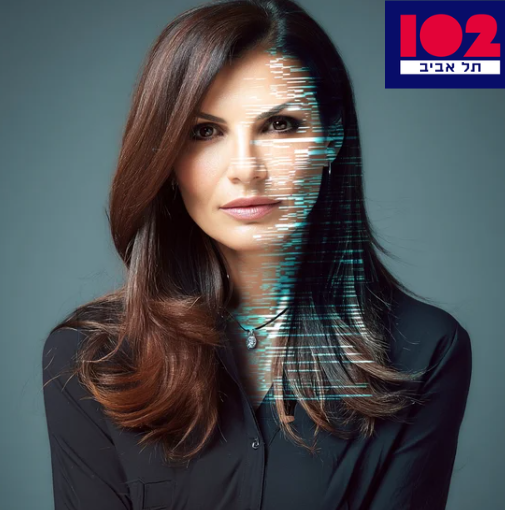
Odelia AI is the first autonomous radio host in Israel. For the past six months, she has accompanied the station listeners on their way home or at work every day (!) from 2 to 4 p.m. She can present music, deliver traffic updates and even tell jokes, mostly at her own expense (though it’s in Hebrew you can check her out here). “AI.O,” Odelia’s show, aired in a prime slot and got some really positive attention from listeners, PR and even new brands that want to sponsor the show because of the innovative vibe it brings.
The first stage in creating Odelia’s character began with an in-depth research phase, examining case studies and technologies from around the world.
We took a close look at both the successes and the failures to understand what truly works and what to avoid — from “Tai” in Australia, who served as a local radio host for six months without informing the listeners she was not a real person, to “Ashley AI” in Portland, modeled after the station’s star Ashley Elzinga from 95.5 FM, who became a hit with listeners and absolute lifesaver for the real Ashley that could finally be free in the afternoons and spend time with her kids.
We interviewed the people involved, gathered insights, and collected practical advice about both the content strategies and the technologies they used. This research helped us define our core principles for creating our new anchor.
In the second stage, once we understood what we needed to build, we began searching for the perfect voice. Who would become the voice of our first AI radio host? And surprisingly, the answer appeared right under our noses.
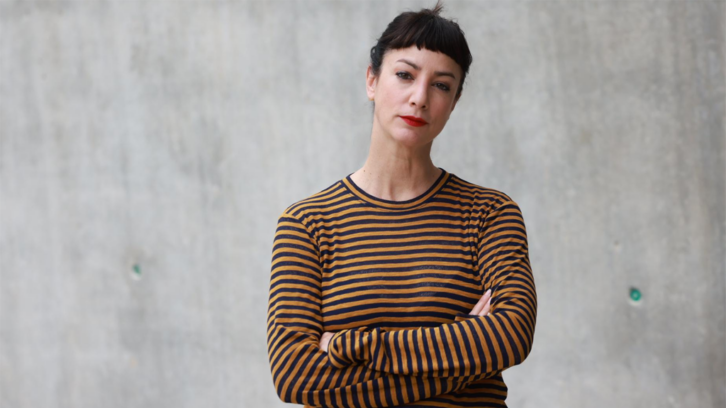
During a random meeting, Eldad Koblentz, shareholder representative on the board of Radio Tel Aviv, suggested we should use the voice of Odelia Safran, the station’s advertising manager, who happens to have one of the warmest and most pleasant voices.
My colleague Shahar Varshal and I had plenty of frustrating moments when the AI simply refused to cooperate. It froze, it distorted Odelia’s voice and sometimes strange accents slipped into the model.
But we kept learning and improving, and from pilot to pilot the process became smoother and more natural. Our team is learning and evolving as well, finding creative solutions and even wild hacks to train the model, including getting it to sing.
At the end of the day, we understood that in order to work efficiently with AI tools, we had to create entirely new workflows. In the past, music editors selected the music and the presenter improvised live on air. Today, the process is far more structured.
The workflow isn’t exactly glamorous: Scripts drafted in Gemini (we started with ChatGPT, but felt Gemini writes Hebrew that sounds more natural and human), a real human reviews and edits the text, voice generation in ElevenLabs, refinement through a custom local model in Replay and then we are on-air. Not exactly live radio, but surprisingly close.
What’s next? The work is still far from over. We are still testing tools, trying new workflows and we have many goals we haven’t yet achieved — some because the technology isn’t there yet, and some because the station itself is still adjusting to the change.
Six months in, Odelia AI hasn’t missed a single show. She’s always on time, and most importantly, never argues about the playlist.
Whether that makes her the future of radio or just a very reliable DJ, we’re still figuring that out.
Comment on this or any article to [email protected] with “Letter to the Editor” in the subject line.
Yaara Marchiano is a Cool Hunter and AI integration consultant. She works with production and media companies to adopt and integrate new AI technologies into every stage of the production cycle and advises startups on embedding and launching AI solutions to the media industry. She is former head of content and trends research at Keshet Broadcasting.
[Read More Radio World Stories About Artificial Intelligence]