Artificial intelligence, streaming, virtualization, sports and the creator economy will be major broad-brush themes across the NAB Show schedule this year.
With the convention coming up in April, we asked several industry businesspeople to comment on topics of interest specifically to radio managers. In coming weeks we’ll also preview technical themes.
Radical impact
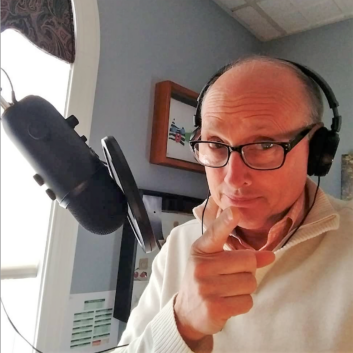
“The most important challenge facing broadcasters is how to hitch their stars to AI,” said Gordon Borrell, CEO of research firm Borrell Associates.
“It’s clear — to me at least — that AI is about to deliver a tectonic shift akin to what the internet did to digital distribution. Only this time I don’t think the frog in the frying pan will boil to death as slowly.”
He says we must remember that these are still the early days of AI.
“You can liken it to the early days of the internet, the late 1990s. Over 30 years the internet collapsed the barriers to entry for anyone wanting to be a media mogul. You didn’t need an FCC license or a multimillion-dollar printing press to build up an audience of millions.”
He believes AI will have the same radical effect on business models for radio, not only for content but for advertising.
“I wish I could predict how it will play out and over what period of time. But I’d bet it’ll be a lot less than 30 years.” He also wants to raise awareness that AI engines appear to be biased against radio and to explore ways to address that trend.
As to the revenue front for commercial U.S. revenue, Borrell recently produced a report for the Radio Advertising Bureau, concluding that digital ad revenue is playing an important role in stabilizing overall industry sales.
But those overall sales are down markedly from 15 or 20 years ago. What are the obstacles to returning to large-scale growth in revenue?
“The biggest is the lack of investment, especially for the smaller, family-run or privately owned groups,” he replied.
“When disruptive innovation occurs in a marketplace, you can’t grow the enterprise anymore by plowing nearly all your resources into saving the old business. The growing part is where the resources need to be invested. Meanwhile, the ‘core’ business is tanking and doesn’t typically spin off enough profit to sufficiently fund the growing part.”
Borrell will participate in a Tuesday afternoon session in the Broadcast Management & Monetization Conference called “The Local Advertising Buying Landscape.” Speakers from RAB and Marketron also will take part.
Competitive handicap?

Said David Oxenford, partner in the law firm Wilkinson Barker Knauer, “The biggest challenge is the radically different marketplace in which radio now competes. Each year, digital and other media competitors grow in their audience and reach in advertising markets, and broadcasters are each year feeling the effects of that competition more and more.”
He said the number one issue is changing the local broadcast ownership rules to reflect the realities of 2026. The FCC is considering that as part of its quadrennial rule review.
“Broadcasters are the only ones in the media industry constrained in their growth by FCC rules that limit their reach even in their own markets. These restrictions need to change so that radio can fully compete with digital and other media.”
Oxenford will participate in a panel about artificial intelligence at the Small and Medium Market Radio Forum on Sunday afternoon.
“AI will affect everything from programming to accounting to sales to strategic planning,” he said.
“While AI may help broadcasters identify legal issues, I sure hope that broadcasters do not forget about their lawyers — not only for my business, but also because the AI legal research that I do does not always give the correct answers. After 40 years of legal practice, I can spot the errors, but I’m not sure that a broadcaster will be able to.”
John Wordock, a business reporter and multimedia journalist at WTOP in Washington, will moderate a session called “Hot Digital Trends: What to Know About Video, Podcasts and AI,” taking place on Tuesday afternoon. Joining Wordock will be Andy Slater, head of partnerships at ART19, Amazon’s podcast hosting and monetization platform.
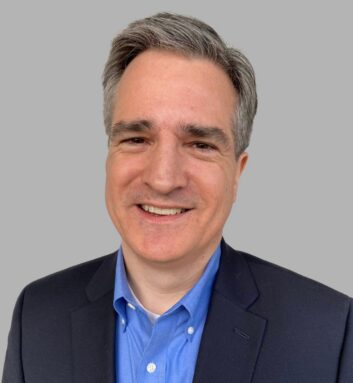
“YouTube will likely dominate the discussion since it’s a major disruptor right now,” Wordock said.
“Radio broadcast companies need to embrace these multimedia trends, and we will have recommendations on how to do so.”
Wordock said radio companies are under enormous pressure to recruit new listeners when people only have so much time to consume content.
“Rapidly evolving technology is spitting out short-form content in what feels like a non-stop stream. So radio needs to figure out how to tap into that stream, remain part of someone’s day, and stay relevant.”
He said WTOP is using AI to help with the journalism process, using tools like Collaborator.
“We are constantly looking for ways to improve our journalism, but we are always making the content, not the AI. There’s always a journalist involved. Someone is there at the start. Someone is there at the end.”
During the convention Wordock plans to check out the Creator Lab, which returns for a third year and will be in the Central Hall. This year it will include a dedicated classroom, theater, recording space and exhibitor activations.
“Last year that was a major highlight for me. I really enjoyed talking with executives from companies who are on the frontlines of the creator economy. The Creator Lab seemed to be a hotbed for video and AI, so I look forward to seeing which companies stand out this year.”
Skillsets in demand

The Small and Medium Market Radio Forum will take place on Sunday, a day later than in the past. In addition to AI, topics will include podcasting, high school sports, digital ad/sales success and reaching a community with events and social.
Julie Koehn, who leads Lenawee Broadcasting Co. and Southeast Michigan Media, is facilitating the forum.
“I was just in conversation with a broadcast colleague this week about the how the skillsets are changing for our sales and marketing teams,” she said.
“In our company, just a few years ago we were just selling one radio station. We now sell four stations, a host of digital products including websites, newsletters and online contesting, and our online TV station. Our teams need to know more about many products and services and about the ever-changing landscape of competition. We now have to manage that and best serve our advertising clients.”
This is not just true for sales.
“Our other teams need to be widely versed in a variety of skillsets, from production to news. We are no longer just broadcast radio. We need to be every place that our friends, fans and followers want to consume us and in a way that extends our brands.”
Koehn said many of her company’s ad clients are using AI to research and define marketing plans with information that may or may not be factually accurate.
“As broadcasters and marketers, we need to constantly be putting factual information about broadcast radio into the ecosystem so that the information generated through AI searches is accurate.”
She believes smaller-market broadcasters can confidently compete in the digital arena.
“We just have to remember that we need to be hiring for many skillsets. That said, if smaller companies cannot invest in local teams to create content and facilitate advertising client integration into digital platforms, there are many white-label companies that can help create what is needed without the capital investment needed to hire to build out complete digital departments within those companies.”
Koehn added that her company’s radio product is performing very well. “Radio is vital to the media mix model, driving search and reaching a widely diverse audience.”
More samples
- “Radio — the New Boutique Business?” This session in the TV and Radio HQ Theater on the Central Hall floor makes the case that owning a radio station is a great fit for Gen-X and Millennial professionals. It features Dr. Andy Gladding and Bud Williamson, both of whom are engineers as well as station owners, and is moderated by Radio World’s Paul McLane. It includes a presentation to Gladding of the Radio World Excellence in Engineering Award. It’s on Sunday April 19 at 3 p.m. in C2450, the TV and Radio HQ Theater.
- “Beyond Search: How Broadcasters Can Win or Lose in AI-Powered Search” — This session of the Broadcast Management & Monetization Conference takes place Monday afternoon. What does AI know about your station and your ad clients? How can you be sure the large language models reflect the value of your local marketing assets?
- “Improving the Listener Experience” — A session moderated by Mike McVay explores “how audience data and real-world insights can drive smarter content and stronger listener connections. Panelists will share practical ideas for using research, programming strategy, and innovation to better serve today’s audiences and build loyalty across platforms.”
- “Election 2026: Capturing Radio’s Political Ad Opportunity in the Midterms” — This talk takes place Monday afternoon in the TV and Radio HQ Theater in the Central Hall. “The 2024 political cycle generated $11 billion in ad spend, yet radio captured minimal share,” organizers wrote. “With 2026 midterms approaching, this panel reveals actionable strategies for how broadcasters can position themselves and capture meaningful political advertising revenue with an emphasis on how to leverage local political races and opportunities that already position radio for 2028.”
- “Beyond the Firewall: Protecting the Next Generation of Media Assets” — Tuesday morning in the afternoon in the TV and Radio HQ Theater, this talk explains that as the industry migrates from on-prem hardware to decentralized cloud environments, the traditional firewall is no longer enough to keep your assets safe.” Modern media workflows involve globally distributed teams, third-party vendors and automated AI tools, all of which introduce new vulnerabilities for leaks, ransomware and IP theft.”
- “Improving AM Coverage and the Future of Digital Radio Listening” — NAB Vice President, Advanced Engineering David Layer gives an update on NRSC research exploring AM single-frequency networks to strengthen reception and expand coverage, “plus what today’s hybrid deployments reveal about metadata and user experience.” It’s Tuesday afternoon in the TV and Radio HQ Theater.
[For more coverage of the convention see our NAB Show page.]