The author is vice president of public policy at NRB.
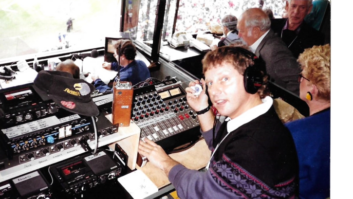
I used to run a radio station, so imagine this scenario with me:
The phone rings and you recognize a government area code. It doesn’t take a formal letter to get your attention. All it takes is a “friendly” call from someone in government dropping a hint — maybe your nonprofit status could use a closer look from the IRS, or your station might be due for an FCC EEO audit.

No order. No violation. Just a hint. Suddenly you’re weighing what’s worth the risk. Sometimes, without anyone telling you to do a thing, you change what goes on the air.
That’s jawboning.
It’s one of the most effective ways the government can silence speech — because it leaves no fingerprints.
Senators Ted Cruz (R-Texas) and Ron Wyden (D-Ore.) have introduced a bill to do something about it. The JAWBONE Act, the “Justice Against Weaponized Bureaucratic Overreach to Networked Expression” Act, would give broadcasters a real legal tool to fight back.
Every radio and TV station in the country should know what’s in it.
Both sides do this
Let’s be honest: This is not a Republican problem or a Democrat problem. It’s a power problem.
Every administration uses government pressure to push private companies around on speech. The Biden administration was accused of leaning on social media platforms to remove content about COVID and elections. Last September, FCC Chairman Brendan Carr was criticized by Sen. Cruz himself, who called it “right out of a mafioso,” for suggesting that stations airing content the White House didn’t like might have trouble at license renewal.
Cruz put it well a few months ago on his podcast: If the government can pull a broadcaster’s license over content it doesn’t like, “that will end up bad for conservatives.”
And it wouldn’t end well for Christian broadcasters either, or anyone who doesn’t always parrot what the people in charge want to hear.
What this actually costs local stations
When I was running a station, our license wasn’t just a business asset. It was our connection to the community.
Local Christian radio and TV stations are often the only voice in a market talking about faith, family and the things that matter most to their listeners.
They carry church services for people who can’t get out of the house.
They air programs that impact marriages, support parenting, promote addiction and recovery services, and air local emergency updates. That’s real.
When that voice gets quieter because a GM is nervous about a regulator, the whole community loses.
And here’s the thing — the damage happens long before any formal action. Word gets around in this industry. A GM hears that a competitor got a pointed call from the FCC.
Suddenly, programming decisions that should be straightforward editorial calls start getting second-guessed. Nobody tells you to change anything. You just … do. That’s the real cost: not a court order, not a fine. Just a station that slowly stops saying what it would have said.
What the JAWBONE Act does
The bill fixes three specific problems that have made jawboning nearly impossible to challenge in court.
First, you can sue even if the pressure didn’t work.
Right now, courts want to see that the government actually caused a content change. That’s hard to prove because companies don’t like pointing fingers at regulators. The JAWBONE Act says the attempt alone is enough. You don’t have to have already backed down to have a case.
Second, you can get monetary damages.
Currently, the only remedy is usually a court order telling an official to stop — but by the time a case works through the courts, that official is often long gone. Money damages and attorney fees mean cases can actually move forward, and officials can face real consequences.
Third, the government has to show its work.
Agencies would be required to log and report certain communications with broadcasters and platforms. Summaries go on a public website. Congress gets the full records. Jawboning works because it happens in the dark. This turns the lights on.
One more thing worth knowing: This bill expressly covers broadcasters, not just social media companies. And the protection kicks in before content ever airs. If the government pressures a station to kill a story or change a program while it’s still in production, that counts. That matters.
This one is worth fighting for
You know a bill is onto something real when several organizations from across the ideology spectrum endorse it.
Groups that agree on almost nothing agree on this. That’s because jawboning isn’t a left problem or a right problem, it’s a government problem.
Christian broadcasters have seen the political winds shift before. The administration that’s friendly to religious expression today may not be the one in office when your license comes up for renewal. The protections you fight for now are the ones you’ll be glad you have later.
NRB has always stood for free speech and against government censorship. The JAWBONE Act is exactly that fight.
I spent years deciding what went on the air at a local radio station. That was my call, my staff’s, and the community’s. Not Washington’s.
The JAWBONE Act would help keep it that way. That’s worth fighting for.
Comment on this or any article. Email [email protected] with “Letter to the Editor” in the subject field.