Last month, Radio World ran a story chronicling Henry Lenz’s CBS News Radio career.
Lenz runs a Substack, and he allowed us to publish his piece on the life of New York radio engineer Henry Tom Wei. Check out Lenz’s Substack for this story and more.
Every immigrant’s journey begins with a crossing. Sometimes it is an ocean. Sometimes it is a border. Sometimes it is the invisible line between the life you are given and the life you dare to imagine.
America has always been a nation of immigrants, bringing together people from everywhere. Every language is spoken here, every culture is represented, every country is present, every faith is practiced and every dreamer arrived here. Diversity isn’t our weakness; it’s our superpower. It’s the source of American creativity, innovation, resilience, prosperity and greatness. We became the world’s indispensable nation because of it.
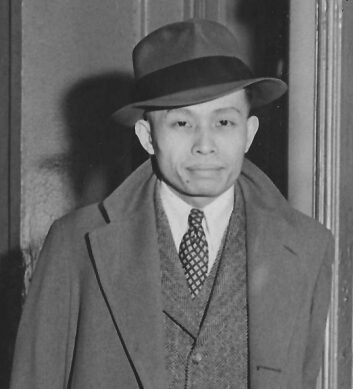
This story is about a boy born over a century ago in the Canton region of South China, in a village he remembered as “Bok Sui”— meaning “white water.” Whether that village still exists in any recognizable form is uncertain; it’s a name carried across generations and memories. Growing up, he heard stories about America — The Gold Mountain, they called it — and he decided to go there in 1930. He was just 13.
The Chinese diaspora in the 19th and 20th centuries usually arrived in California or British Columbia. Long before jetliners crossed the globe overnight, before GPS, before cellphones and before anyone could track a journey with a tap on a screen, this young man set out alone. He departed carrying little more than a sense of adventure and a dream large enough to sail across the ocean.
In one telling, he became enchanted with the idea and left home against his father’s wishes. In another, his father may have wanted him to go, believing that America offered a future China could not. We may never know which version is true. His immigration documents later gave his birthday as Oct. 15, 1916, but even that may have been only a guess.
It’s the tale of a young man who, even now, seems to have been astonishingly resourceful and determined. Without a clear trail for us to follow nearly a century later, we have just fragments — a ship’s manifest, a train ticket, a Chinatown address, a handful of photographs, his citizenship certificate, a faded draft card, family memories and a WNYC Radio ID.
Plus, there are a few mysteries that may never be solved. But we know what he did here: He built an amazing American life. His name was Hom Hong Wei. Eventually, he would become known simply as “Henry Tom” Wei.
The journey to New York
He made his way through the Pearl River Delta — through the waterways that linked Guangzhou, Macau, Shenzhen and Hong Kong — until he reached the port there and boarded the ship that would carry him across the Pacific.
He arrived in Vancouver and got on a train to travel across the North American continent, traversing thousands of miles of forests, mountains, prairies, rivers and unfamiliar cities. Imagine that journey through the eyes of a 13-year-old. No television, no internet, no familiar language and no certainty about what waited at the end of the trip. Not even a family member or friend waiting at any dock or station.
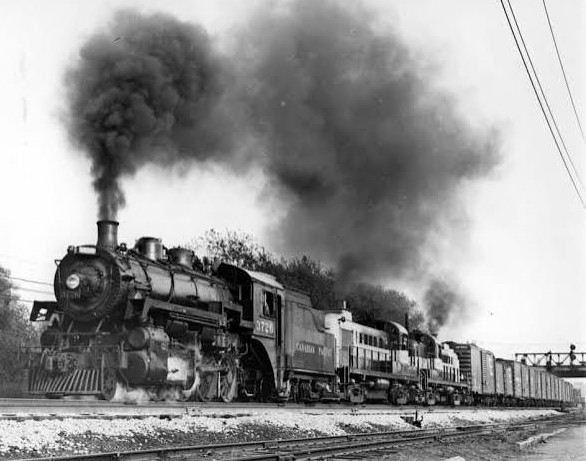
One tale recalls that a stranger on the train took an interest in the young man and bought him sandwiches along the way. I love that detail. History is often shaped not only by great leaders and famous speeches, but by small acts of kindness from people whose names are lost forever. Eventually, the train reached Halifax in Nova Scotia.
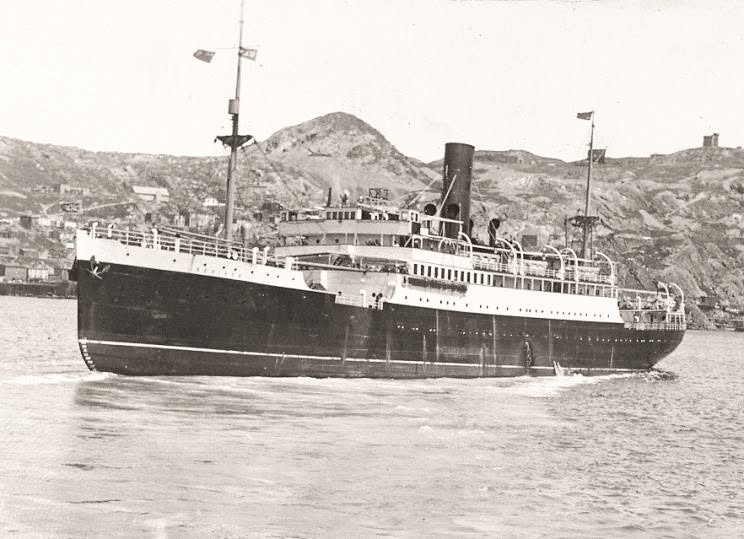
From there, he boarded the SS Nerissa for the final leg of the journey to New York City. When the ship arrived in September 1930, immigration officials detained him for questioning at Ellis Island. He arrived alone during an era when immigration was heavily restricted due to the Chinese Exclusion Act of 1882.
We know from the records that Henry spent several days in detention while immigration authorities determined whether he could enter the country. We know that they fed him more sandwiches there. The other details remain murky. Did he come to join relatives, sponsors or friends? Or did he arrive as a so-called “paper son”? We may never know.
Yet somehow, that uncertainty makes the story even better. Because whatever happened in that interview room, he succeeded. The officials opened the gate. Did I mention that he was only 13? He probably took a ferry with his tattered suitcase across the harbor to Battery Park in Manhattan. From there, he walked up to nearby Chinatown, and the rest of his life began.
His story mirrors the history of New York, radio, immigration and America itself.
For a time, Henry lived at 68 Mott Street with a new friend he later referred to as “Uncle Nang.” He was likely a fellow immigrant who helped newcomers get started, though nobody knows for certain today. What we do know is that someone opened a door. Someone gave a young immigrant kid a place to sleep.
At first, he was a waiter in a Chinese restaurant. Then, across the street at 69 Mott Street, Henry found work in a radio repair shop.
Discovering the “magic box”
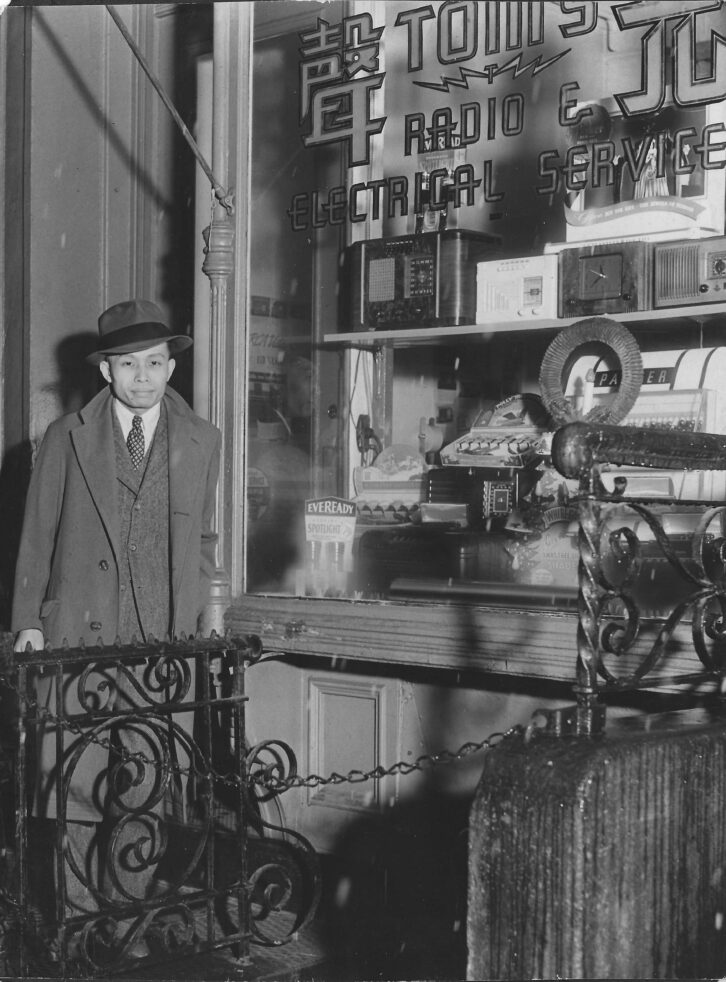
In 1930, radio was the internet. It was television, podcasting, streaming, social media and breaking news rolled into a single glowing box in the corner of a room. And the boy from China became fascinated by it. He learned how the circuits worked, how the tubes glowed, how voices traveled invisibly through the air and how sound could connect people separated by hundreds or thousands of miles.
Imagine New York City then. The city was struggling through the Great Depression, and radio was transforming American life. Families gathered around large wooden receivers to hear news, comedy, drama, baseball games, presidential speeches and music. Somewhere in a tiny repair shop in Chinatown, a teenager from China was learning how those magical boxes worked. Radio would become his life’s work.
[Related: Read about another engineer Wei influenced, Richard Ross.]
His memories of seeing a silent film as a child first sparked his interest in America. Over the years, Henry learned English by going to the movies. There is also a story in the WNYC archives where he talks about attending the Hebrew Orphan Asylum School to continue his education, which was where many immigrants went to learn to speak English. In the 1930s, Babe Ruth visited there, so maybe Henry got his autograph, too.
Several years later, Henry enrolled at the Brooklyn Polytechnic Institute, where he studied electrical engineering. Then he went to the RCA Institute in 1937 and earned his FCC 1st Class Radiotelephone license. He was proud to be the first Chinese American to do so. At the time, it was the gold standard for broadcast engineers — a difficult credential, a rare achievement and one that opened doors throughout the industry.
In 1938, he was hired at WNYC Radio, part of the New York City municipal broadcasting system. He eventually became the chief engineer there.
Building a life and engineering history
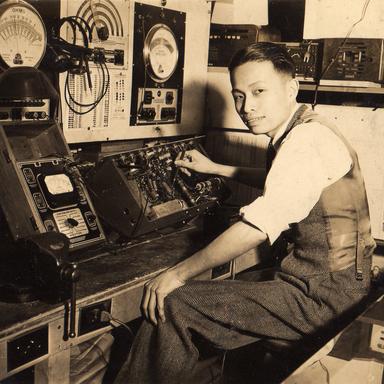
In 1948, nearly two decades after leaving China, Henry returned to visit his parents. Imagine that reunion 18 years later, after a war and a revolution there. During that visit home, he met the woman who would become his wife, Kim Ling. He brought her back to America on an airplane, and together they built a family.
Their three children were born here. Their son, Damon, would eventually help me reconstruct Henry’s story almost a century after that 13-year-old boy arrived in New York Harbor. Damon even shared memories of his father singing to his mother.
Henry helped shape the sound of one of the greatest cities in the world. He worked during the administrations of mayors whose names now fill history books. He was Fiorello LaGuardia’s engineer as Hizzoner read the comic strips on the air in the 1940s. In 1970, he received a Civil Service award from John Lindsay, honoring his 30 years of service at WNYC.
Henry aired programs from the 1939 World’s Fair — before the idea of a “Radio Row” even existed. He also worked for Radio Free Europe during WWII to help the Allies fight fascism.
He met Presidents Harry Truman and Franklin D. Roosevelt. First Lady Eleanor Roosevelt befriended him with cold drinks on hot days during remote radio broadcasts. He mixed and aired concerts, interviews and performances by celebrities like Mitch Miller, Jose Greco, Haile Selassie and many others from studios, stadiums and the bandshell in Central Park.
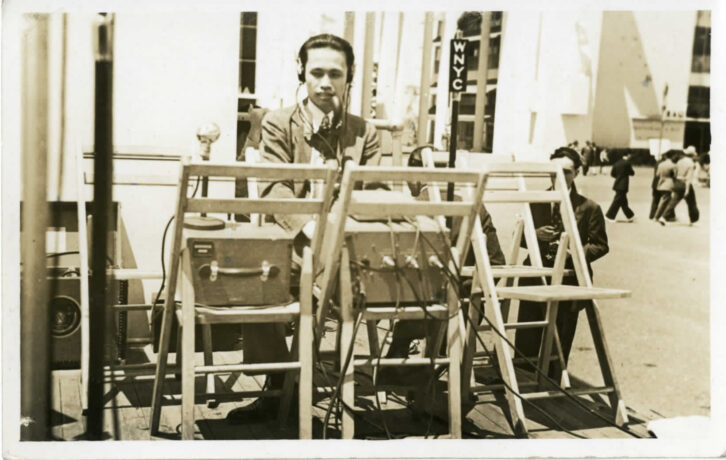
He joined the Apollo astronauts down the Canyon of Heroes, and he covered the tall ships in New York’s harbor in 1976 for America’s bicentennial.
A legacy of mentorship
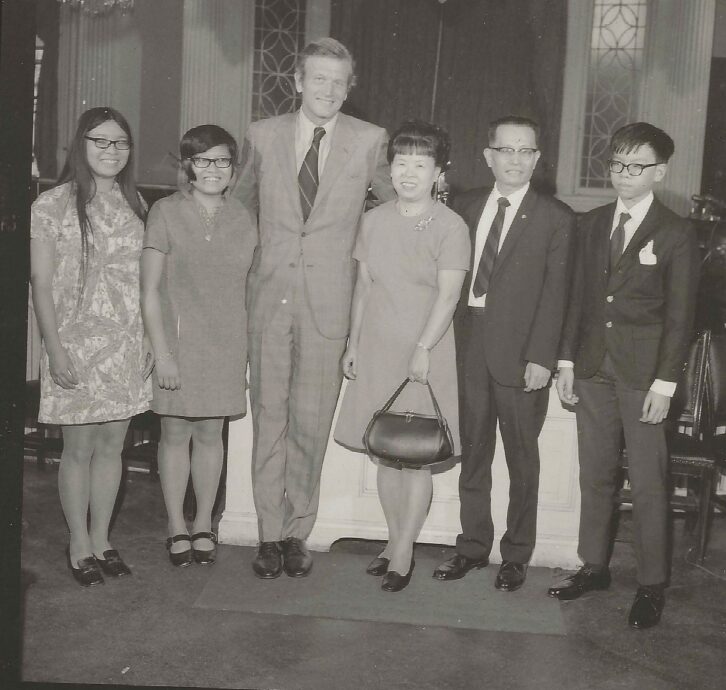
Henry also created a broadcast engineering class at Westinghouse High School in Brooklyn, where he taught hundreds of young men and women how to begin their careers. In 1941, he was an announcer and producer on Brooklyn’s WBYN for the “Chinese News.”
He helped explain America’s war effort to listeners, and he also helped young Americans of Chinese descent learn more about their language and culture. His other interests included music and Eastern philosophy.
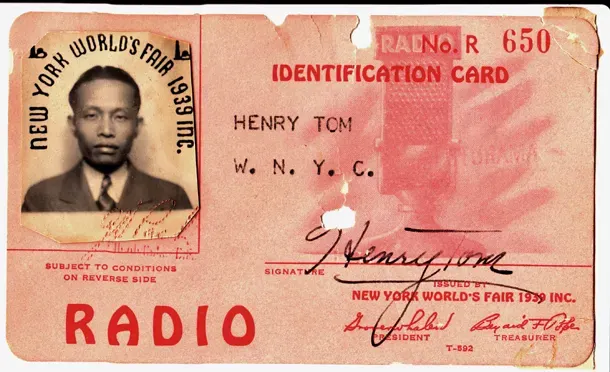
And then, more than four decades after he arrived in America, Henry opened a door for me. Fresh out of Hobart College (Geneva, N.Y.) in 1972 and looking for a way into broadcasting, I visited WNYC. Henry generously offered me a volunteer position. I set up and mixed radio broadcasts from the WNYC(AM/FM) studios, City Hall and Lincoln Center.
Then he gave me some advice: Get your FCC First Class License. When I passed that test the following year, he arranged an interview for me with his friend Bud Arnow, the engineering director at CBS Radio. I think my enthusiasm got me hired. My first assignment during my first week there was editing (with a razor blade) and mixing Walter Cronkite’s daily radio commentary. How do you top that?
So began my own journey, fascinated by sound and radio just like Henry, leading to a career where I also worked with presidents, journalists, celebrities and storytellers.
The parallels in our careers amaze me. Like many immigrants, Henry Wei loved baseball. Damon told me that he used to play catch with his dad in their backyard. When Henry was covering the opening of Shea Stadium in Flushing Meadows in 1962, Attorney Bill Shea, who was instrumental in creating the new franchise, gave Henry a NY Mets cap. Henry was thrilled when they won the World Series in 1969. Years later, there I was, reporting from the Mets dugout and locker room when they won the championship again in 1986.
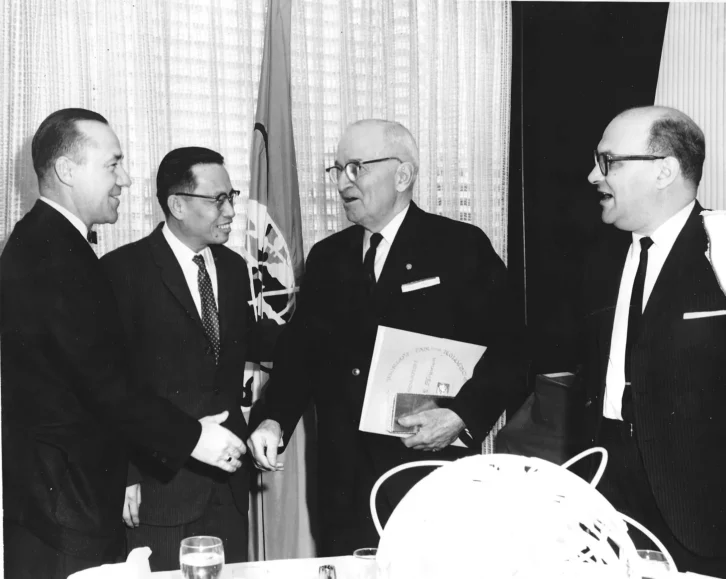
One of my favorite stories about Henry involves his daily commute. After he married, he moved to Staten Island and started a family. He traveled to work on the ferry every day. Today that sounds routine, but back then it wasn’t. The Verrazano-Narrows Bridge didn’t exist yet; the ferry was the lifeline connecting him to the rest of New York City.
I spent part of my career producing documentary radio programs on CBS Radio. One year, we used the haunting sound of the Staten Island Ferry foghorn as part of our audio palette to open each show for Charles Kuralt’s weekend broadcasts about America’s harbors. Now I realize that the sound I’d used was a daily part of Henry’s life — one more unexpected connection between us.
Echoing forward
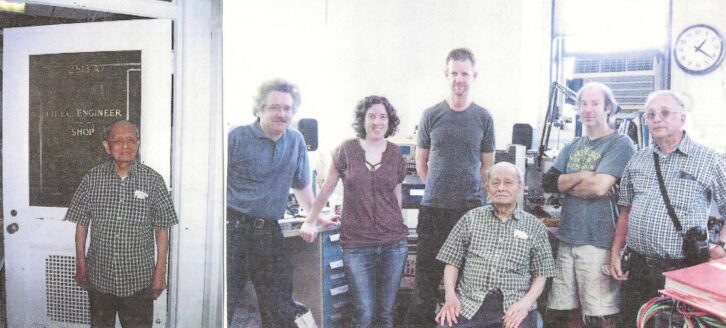
Different generations, different backgrounds and different beginnings, yet somehow similar paths. Both of us were fortunate enough to spend our lives doing work that we loved. But Henry’s journey required something extra: He had to cross the Pacific Ocean first.
That’s the thing about immigration. The story doesn’t end when someone arrives. It echoes forward through generations, families, friendships, successful careers, mentoring others and lives where they live long enough to see it all blossom.
Looking back now, I realize that the trajectory of my own life was foretold by a decision made nearly a century ago. A 13-year-old boy from a Chinese village heard stories about a place called America, left his home in search of it, created a loving family, enjoyed a long career in broadcasting and lived into his 90s.
Henry was like no one else and truly lived a life of consequence.
As America marks its 250th birthday, I am profoundly grateful that Henry Wei made his brave journey to discover The Gold Mountain.
Comment on this or any article. Email [email protected].