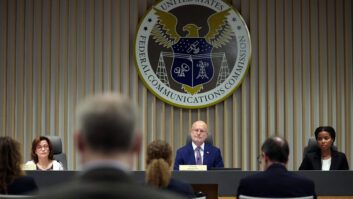
The Federal Communications Commission made a subtle change last month that requires experimental high-frequency stations to follow its station identification rules.
Bennett Kobb first reported the change in his Experimental Radio News.
Previously, some HF experimental licensees were able to transmit without identifying by utilizing waivers. The licenses, which cover experimental operation in the 2–25 MHz band, are available on a temporary but renewable basis.
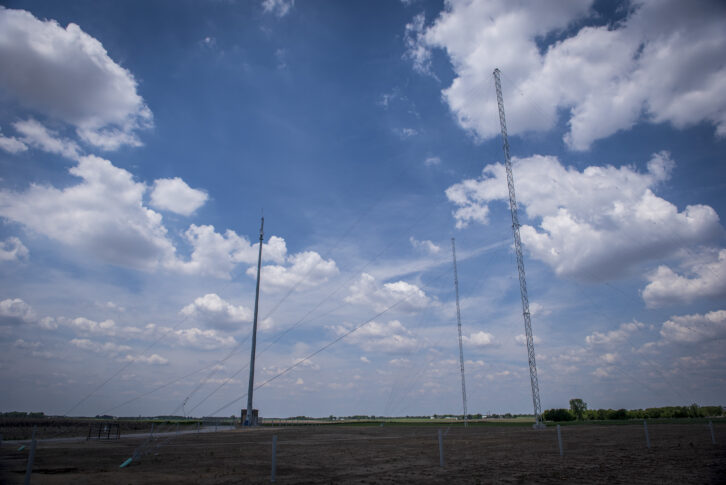
Experimental HF stations are known to run as much as 800 kW of power, but until December, some licensees held waivers allowing them to operate without ID.
[Related: “Mystery Surrounds 3 Pending U.S. Shortwave Stations”]
However, in letters issued to licensees on Dec. 17, the commission emphasized their obligations. These now include strict adherence to the ID rule. The commission explained that an experimental radio station must transmit its assigned call sign at the end of each complete transmission at least once every 30 minutes in clear voice or Morse code, “with all digital encoding and digital modulation disabled during station identification.”
The FCC’s Office of Engineering and Technology said that the letters were in response to interference complaints from incumbent spectrum users. Several amateur radio bands, for example, operate in and around where experimental stations are licensed.
One experimental station, WK2XJK, is operated by Rockland Wireless and has its antenna on the Armstrong Tower in Alpine, N.J. It is authorized to operate with 16 kW ERP, including in the 14.0–14.99 MHz band. As Kobb noted, WK2XJK was exempted from identification as of Dec. 1; however, by Dec. 17, that exemption was removed.
Kobb told us that not all experimental stations had been exempted from station ID. It remains unknown why some held waivers while others did not — Kobb speculated that it may have simply been a matter of whether or not the licensee requested an exemption.
These licenses have drawn significant interest from the HF trading industry for sending data between U.S. and foreign exchanges. While experimental HF stations can operate under Part 5 of the FCC rules, the commission states that licensees “are not permitted to provide commercial service, charge fees or receive payments for products or services of operation.”
Experimental license records are normally public, but applicants can petition to withhold commercially sensitive data.
Kobb also reported that the commission rejected requests from Skywave Networks to reveal confidential information in license applications through the Freedom of Information Act.