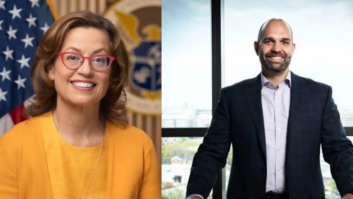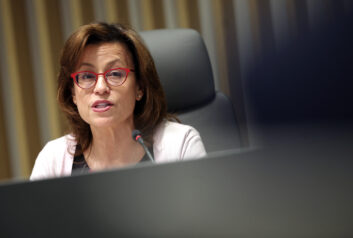
Warning of federal overreach ahead of the midterms, FCC Commissioner Anna Gomez has called on National Association of Broadcasters President and CEO Curtis LeGeyt to alert radio and TV stations to threats surrounding election poll coverage.
Gomez, the lone Democrat on the three-person commission, did not mince words about her level of concern.
“This administration is running a coordinated, government-wide effort to reshape the media into its sanctioned messenger, and the Federal Communications Commission has become one of its most active instruments,” Gomez wrote to LeGeyt.
(Read Gomez’s letter to LeGeyt.)
As a result, Gomez chose to write to NAB, explaining that the association has the nationwide scope to warn radio and TV stations about what she perceives as a grave threat heading into the midterm elections.
“Fake polls” warning
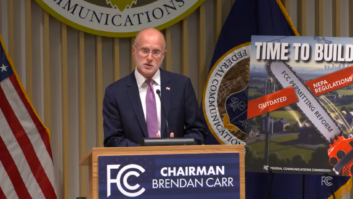
On Wednesday, FCC Chairman Brendan Carr took to social media to warn broadcasters about reporting on what he deemed “fake” polling data.
“During this election season, there has been a significant surge in entirely fake polls and suppression polls designed to do nothing more than interfere with the regular functioning of the electoral process and alter the normal patterns of voter turnout and enthusiasm,” Carr said in a post on X.
The Republican Carr wrote that the FCC takes such issues seriously and that broadcasters are prohibited by the terms of their licenses from engaging in “news distortion” or promoting “broadcast hoaxes.”
But citing the FCC’s own legal standards, Gomez argued that enforcing the news distortion policy requires proof that a licensee intentionally fabricated or distorted news coverage of a major event. Courts, according to Gomez, have consistently distinguished between deliberate deception and simple inaccuracies, journalistic errors or editorial differences of opinion.
She also argued that the broadcast hoax rule carries a strict threshold, applying only when a station knowingly airs false reports concerning a crime or catastrophe that inflict immediate and substantial public harm.
“Absent that level of clear evidence, the commission has no authority to act,” Gomez wrote.
Tempered response
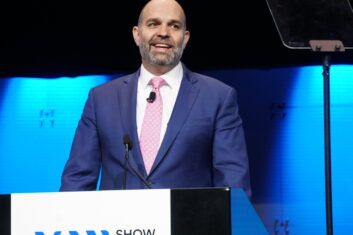
Gomez felt the letter to LeGeyt was needed in part because many NAB member stations lack the legal resources to contest federal inquiries independently ahead of upcoming midterm elections.
While she expressed gratitude for NAB’s pushback against the commission’s early license renewal inquiries, Gomez feels the overall response from NAB and other lobbyists have not yet matched the scale of the regulatory threats.
She asserted that NAB members need to hear such messaging directly from LeGeyt as the association’s leading voice.
“An industry confronting a coordinated effort to turn licensing authority into leverage over election-year coverage needs more than a couple of tempered statements,” Gomez wrote.
In a statement following the letter, LeGeyt said that NAB will continue working with Gomez and other policymakers to protect the rights of broadcasters “and strengthen local stations’ ability to deliver trusted news and information to the communities they serve.”
“We appreciate commissioner Gomez’s recognition of the value of local broadcasters and her commitment to the First Amendment principles that underpin a free press,” LeGeyt said.
Gomez added that she would welcome the opportunity to work directly with NAB to ensure its membership receives accurate information on what the law requires.
Equal time and ad rates
In additional examples in her letter, Gomez argued the commission is twisting the equal opportunities rule into a weapon. Section 315 of the Communications Act requires a broadcaster to offer equal time to a candidate’s opponents.
However, Gomez pointed to Congress’ built-in exemption for bona fide news interview programs, which has been cited on several occasions, including in a 2006 FCC ruling denying a Democratic gubernatorial candidate equal time after his Republican opponent, then-Gov. Arnold Schwarzenegger, appeared on “The Tonight Show with Jay Leno.”
Gomez also referenced filings by ABC’s parent company, Disney, alleging the Media Bureau revised that guidance to manufacture legal vulnerability over reporting the administration disliked.
In addition, she argued that FCC staff unilaterally extended the lowest unit charge, a statutory discount reserved for federal candidates.
The Media Bureau issued a public notice regarding changes to the lowest unit charge on March 30. Following a challenge filed by four Democratic congressional candidates, the Supreme Court issued a stay on Sept. 4.
“Almost overnight, that same discount became available to joint fundraising committees and coordinated party advertising campaigns for the first time,” Gomez explained.
Gomez believes the move results in a fire sale on ad inventory that could otherwise help stations grow revenue during a competitive political season heading into the midterms.
[Do you receive the Radio World SmartBrief newsletter each weekday morning? We invite you to sign up here.]