In a landmark decision that could have quick implications for the Federal Communications Commission, the Supreme Court has ruled that the president has the power to fire commissioners at independent agencies without cause.
In the 6-3 majority opinion issued Monday, Chief Justice John G. Roberts Jr. ruled in Trump v. Slaughter that President Trump had the right to fire Rebecca Slaughter, a Democratic member of the Federal Trade Commission, without cause, writing that the “FTC’s for-cause removal provision is contrary to the separation of powers enshrined in the constitution.”
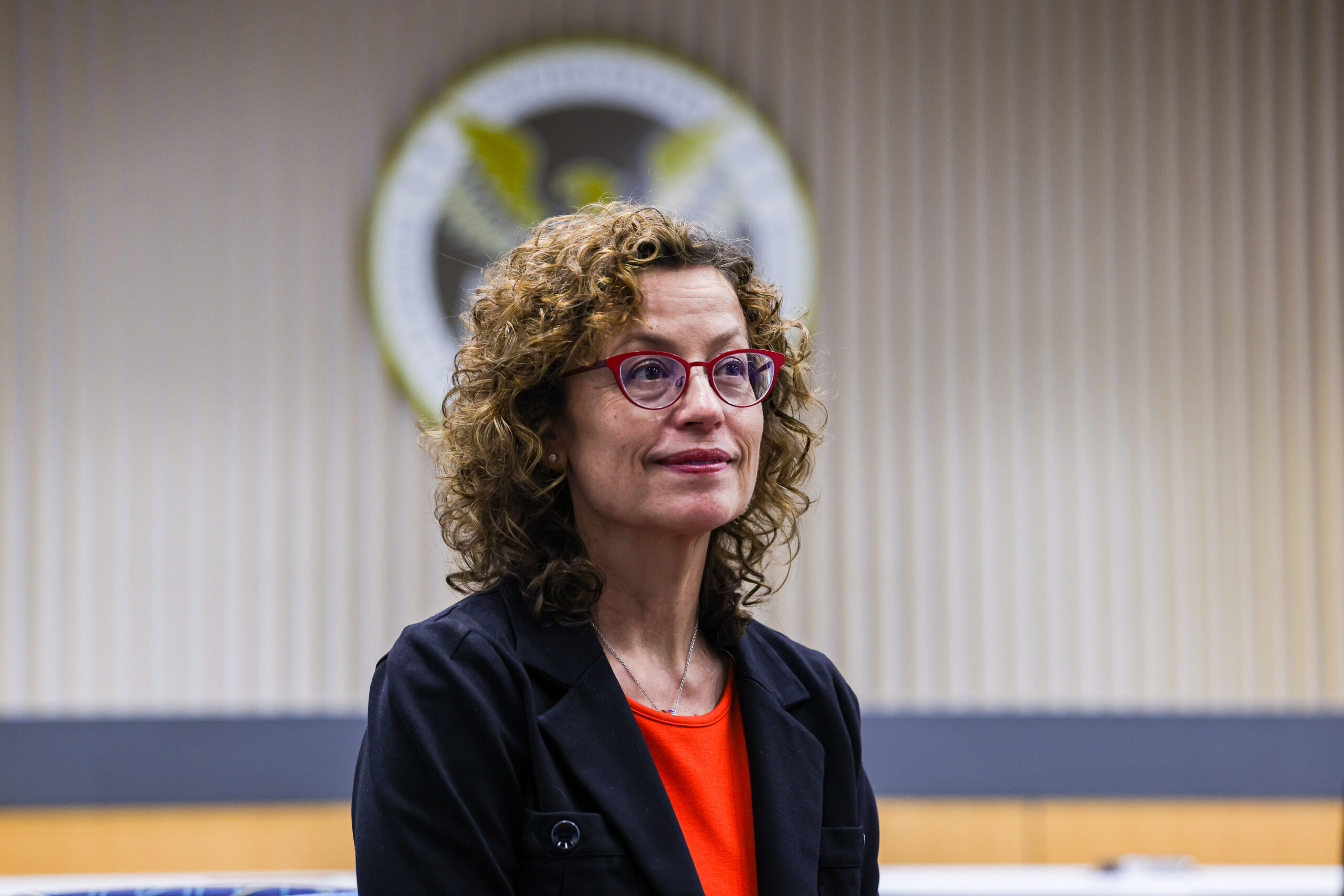
There has been speculation that FCC Commissioner Anna Gomez — the lone Democrat commissioner — might be targeted next. Gomez recently told Wired that she checks her email “every day” to see if she has been fired.
But under Monday’s ruling, Trump now has the legal avenue to fire Gomez.
“Although it is up to the Senate to decide whether to confirm those with whom the President would prefer to work, neither Congress nor the courts may saddle him with those with whom he cannot work,” Justice Roberts wrote in the ruling.
Olivia Trusty, the third FCC commissioner, was confirmed by the Senate last June to serve and she is also a Republican. The Communications Act requires the FCC to have at least three commissioners for a quorum to conduct official business.
The quorum, as attorney Gregg Skall told us, does not have to be made up of different political parties. Should the administration seek to fill any vacant seats with a permanent replacement, those nominees would require standard Senate majority approval.
President Trump is not legally required to fill other existing and older FCC vacancies before appointing a successor to her seat, Skall said.
“The only statutory constraint is the party-balance rule: The maximum number of commissioners who may be members of the same political party shall be a number equal to the least number of commissioners which constitutes a majority of the full membership of the commission — which would be three,” Skall told us.
Gomez has been critical of what she views as a “sustained, coordinated campaign of censorship and control” by the Republican Brendan Carr-led FCC, specifically regarding recent commission moves toward early reviews of ABC broadcast licenses.
In a release that immediately followed the Monday Supreme Court ruling, Gomez said the decision puts at risk how Congress intended independent agencies to function in American democracy.
“When we negotiate spectrum agreements with foreign governments and international bodies, our counterparts trust that our positions reflect technical expertise and legal authority, not the political preferences of whoever occupies the White House at a given moment,” Gomez wrote.
She added that when the FCC was established by Congress, it made an intentional choice to create a multi-member, multi-party body that was “insulated” from political pressure.
Gomez’s term as commissioner expires July 1. Under the Communications Act, she may legally remain in office until the expiration of the session of Congress that begins after the expiration of her term, or until a successor is appointed and confirmed.
As a result, her holdover period could theoretically allow her to stay in office until that session adjourns in December 2027.
[Do you receive the Radio World SmartBrief newsletter each weekday morning? We invite you to sign up here.]