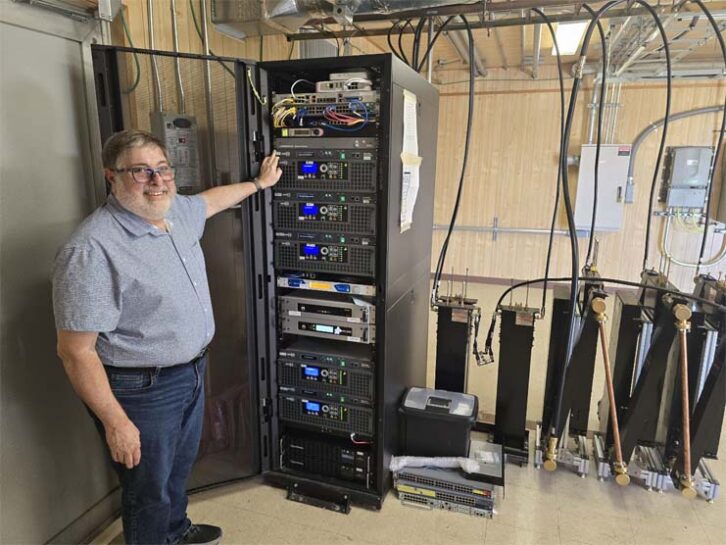
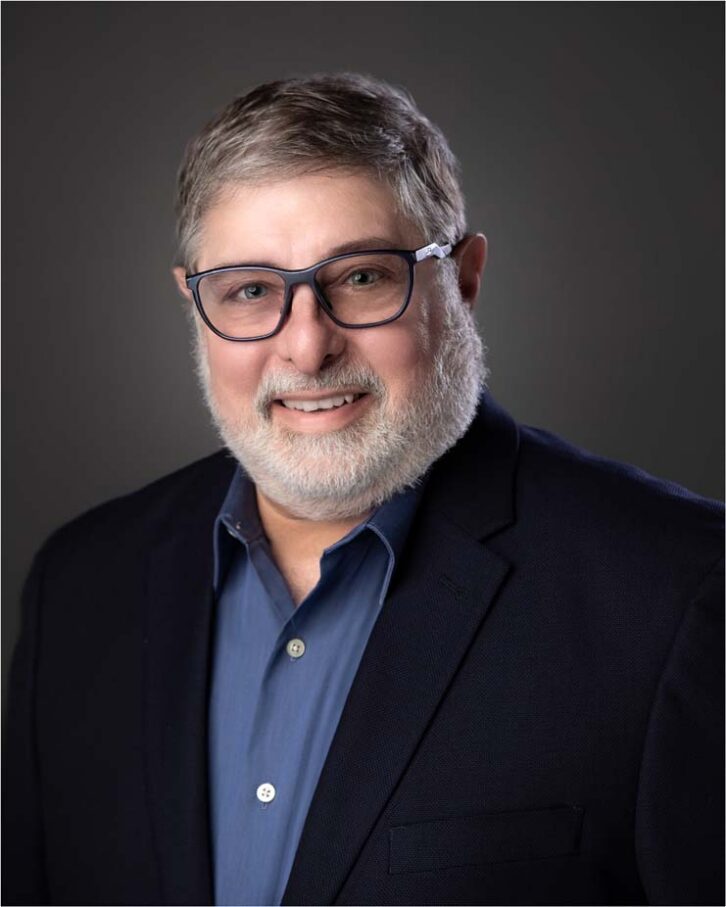
Bert Goldman has had a decorated career, spanning more than 50 years.
For many, he’s best known for his work as senior technical advisor to GeoBroadcast Solutions. He helped refine its synchronized FM booster technologies, used in MaxxCasting systems that combine radio and cellular technology to enable stations to maximize signal penetration in a variety of ways.
And now that GBS has gained FCC approval for its ZoneCasting geotargeting technology, Goldman has been busy planning installations of program-originating boosters.
He estimates he has filed more than 100 FM booster and translator applications and devoted many hours to system testing, design and FCC paperwork over the past 15 years. He has visited India three times for testing of GBS booster technology there.
But in the course of his career Goldman also has led engineering departments of iconic radio companies such as ABC/Disney Radio, Nationwide Communications, Patterson Broadcasting and Shamrock Broadcasting. Today he owns and runs Goldman Engineering Management.
Now he has been recognized for his work by the National Association of Broadcasters, which named him recipient of its 2026 NAB Radio Engineering Achievement Award.
“A nationally respected expert in AM and FM spectrum analysis, Goldman has helped broadcasters improve performance, expand coverage and enhance asset value,” in the words of NAB.
“His work spans station construction, technical operations and regulatory compliance, and he is widely regarded for his deep expertise in FCC rules, FM booster and translator engineering and directional AM antenna system design.”
The development of MaxxCasting
While Goldman, 72, has managed capital budgets, built studios, directed regulatory compliance and developed technical strategies throughout his career, it’s his work with GBS that has grabbed headlines.
GBS founder and CEO Chris Devine came to Goldman around 2011 with what Goldman felt was a crazy idea.
“I’d known Chris for years and years, and he had this idea to build these FM boosters. He called me up and he asked me what I thought of it. Quite honestly, I was pretty negative. I didn’t think you could build these things without a significant amount of interference.”
Goldman had been experimenting with boosters since the early 1990s. While some that had good terrain blockage worked better than no booster, he said others “admittedly were spectacular failures.”
He suggested that Devine contact Bill Hieatt, whom Goldman had worked with at First Broadcasting. Hieatt had been an engineer at Motorola designing simulcast pager systems, which use many of the same concepts as synchronized boosters.
“Geo did some really significant development work, but they were having a little bit of trouble figuring out what was necessary, what some of the tolerances needed to be to get these things to synchronize,” Goldman recalled.
“At that point, I came in working with them on a part-time consulting basis.” (Hieatt would pass away in 2020.)
With the help of Cox Media Group radio stations in Florida, Goldman says, GBS conducted a significant amount of field testing of synchronized FM boosters. He said the experimental systems kept getting better and better.
“Using things like digital composite was an absolute game-changer. More reliable and less expensive IP circuits have helped. We’ve found that by using at least two internet services, reliability is greatly enhanced, especially for HD Radio,” he said.
“It solved so many problems, getting these things synchronized.”
MaxxCasting uses a single-frequency network of synched booster nodes to increase coverage. Its first deployment was in 2013, and the technology is now in major markets like San Francisco, Chicago, and Los Angeles. Audacy has been an active user and recently announced that it will install synchronized boosters in New York City on WCBS(FM) and WXBK(FM).
An important goal for stations is to expand coverage to help drive more revenue. “There is a cost of putting in the system, but I think that in virtually every case, their ratings and their revenue have increased, more than offsetting the costs,” he said.
While GBS has deployed MaxxCasting on a few Class A FM stations, most of the installations have been on Class Bs.
“Because of so many things like terrain obstruction and interference in some cases, it’s a simple fact that on a Class B FM, nobody gets a solid signal out to the edge of their 54 dBu [contour]. By definition, if you’re trying to get a good 60 dBu signal in your entire coverage area but your main coverage area extends to the 54 dBu, there are very few places at the edge of your 54 dBu contour where you’re going to actually get a good, listenable signal using only your main transmitter,” he said.
“So what we’ve done is put in these smaller transmitters, the boosters, and synchronize them. We’ve been able to extend the good signal to the edge of the protected contour — and sometimes a little beyond. The signal is significantly improved.”
Goldman says it’s critical that the specialized equipment is installed correctly.
“The precision required to successfully deploy these systems is far greater than the precision that engineers are historically used to dealing with in broadcast transmission systems.”
Importantly, GBS has been able to get MaxxCasting to “play” with HD Radio.
“We’ve been able to work with Xperi and the codec and transmitter manufacturers so that it works well. The weakest link with HD implementation is the IP connection. You really need a rock-solid IP connection. So we’ve standardized: Any installation we do that includes HD requires redundant connectivity.”
Goldman believes educating engineers and managers about the benefits of MaxxCasting is important. He feels the technology is “tried and proven and has been extremely successful.”
He cites Bonneville’s MaxxCasting system in San Francisco, where broadcasters must deal with the East Bay Hills and their effect on coverage of communities like Concord, Walnut Creek, Pleasanton and many others, affecting hundreds of thousands of people.

Many stations in the San Francisco market have used a booster on Mt. Diablo. It fills in some East Bay communities, Goldman said, but because it overshoots the East Bay Hills, in some cases it causes interference to almost as many people as it benefits.
Goldman designed a five-site solution for GBS involving lower boosters that align with the propagation from the main transmitter.
“When our tuning experts Vern Egli and Paul Littleton finished aligning all six signals, the result was amazing. Even HD reception when driving between booster nodes is rock solid,” he said.
“We had trouble getting clients initially, but Bonneville took the plunge a few years ago, and since then, we’ve added stations from Audacy, so that five of the six top-rated stations in San Francisco are now using the system. We’re now managing six stations, and doing the math, that’s 30 transmitters, all synchronized (with HD) and combined into five antennas.”
Noncommercial KQED(FM) was added recently, the sixth station in the MaxxCasting node covering Pittsburg and Antioch, Calif. He calls these “the fastest-growing communities in the Bay Area, with virtually no listenable FM stations without MaxxCasting.”
“The system has significantly benefited the stations using it, and it’s a great personal satisfaction, improving FM quality for about 1 million people in the San Francisco market.”
GBS has also added two nodes to the San Francisco system for two stations using MaxxCasting to improve coverage in San Jose.
Geotargeting
ZoneCasting is a related but separate technology focused on geotargeting, presenting additional design challenges in managing transition and interference areas. It has been controversial in some circles, and the NAB itself pushed back hard against it at the commission.
ZoneCasting uses a series of FM boosters to air unique programming in specific coverage areas. Such use of boosters was not allowed previously by the FCC, and the commission only allows it for three minutes per hour now. Two stations have deployed it, with 10 more planning to do so, he said.
“Engineers really aren’t interested in ZoneCasting right now. They’re not going to be the ones deciding to do it anyway. It’s more of a sales and management decision,” Goldman told Radio World.
The challenge in designing such systems, he says, is ensuring that transition areas don’t experience interference from multiple signals.
“Where we can’t build a transition site successfully — where one traveling through the transition does so within just a few seconds — any interference area is relegated to an unpopulated area. It doesn’t work out in every situation, and you can always keep throwing boosters at it until you get the interference areas down to pretty much zero. You don’t want to have a big mush zone for three minutes an hour, either.
“HD works out really well, especially if you’re listening to the HD-1, because you drive into the transition, and it drops to analog with the analog booster audio. Then after a few seconds, the HD pops back in.”
GBS continues to work with HD Radio’s developers to ensure seamless transitions between main HD channels and booster signals. “We are working with Xperi to be able to synchronize so there is no noticeable transition whatsoever.”
Separately, GeoBroadcast Solutions has said the FCC should allow broadcasters to stop using main transmitters entirely or to substantially reduce their power.
In a 2025 filing that was prompted by Chairman Carr’s “Delete, Delete” initiative, GBS said stations should be allowed to employ “distributed transmission systems” to serve their communities, using the same coverage and non-interference requirements but with much less expense. It urged “the modernization of regulations that currently mandate the use of a main transmitter by radio broadcasters.”
Challenges and trends
Goldman is optimistic about opportunities for Maxxcasting and ZoneCasting, but AM radio is another matter. He still does the occasional AM antenna design, typically for broadcasters who are consolidating sites and selling off valuable property under their towers.
“There’s a significant amount of consolidation going on with AM facilities — diplexing, triplexing, quadplexing, you name it — to bring all these stations into one site. Now you’ve got four tenants paying to maintain the value of that property,” he said.
“Meanwhile, we’re losing transmitter sites, and people are having to get by with smaller and smaller AM facilities.”
This has been offset somewhat by the fact that many AMs now have FM translators.
“The activity I’ve seen in AM is mostly centered around trying to recover value from the property that they sit on and move them to another location without literally turning in the license. Which, unfortunately, is frequently happening.”
Goldman can see the business challenges facing operators.
“Stations aren’t making the money that they used to, and it’s creating a lot of pressure, both to minimize the technical costs and reduce personnel. A lot of good engineers are being essentially pushed into other careers, outside of broadcasting, and it’s becoming harder and harder to keep stations on the air with a continuous reduction in available funds to do so.”
He says there is already a shortage of competent engineers, particularly for the financially challenged AM band.
Early days
Goldman grew up in the Washington, D.C., area but attended a naval military high school in the late 1960s in Florida.
His father, who served in the U.S. Marines, passed away when Goldman was 8. About being sent away to school, he said, “I think my mother wanted me to have more male influences in my life.”
In high school, Goldman became interested in radio. In fact, he created a sound-effect sweeper for WWBA(AM) in the St. Petersburg area. He put it on tape and sent it to the station. “They actually used it on the air. I couldn’t believe it.”
At the University of Maryland Goldman began studies in aviation engineering but eventually changed his major to broadcast engineering and management.
During school Goldman was introduced to broadcaster Everett Dillard, owner of WDON(AM) in Wheaton, Md. Goldman asked for a job and he was soon mowing the grass at the transmitter site, which featured a self-supporting tower.
“Then one summer, he said that if I really wanted to be in radio, he would put me to work doing all the jobs at the radio station for a few weeks at a time to see what I thought. That included engineering, and I really loved it. And I knew I wasn’t a sales guy after that experience!”

His engineering career began as drivetime board operator and maintenance engineer at WTOP in Washington. He took his first chief’s job and moved to Napa, Calif., at KVON/KVYN, subsequently moving to Shamrock Broadcasting’s KABL in San Francisco as the assistant engineer. He was named DOE in Kansas City for KUDL and WHB, eventually ascending to corporate VP of engineering of Shamrock.
One of Goldman’s most memorable projects was when the company purchased a floundering FM in Phoenix in the early 1990s.
“We moved the station from Shaw Butte, north of town, to the big common South Mountain location where it is today. I managed the project, which involved dealing with the city and the tower owners, helping locate and acquire new studio and office space, and designing and building the studios.”
It was a company-wide project, with fellow engineers from Shamrock flying in from stations across the country to help.
“We also built the new transmitter facility on South Mountain and got it on the air at the appointed time with five minutes to spare. KMLE was and still is a great station in Phoenix.”
He later held technical leadership positions at Patterson Broadcasting and Nationwide.
At ABC/Disney, Goldman oversaw engineering operations for its O&O radio stations, ESPN Radio, Radio Disney and the ABC Radio Network. He also developed the company’s technical acquisition strategy and managed all related capital budgets.
Consulting business
Goldman has fond memories of managing engineering and construction efforts. But after he began work for Ron Unkefer’s First Broadcasting, the national market for upgrades, move-ins and station projects changed dramatically in the early 2000s when the FCC made it harder to upgrade stations into larger markets.
“I decided that it would be a good idea for me to take the talents that I’ve developed and become a consultant, doing applications and upgrades and physical projects, and the things that I’ve done my whole life prior, including the new skills that I had learned.”
Goldman noted that broadcasters are adopting AoIP consoles and infrastructure quickly, with a big push on the studio side toward cloud and IP-based tech.

“My background has been pretty much analog and RF. I try to keep up with the trends and IP, but it’s become very specialized and advanced, quite honestly. I know engineers who are really good in that department, so I rely on their expertise.”
Goldman focuses now mostly on RF, the regulatory side of broadcast and designing synchronized FM boosters.
He estimates he has engineered upgrades to AM and FM stations in most of the top 25 U.S. markets and expressed pride in creating substantial value for their owners. In total, he has designed and managed the construction of more than 50 stations, including studios, transmitter facilities, tower sites and offices.
He is also a member of the Broadcast Technical Society at the IEEE, the Association of Federal Communications Consulting Engineers and the Society of Broadcast Engineers. He has also been active in the NAB National Radio Systems Committee and the NAB Radio Technical Committee.
There have been scary times running a business, yet: “This has been great for myself and the family,” said Goldman, who resides in Auburn, Calif., with his wife, Sharon. He has four children and four grandchildren.
“I’ve been able to continually expand my horizons and get better and better at what I do. I’ve never stopped learning, and that’s a good thing to do.”
[Do you receive the Radio World SmartBrief newsletter each weekday morning? We invite you to sign up here.]