Your latest Radio World ebook explores the landscape of consoles and control surfaces; this is an excerpt.
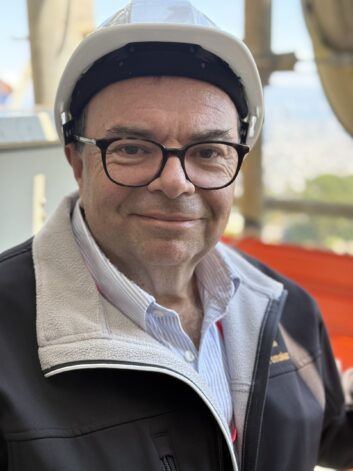
Chuck Bullett, CPBE, AMD is the owner and principal at Omega Broadcast Technology LLC, Consultants. He semi-retired in late 2025 as market director of engineering & technology for Audacy-San Francisco.
Radio World: Chuck, we’re asking industry experts like yourself to tell us what they consider the most important trend in the design of consoles and control surfaces.
Chuck Bullett: The headline here is the ability of combined manufacturer solutions to evolve quickly and meet custom workflow demands with containerized AI.
Think about what a format change might require that demands an immediate change of direction with little forewarning. Using a large language model, an AI can quickly modify and adapt a new Python script or feature set and then upload into your mix-engine.
When we’re designing new audio networks, scalability remains key too. And while rarely does a broadcast plant downsize, providing visibility only to the resources a producer needs for a content package remains paramount. Don’t overwhelm the user with unneeded features, but ensure that you’ve given them everything they want. Ensuring that an AI LLM follows that guideline will be important. Top of mind will always be to inform the LLM as to how the user is interfacing with the workflow. Are they operating remotely via a tablet presentation or with a large control surface in a well-equipped studio?
Transitioning that information or experience into an LLM to provide specific routing instruction sets into the mix-engine’s eco-sphere is where the studio engineer of today needs to place themselves, while being mindful to “tread lightly” and no make significant changes that impact global users.
AI LLMs will become increasingly important in anticipating workflow needs too, often even before users realize they need something changed.
RW: What important features or capabilities have emerged recently?
Bullett: Gone of course are a console system’s banks of mechanical or optically driven relay interfaces for studio control, and in their place are a vast array of new control layers that include everything from basic serial and parallel data strategies to embedding that control architecture over Livewire, WheatNet, Ravenna or the MIDI and MADI protocols in which the studio control surface “tells” video switchers or routers to change to an active presenter’s video camera when a mic channel gates-open, or switch the lighting for a certain camera shot when the show takes a break and the operator switches the source material to a commercial playout deck, for instance. Flying faders, once regarded an extremely high-end feature in automated recording and playback consoles, are now the norm.
The traditional analog control surface still has its place in the console “eco-sphere” and is probably the definitive radio “audio” console. Catfish’s Rave from Angry Audio is a brilliant product and caters to a price point that network-based solutions are not really geared for; it’s not a “road mixer” for small front-of-house usage and small bands, as its designed expressly for broadcasts applications. The Rave Has earned favor among community broadcasting programs, and is a far cry from the Shure M67 we used at our high school station when I first hit the microphone.
RW: How has the evolution of consoles into control surfaces changed the way radio engineers view them and plan around their installation?
Bullett: Full immersion into the specific system’s routing eco-sphere is where the studio engineer of today needs to place themselves when planning a new audio for a media network or for making significant changes in an existing network.
How the features will be implemented will depend on a multitude of variables and workflows, so before releasing them into production testing should be a goal. A spare audio engine that works with the present audio network is priceless both as an off-line spare, and as a sandbox to test new console scenes and logic flows. It’s just as important as preparing a new web page launch, and just as involved in terms of how much time a radio or studio engineer will spend in front of a laptop screen programming logic crosspoints.
RW: What are the implications of software- and cloud-based mixing?
Bullett: Verifying the quality of a mix in real time for live content production seems to be one of the current conundrums, in my view. In past times we had “Q-o-S” stations in master control rooms for a reason, and being able to reasonably assure that the quality of the mix going out to a network is as it was intended. Many sports venue productions today are no longer handled from “in the truck” but rather using cloud-based architecture too. Overcoming this limitation is one of the more pressing developmental challenges for cloud-based solutions.
RW: What does the term virtualization mean now in the console context?
Bullett: The interface to today’s operator in the projects I’ve been involved with is the result of spending sometimes weeks tailoring a software-defined pallet of tools while exercising a careful and deft touch to ensure they have what they want and need.
Those workflows need to be tested or “sandboxed” before being allowed into production. Virtualizing that rule set into a mix engine is just the right application for that.
“Virtualizing” a workflow is a term that seems new, but we’ve been using it for 20 years to describe the events that take place within an automation system’s mix engine. A 2026 take on it is to move that workflow from the rack-room servers and into the cloud, so a number of examples exist.
The cloud-based mix engine is already being marketed as a subscription-based SaaS. That is the extreme example of where we’re at today.
RW: What will the console of the future look like, if we use one at all?
Bullett: Automating the mixing sequences with LLM AIs in spoken-word studios without a console or control surface may well be the case.
And why stop there?
Using voice recognition cues such as when a host uses the phrase “coming up after the break,” the AI agent could start the segment wrap music “up and under” the mic channel.
Do you need the AI agent to keep the show on the clock so that the breaks are observed correctly? Let an agent start wrap-up music under the host to force the end of the segment. Or let an AI screen telephone callers and cue them up for a show. That is entirely within reach of where the technology is today.
Provide the agent with an instruction set that describes the show topics for the day and turn it loose onto the phones. If the caller’s topic doesn’t fit the prescribed parameters the agent was given, the caller is released politely.
Want to keep the callers engaged while they’re on hold waiting for their chance with the show hosts? Turn on your AI’s “Chatty Cathy” mode with each of the callers.
The potential for AI production associates to extend beyond the console into other areas of the production workflow for content production is without limit.