For the New York City Tri-State area, with a combined population of more than 22 million residents, there’s one home for jazz: 88.3 WBGO(FM).
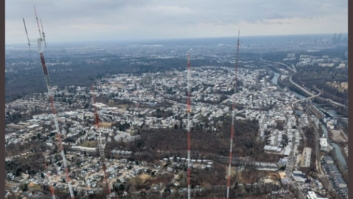
Newark Public Radio’s WBGO transmits its signal from atop 4 Times Square in Manhattan. But for 47 years, the station has called its studio on Park Place in Newark, N.J., home. Its relationship with the largest city in New Jersey is deeply rooted. The city’s appreciation for jazz is evident.
In 2022, WBGO partnered with the city to rename Park Place “Wayne Shorter Way,” honoring the legendary saxophonist who was born and raised there. Among the ceremony’s participants was Shorter’s best friend and longtime collaborator Herbie Hancock.
On July 31, WBGO joined Mayor Ras J. Baraka of Newark to proclaim the day “Herbie Hancock Day,” as the piano legend performed that evening at Newark’s New Jersey Performing Arts Center.
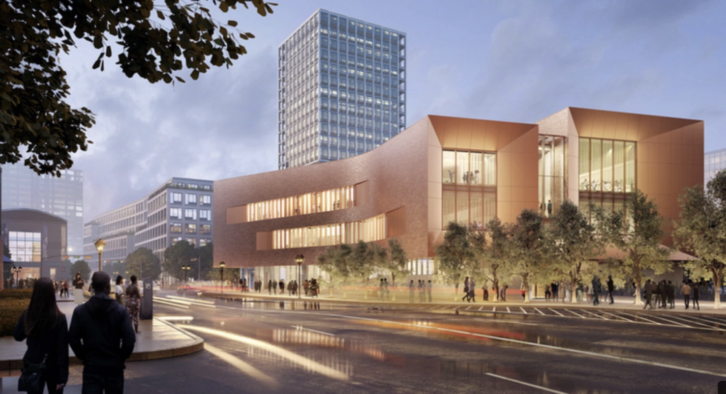
The performance at NJPAC is just the beginning of a deepening partnership between NJPAC, the city and WBGO that will result in a brand-new studio complex and public-access performance space in downtown Newark.
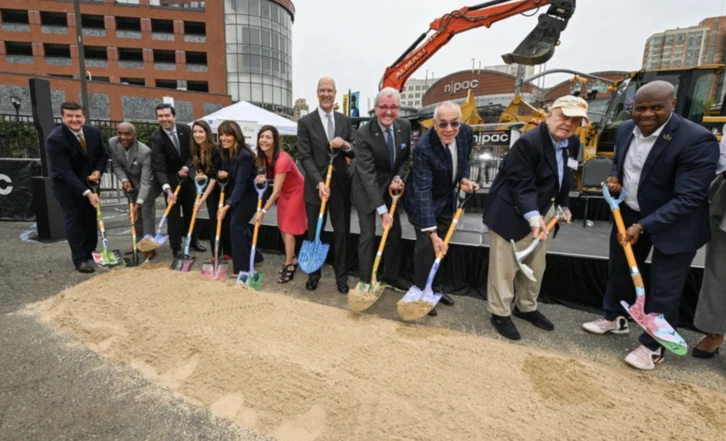
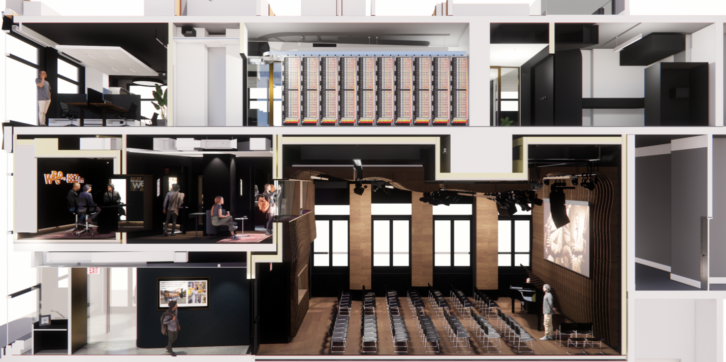
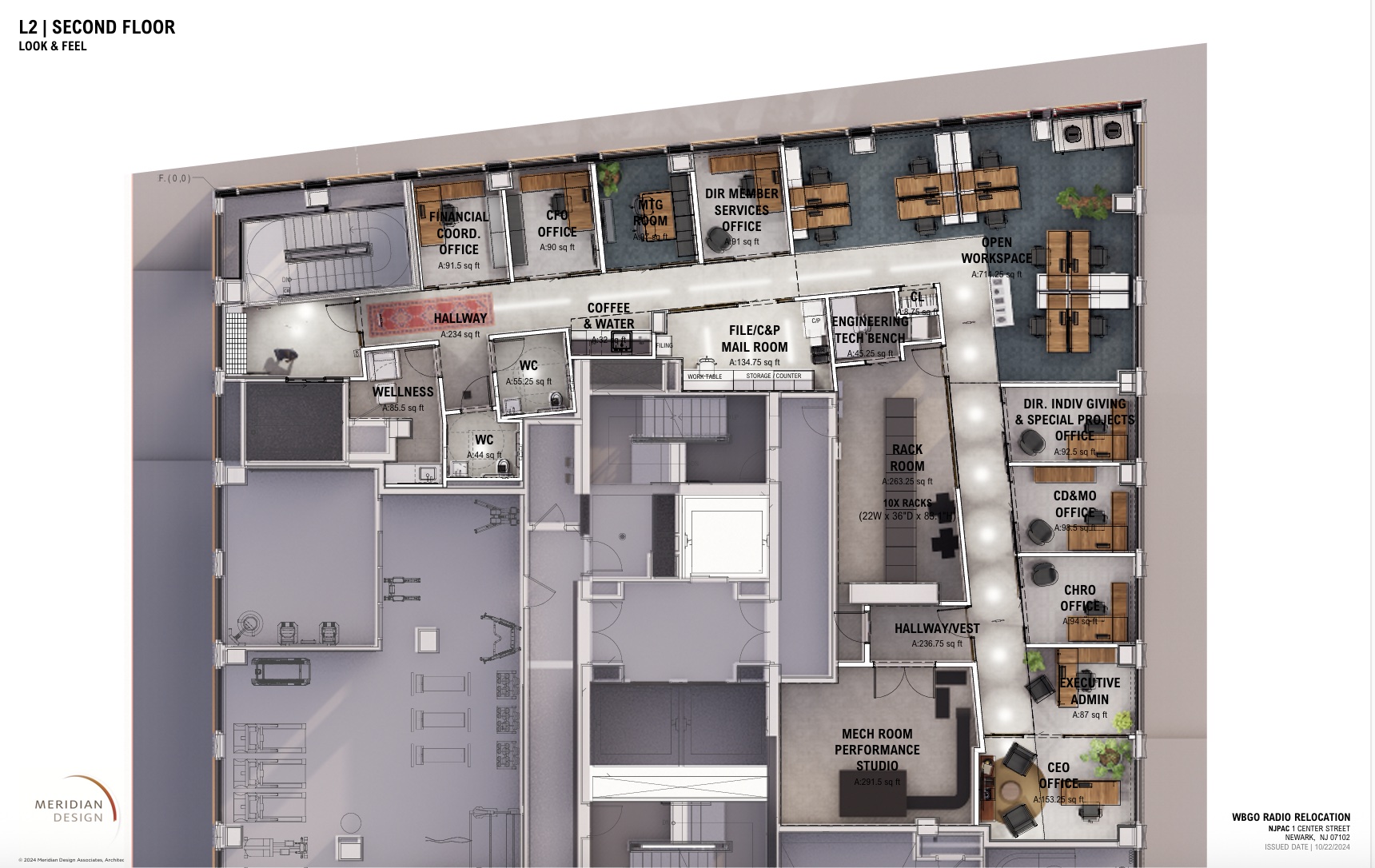
Targeting the summer of 2028, WBGO will occupy the first three floors of a 25-story tower at 1 Center Street, part of the $336 million NJPAC “Artside” redevelopment project.
The space combines current trends in serving both audio and video on demand, a space for community gathering, and the kind of heritage that a jazz station is uniquely positioned to offer.
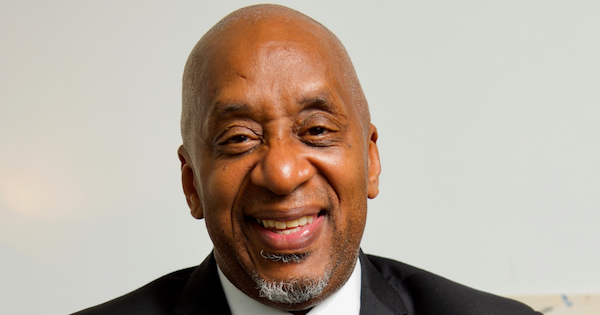
Newark Public Radio President and CEO Steve Williams gave us a preview of what’s to come.
A renewed bond
There’s something special about jazz on the radio.
Williams knows this.
Reached on a summer Friday afternoon, he reflects on his 51-year career in radio. It has led him through heritage jazz outlets such as Detroit’s former WJZZ(FM), which despite having changed format in 1996, still draws frequent remembrances on YouTube.
Williams went on to program several successful smooth jazz stations. He led programming at New York City’s WQCD(FM), “CD 101.9,” during the height of its popularity in the 1990s.
Other stops include San Francisco, Philadelphia, Seattle and Denver.
After three years as WBGO’s director of programming in the mid 2010s, Williams returned to the station in 2020, first as consultant during the COVID-19 pandemic. Then Newark Public Radio named him CEO in 2021, at a time when the station sought new leadership, amidst an alienated relationship with the city of Newark.
By then, plans were already underway to design the station’s new space on the NJPAC campus.
Ground for NJPAC’s 25-story tower broke in 2024. The structure was topped off this past March.
The design phase for WBGO’s space, meanwhile, is complete. Its bond with Newark seems stronger than ever. Now, it’s go time.
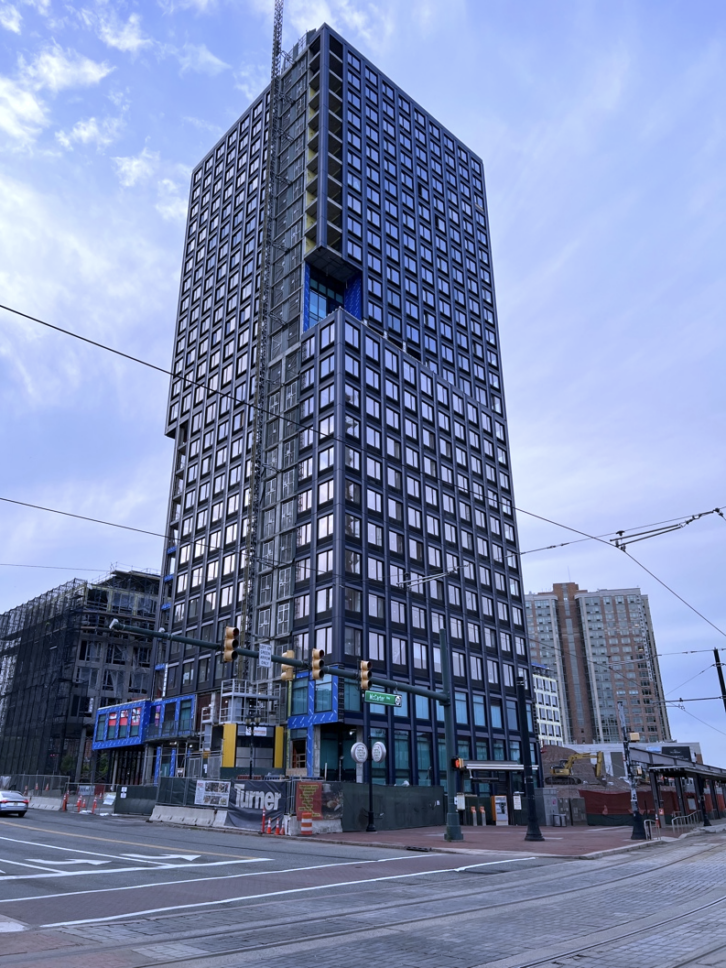
Williams’ time in the industry has taught him never to take a construction timeline for granted. “It’s a ground-up project for us, and so inherent are the twists and turns and delays that come with it,” he said.
By mid-2027, Williams expects the tower construction to wrap up, followed by a nine-month interior fit-out.
WBGO has partnered with architectural and design consultants Meridian Associates, acoustical design firm WSDG, JRM Construction handling the buildout and Public Media Engineering overseeing the technical integration.
The station’s new 10,000-square-foot studio and performance facility carries a total price tag of $15 million. Williams is optimistic, thanks in part to support from the state of New Jersey, which thus far has pledged around $5 million in direct legislative budget appropriations.
The station is also preparing to raise approximately $7 million through a capital fundraising campaign, with the rest from corporate support and listener contributions. The private phase of that effort is underway, Williams explained, with a public-facing campaign slated to launch in 2027.
Important to making the financial plan work, Williams said, was WBGO’s 2024 decision to sell its current building on Wayne Shorter Way to The Berger Organization, a local developer which has real estate interests throughout Newark.
For WBGO’s staff, including Williams, while it is business as usual right now on Wayne Shorter Way, the downtown tower represents something far larger.
“There’s a component to planning, designing, building and occupying a new space like this,” he said. “Those who work within the space will see themselves and the work they do differently — at maybe a higher level, just because of that space.”
He has support. Williams credited the work of Project Manager Tracey Kasper, as well as the chair of the WBGO board’s building committee, Karl Frederic, for support.
WBGO’s board holds him accountable, he said. They ask constant questions and help approve expenditures. But it is all in the pursuit of a common objective.
“You get the sense they have confidence and they believe in the project,” Williams said.
A jazz lover’s dream
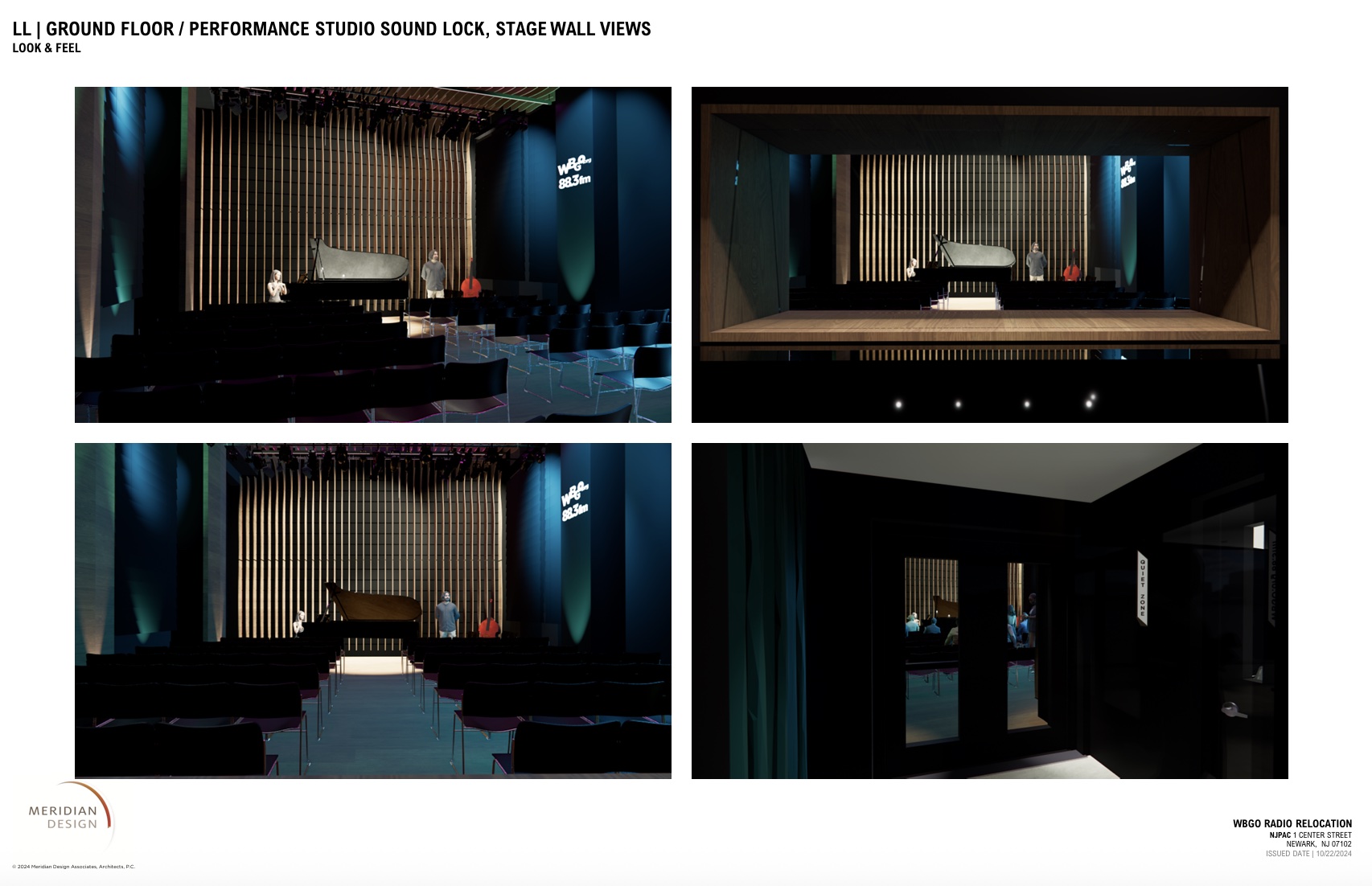
WBGO’s new home will offer a 100-seat performance venue. At Wayne Shorter Way, live performances were squeezed into a studio space that could support approximately 20 to 25 people “on a good day,” Williams said.
The facility will also house a dedicated public-access archival library. Supported by a grant from the American Archive of Public Broadcasting, WBGO has digitized roughly 4,000 historical audio files, interviews, live studio performances and news broadcasts spanning its history back to the early 1980s.
Everything the station produces going forward will also be included. Dedicated public workstations will allow visitors, students and researchers to explore decades of jazz history on site.
Flexibility, Williams said, was a focal point of the new space’s design, with the idea of video and audio no longer being separate.

“It’s a reflection of the way media is both converging and expanding,” Williams said.
That’s the path WBGO must follow as both a media and technology organization, which Williams believes the jazz outlet represents. He also knows, while the station designed the space with its own needs, and the city of Newark’s in mind, the rest of the industry is watching.
“Those who visit the area, and Newark, when they see how special this place is, I believe that will have a residual effect,” Williams said.
Don’t wait for a brighter day
Williams knows that WBGO has been more fortunate than many other public media stations. It enjoys a long line of loyal, generous listeners in the New York City tri-state area, and beyond, who will stand up for the station financially when called upon.
Since the congressional rescission of funding for the Corporation for Public Broadcasting came down, Williams said, it was a matter of simply not paying attention to the headlines.
“I tend not to look at the world in that way from a practical sense,” he explained.
Still, the loss of federal funding resulted in roughly a 9% annual operating budget loss for WBGO. To help offset that gap, the station has been on the cutting edge of finding alternative revenue streams, including programmatic stream insertions of commercial advertisements through a partnership with SoundStack.
In its first year, Williams estimated that the partnership with SoundStack has resulted in approximately $45,000 of additional revenue for WBGO. The station expects revenue increases in subsequent years.
There are many forms of jazz and as such, WBGO is planning on launching additional streaming channels soon as part of a forthcoming service, again with additional revenue in mind.
Even so, Williams must make the math work every day.
“Naturally, when we started the planning, we had no idea we’d be looking at a federal rescission,” Williams said.
Public radio is not alone in its pursuit of alternative revenue sources. In arts and culture, whether it is museums, performing arts centers or broadcast sources, Williams explained, everything that is relying on public support has a lot at stake right now.
“We’re all looking at the world differently today,” he continued. “But these projects must go on. In fact, in some respect, you’re more energized to complete these projects.”
Unexpected support — such as from the state of New Jersey — is helping the station realize its ambitions.
To date, Williams said, WBGO has received four budget appropriations from the state of New Jersey, totaling more than $5 million.
“Legislative line items to support capital projects is a first in the history of the station,” he said.
More than a companion city
Williams is particularly bullish on Newark’s future. For a variety of reasons, more and more residents who years ago would have taken up residence in Manhattan or another borough are flocking to northern New Jersey.
According to a U.S. Census Bureau analysis reported by WPIX(TV), New Jersey stands as the top destination for former New Yorkers, capturing around 390,000 former residents between 2019 and 2023.
Newark is home to corporate headquarters for companies such as Prudential, Horizon Blue Cross Blue Shield, Panasonic, Audible and regional utility Public Service Electric and Gas.
Meanwhile, a $125-million, 15-acre film- and TV-production facility will soon house Lionsgate Newark.
“Newark has an arts and culture scene that rivals any major city in America,” Williams said.
The new performance venue is being built as a freely accessible public gathering space.
“When you’re WBGO, with your heritage of community service, you work to bring in events that support and enrich the community with many events that may have little or nothing at all to do with jazz.”
Prior to the COVID-19 pandemic, the station regularly hosted art exhibits and political debates in its studios. All of those community opportunities — including town hall meetings, youth education programs and civic gatherings — will be front and center in the walkable downtown Artside district.
“It’s important that what we create has viability as a public access space, a space that can be utilized by the community at will,” Williams said.
Forever a part of radio
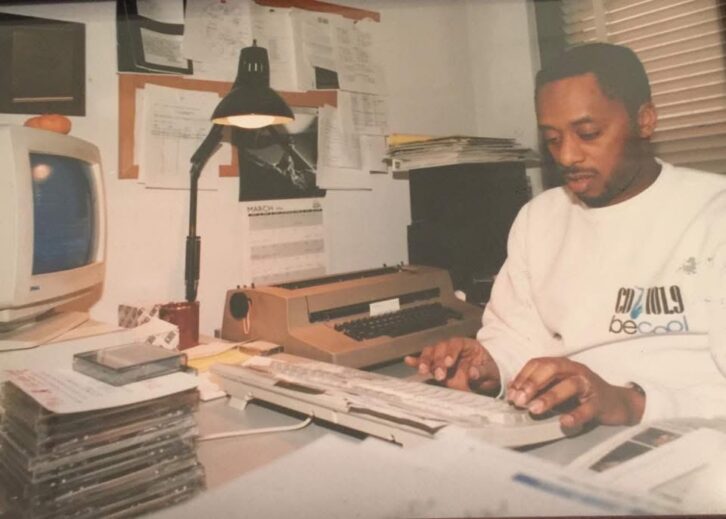
Reflecting on his journey, Williams remembers where the bug first bit him as a high school student in Cincinnati.
A friend who recognized Williams’ deep music acumen referred him to a radio workshop led by Tom Knox. The program allowed students to compete for shifts on community station WAIF or the big prize: album-oriented rocker WEBN(FM).
In 1976, Williams earned his spot on the air.
“I walked through blizzards and rainstorms, often against my parents’ wishes, because I had the radio bug,” Williams recalled.
Five decades later, that drive hasn’t dimmed.
“I still have that sense of excitement and wonder, and curiosity and dedication that goes all the way back to my teenage years in Cincinnati when I first started doing radio,” Williams said. “I’m a broadcaster first and foremost, and any opportunity I get to work inside a radio station, I’m usually there like a kid in a candy store.”
Looking ahead to the summer 2028 target, Williams views the project as his proudest achievement.
“This will be, by far, the most impactful thing I’ve ever done,” Williams said.
Radio World welcomes letters to the editor on this or any story. Email [email protected].