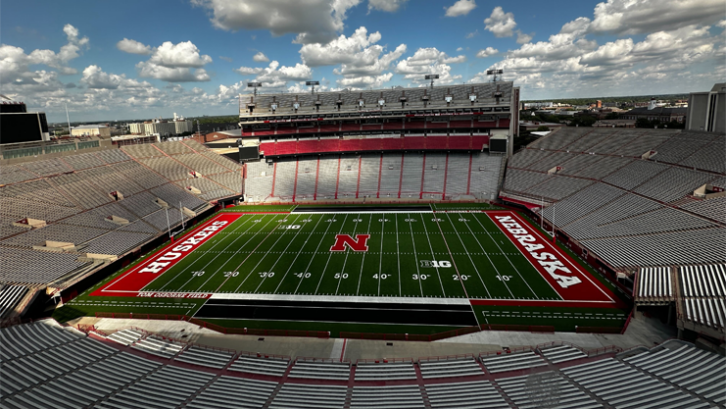
Huskers Radio Network, part of the University of Nebraska, feeds more than 30 affiliate stations with sports coverage that includes its nationally known football program, basketball and volleyball, plus associated shows. The school is in the Big Ten Conference and competes in NCAA Division I.
The athletics department moved its entire multimedia department at Memorial Stadium to a renovated second floor, creating a 25,200-square-foot facility. It includes a variety of media including HuskerVision, designed and built by Beck TV, as well as the new Huskers Radio Network (HRN) facility built by Inrush Broadcast Services.
For HRN this wasn’t a revolution in technology but a location change, a refresh in hardware and cabling, and cleanup of documentation.
The project also shored up the important Barix distribution network that feeds every affiliate and added new custom WheatNet Screenbuilder virtual control panels to ease daily management of the distribution network.
The HRN studios include a video studio, a control room studio and two production studios, all in an open floorplan.
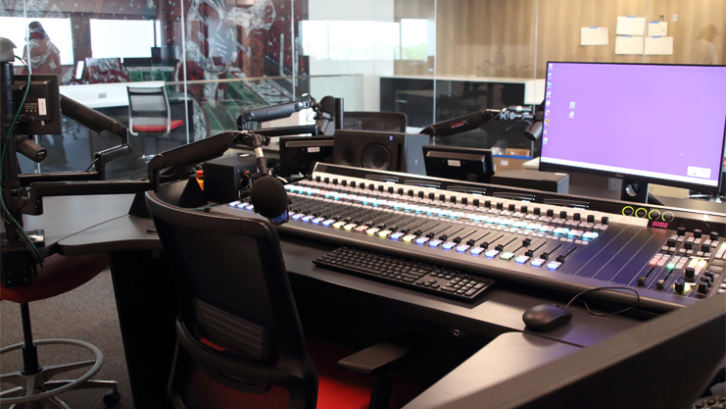
The furniture and Wheatstone gear, including LXE surfaces and various varieties of blades, had been installed previously; these were documented, moved and freshened. The RCS Zetta system also got a hardware refresh and a database and audio move.
The overall facility construction began in 2020 and was open to integrators in April 2025. The HRN integration was completed by the end of July.
HRN was integrated into the overall multimedia Technical Operations Center over two visits in June and July. The studios were moved and upgraded to the new facility over the July 4 holiday.
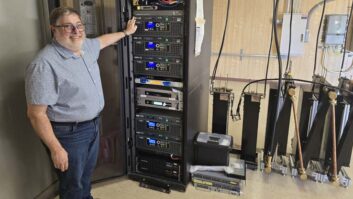
Redesigning the head-end equipment for HRN enabled the team to reduce TOC footprint, as HRN was leaving its own dedicated rack room and joining the combined multimedia TOC.
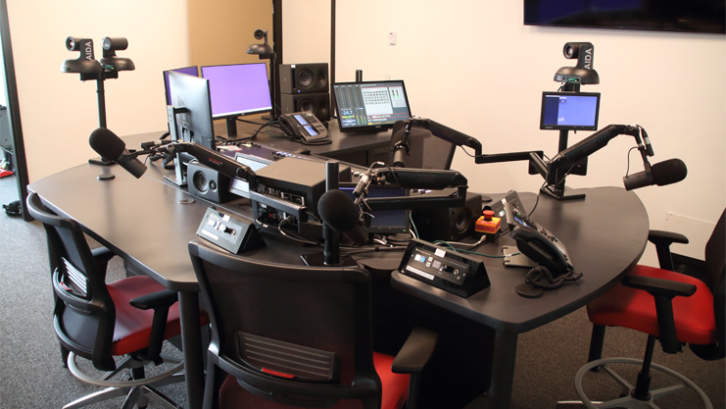
Key technical components included the Wheatstone AoIP infrastructure, RCS Zetta automation and Barix affiliate distribution system. BSW supplied new radio equipment. Inrush Voice provides phone service to HRN’s Telos VX talk show system.
The work leaders included Brandon Meier, project manager for HRN and HuskerVision; Scott Guthrie, chief engineer of HRN; Garett Hill, technical expert at HRN and HuskerVision; Josh Hilkemann from Playfly, which runs day-to-day operations of the HRN; Alex Bonello from HDVmixer; Tom Lawler from RCS; and the Inrush integration team. BeckTV was the integrator for the HuskerVision side.
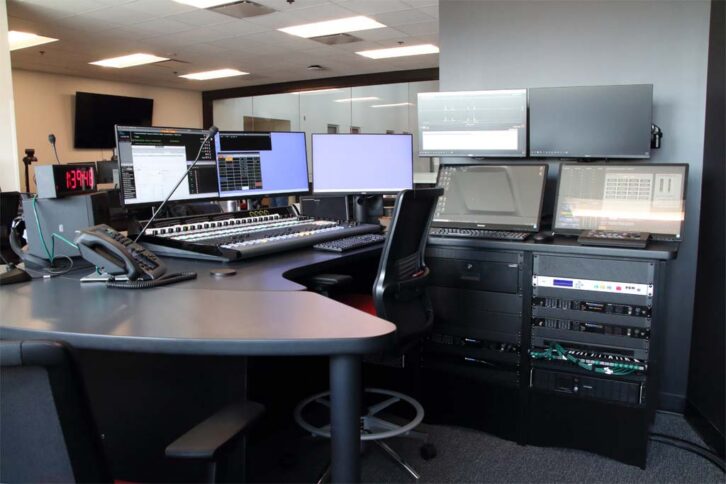
“This is a complex production and distribution facility entirely owned by a university athletics department and run by production and network sales partner Playfly,” said Rob Bertrand, partner at Inrush.
“It utilizes a unique implementation of Barix distribution hardware in a design and network methodology that was implemented by a prior engineer.
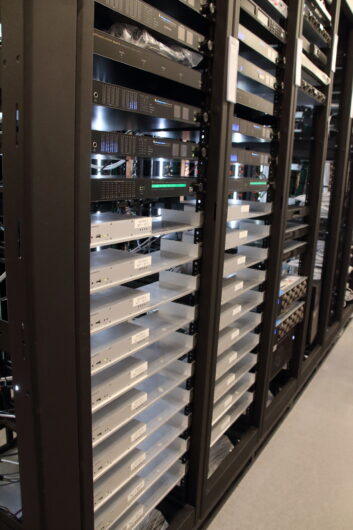
“Combined with RCS Zetta macros for affiliate network closures, it’s incredibly effective as a cost-effective owned distribution network. But it took some coordination to discover all the nuances of the prior engineer’s design as well as shifting ownership of certain web components from one entity to another.”
In addition, Inrush provided custom Wheatstone scripts to create a quick and effective GUI to trigger salvos for each of the four networks, change network audio monitoring and track/confirm closures are being fired to all affiliates.
“Previously, HRN struggled to track which source was feeding each network and it was difficult and opaque to confirm that affiliate closures had been properly sent. Now, any of the four LXE studio positions can perform these actions from their touch screens, which are attached to the LXE engine.”
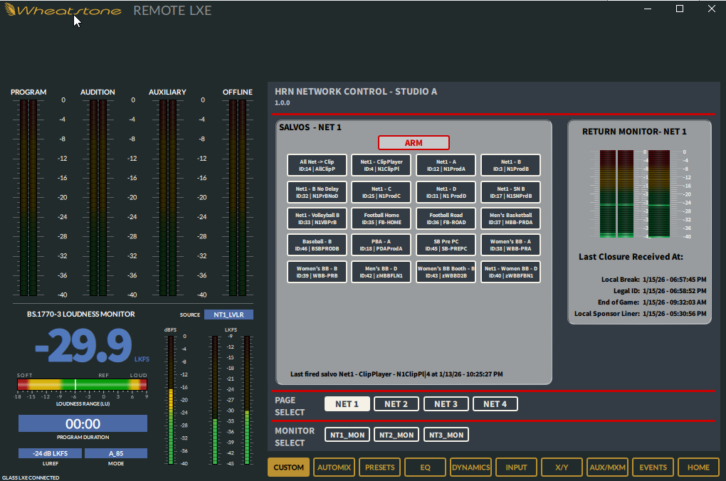
Bertrand said that while there are no project components residing in the cloud, the virtualized technology offered by WheatNet Screenbuilder enables complex switching and logic arrays to be built and the operation monitored easily by operators.
“Creating such an environment before the AoIP world would have involved custom boxes filled with relays, back walls adorned with numerous 66 blocks and cross-connects, and even then it would have been nearly impossible to provide the logging and confirmation now available via the virtualized WheatNet Screenbuilder functionality that Inrush delivered to HRN.”
Cameron Boswell, Inrush SVP of integration services, said, “We were substantially impressed with what Huskers had already achieved using Barix hardware. We cleaned it up and standardized its logic and audio implementation, but we were really building on what was there.
“Their Barix distribution network is cost-effective and extraordinarily effective in meeting the IP-based distribution needs for the four disparate channels of the Huskers Radio Network, including matching backup encoders.”
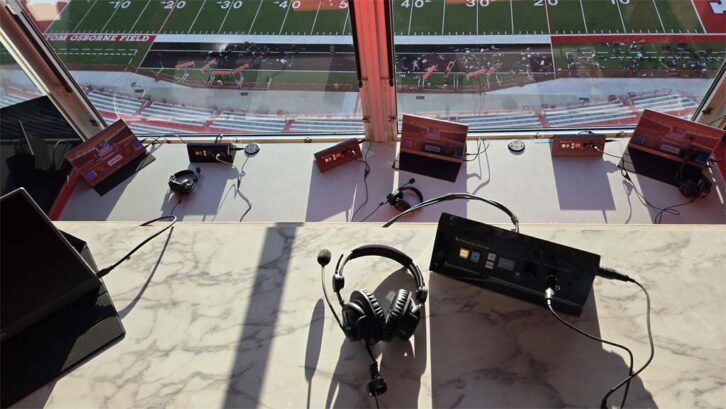
The Huskers Media team brought Inrush back for subsequent visit to rebuild the play-by-play booth in the stadium.
This is a story from the ebook “Sweet New Studios for 2026.” Read about more projects here.
[Do you receive the Radio World SmartBrief newsletter each weekday morning? We invite you to sign up here.]