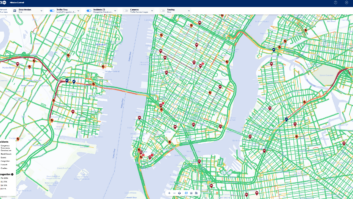
This is the first in a three-part series.
It’s a Friday afternoon at 3:30, and you’re looking to get a head start on the weekend.
Before hitting the road, you open your go-to navigation app and punch in your destination. Digital mapping platforms, after all, have rewritten the rules of the road.
According to Alphabet investor disclosures, Google Maps now commands more than two billion global users.
Meanwhile, mobile tracking data from comScore featured in Scrap.io’s Navigation Analysis shows Apple Maps secures roughly a 25% share of the U.S. market, and Waze tracks millions of hours of highly engaged, crowd-sourced driving data every single month.
But a few minutes after entering the freeway, you come to a complete stop.
A sea of brake lights appears, with no immediate sign of movement — leaving you to wonder where the bottleneck came from.
Did you turn on your radio?
Plenty of stations, particularly in larger markets, still offer dedicated traffic reports. In fact, as technology has evolved, so has the efficiency of the traffic reporter, who now uses digital tools alongside traditional observation.
Radio World interviewed several of the voices behind the microphone in eight U.S. markets to discuss their tips of the trade, how they entered the profession, and why there is still value in having a human voice behind the mic.
This is part one of a three-part series. Today, we’ll focus on how each of the eight reporters we talked to got into traffic in the first place, their geographic knowledge and the tech they use to stay on top of their area’s roadways.
A happy accident
Does anyone set their sights on traffic from the start?

In Washington, D.C., WTOP(FM)’s Dave Dildine remarked that if someone had set their sights on traffic reporting from a young age, they probably had some screws loose. “That’s practically a prerequisite for the job,” he said.
WBZ(AM)’s Gina Tempesta called her now more than 25 years doing traffic in greater Boston an accident. “No pun intended,” she joked.
When Tempesta embarked on a broadcast career, she felt it would be advantageous to work as many off-hours as possible. WBZ had an opening for a weekend traffic reporter, and it turned out she was pretty good at it. “I fell in love with the rush of getting as much information out as possible in as short a window as possible,” she said.
After a short stint away, she returned to iHeartMedia’s WBZ in 2023 and said she still has the same innate curiosity about the roads in and around Beantown. Maybe it’s all related to the “Big Dig” — Tempesta reported before, during and after the massive project, so much so that she’s working on her second children’s book in a series about it.
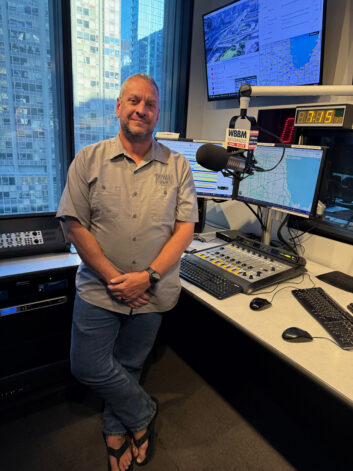
Beau Duran grew up listening to Los Angeles traffic reports on KNX(AM). But when he began voicing reports in Chicago, first for Total Traffic & Weather in 2010, and since 2017 on Audacy’s all-news WBBM(AM/FM), he was drawn to its storytelling nature, particularly in a seemingly endless sea of highways across Chicagoland.
“Aside from being the first line of breaking news for many events, traffic reporting allows me to be descriptive and detailed in ways rivaled only by sports play-by-play,” he told us.
Dildine’s interest actually started in weather, and he spent several years doing meteorologically laden research. But traffic is very much associated with weather — as most all-news stations package — and reporting on it called Dildine back. Since 2010, he’s been the voice during the afternoon rush hour on Hubbard Media’s perennial ratings and revenue leader in Washington.
He praised the renowned Jim Farley, vice president of news and programming at WTOP from 1996–2013, for his big break. “He saw my potential and gave me a chance to be part of this flagship station,” Dildine said.
He’s also covered several big weather events for the station, from hurricanes to the June 2012 derecho and his photos of several such events have gone viral. “We’re in afternoon thunderstorm season now and there’s nothing quite like watching D.C. traffic devolve during a severe weather outbreak,” Dildine told us.
But it’s not always a linear progression.
Sabina Mora of Audacy’s KNX(AM) in Los Angeles has held several broadcasting positions across her career in radio. She’s worked on-air in formats from country to smooth jazz, and has also done plenty of on-camera work, including as a production assistant.
“Radio gigs allowed me to travel early on and get a feel for highways, freeways and toll roads in each new city,” she said. That gave her the confidence, later on, to be a traffic reporter both on TV and since 2024, mornings for KNX.
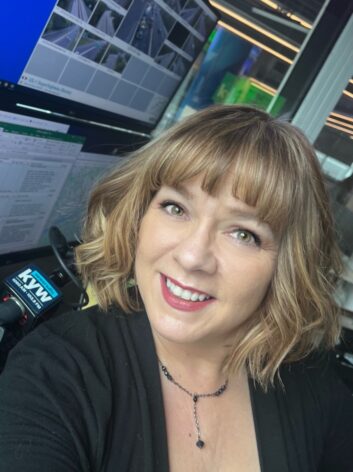
For Stevie Reese, the voice of traffic during the daytime on Philadelphia’s all-news KYW(AM/FM), the traffic position came out of necessity. In nearby Reading, 107.5 WBYN(FM), then “Frank FM” and owned by Nassau Broadcasting, was sold in 2009, and she lost her program director position.
Reese wanted to remain in the Philadelphia area, so she took a part-time traffic position with then-Clear Channel. After learning more about the roads, directions and traffic patterns in and around the Delaware Valley, she realized she really enjoyed it. “Great teachers and mentors were a big part of making sense of it all,” she said.
She’s now been heard on Audacy’s KYW since 2017.
Total Traffic and Weather’s Jill Myra also credited two mentors, who also happened to be classmates at New Jersey’s Montclair State University: Tom Kaminski and Bob Williams.
They all were part of the school’s WMSC(FM), in those days, 101.5 — the same frequency Myra would end up on, anchoring Townsquare Media’s WKXW(FM), Trenton, N.J., “Jersey Traffic South” reports. Myra has been part of “New Jersey 101.5” since 1992.
In Cleveland, WTAM(AM)’s Pat Butler always just loved radio. “When I was a kid, I’d stay up listening to college radio with my headphones on,” he said. That was a prerequisite for choosing a college, so he chose John Carroll University. “WJCU(FM) has a great reputation in northeast Ohio, and there’s no doubt that helped me land a newsroom internship here,” he said.
But radio jobs were still tough to come by. “I was willing to sweep the floors to get my foot in the door,” he said. A promotions department part-time position opened for sister station WGAR(FM), which led to some weekend on-air work.
Then, in 2005, Clear Channel ended its relationship with Metro Traffic and started to do reports in-house. Butler overheard Ray Davis, WTAM’s program director, lament a lack of applicants for traffic on-air work. “It just clicked in my head,” he said.
He cut a demo tape and put it on Davis’ desk, who turned around and hired Butler. Now, he’s been doing Cleveland traffic for 21 years, including when the station had a partnership with WKYC(TV), from where Butler did traffic from a helicopter for about 13 years.
A bond over maps
If you’re going to report on traffic, knowing your region’s own roads is a must.
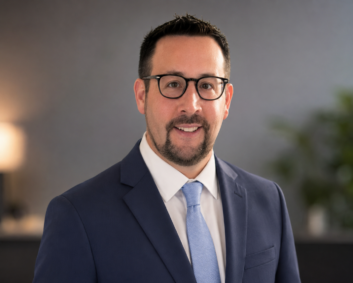
Greg Rice of Audacy’s all-news WINS(AM/FM) in New York City has always had a sense for navigating. “From the moment I got my license, my parents were always confident that I would be able to find my way where I was going, to the grocery store, to my grandparents’ house,” he said. His twin sister? Not so much.
But for Rice, who’s been offering traffic on-air in the Big Apple since 2012, that often means taking the long way home. “I’ll take a different way than usual to a destination, or even go a little out of the way, so I can see different roads and get a taste of what our listeners are seeing on a daily basis,” he said.
The Rand McNally Thomas Guides, KNX’s Mora said, were what originally really honed her map skills. They are a series of paperback atlases featuring detailed maps of large metropolitan areas in the U.S., including Los Angeles.
But sometimes it’s beyond just a necessity for the job — it’s a pure affinity.
Total Traffic’s Myra loves maps. “In my early years of covering traffic, we had a library of Hagstrom map books in our ops center,” she recalled.

Finding a location coordinate, she said, was as satisfying as finishing a crossword puzzle. “Someone needs to bring back the old AAA TripTik books!” Myra said.
WTOP’s Dildine also shared the affinity for maps and a sense of direction. “Whenever I visit a new city, I like to test myself by studying the road network in advance, then driving as much as possible without GPS,” he said.
Butler has had to supplement his Buckeye State geography. From iHeartMedia’s Cleveland studios, Butler also provides recorded reports to Columbus, Akron/Canton, Youngstown and even smaller locales like Defiance, Findlay and Mansfield.
“If a station can sell a sponsorship for a traffic report, it doesn’t matter if the town only has two traffic lights — we are doing traffic for them!” he said.
Scanning for activity
Prepping traffic, WTOP’s Dildine said, is vastly different from working in a newsroom, where a story will at least often come with the aid of a press release or statement. “Traffic reporters have to start from scratch, working with dips and drabs, pulling threads for multiple occurrences at once with only seconds to spare,” he said.
But there’s one almost universal cornerstone for the information gathering process: police scanners. “Scanners are our lifeblood!” Duran exclaimed.
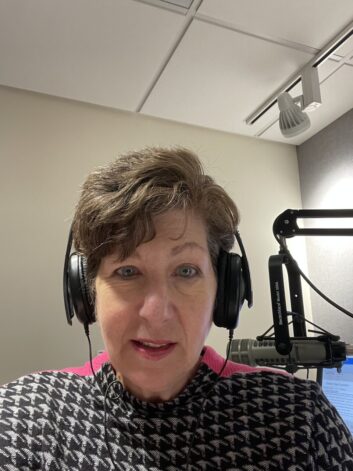
WBZ’s Tempesta said traffic cameras often end up simply confirming what they first hear on the scanner.
Reese agreed, noting that in KYW’s traffic studio, a scanner is always active with Philadelphia’s trunk system. “Current city information is not easily accessible in one place,” she explained. “The scanner makes it easier to multitask.”
Many police departments across the U.S. have encrypted their transmissions. That’s hurt in some cases.
In metro Washington, Dildine described how the National Park Service byways function more like freeways. U.S. Park Police VHF channels went encrypted in 2018. He called it a huge loss for regional awareness.
“Our drivers on these parkways often suffer in excruciating backups with little information surfacing compared to the state maintained roads,” he said.
But in most places, fire and rescue channels have remained in the clear.
“This is where the most valuable clues lie at the onset since paramedics usually precede police and offer an indication of the lanes affected and how significant the incident is,” Dildine explained. “Knowing what to listen for, the department codes, what to refine, and what to ignore are the skills that take time to develop,” he added.
Some of that has moved electronically. KYW’s Reese cited one mobile app in particular, PulsePoint, where, if a police, fire or EMS department opts in, users can see computer-aided dispatch calls in real time.
Reese also follows the Broadcastify-streamed scanner feeds because they offer information in a digest form.
WINS’ Rice has an old-school mindset. “I want everything at my fingertips,” he said. That includes specific police and agency scanner frequencies or talkgroups. “There’s something raw about being able to hear the responders on-site with an issue, or watching a problem be cleared away with my own eyes,” he said.
In Cleveland, Butler sometimes finds the scanners distracting.
“I’m broadcasting live every 10 minutes, and there’s only so much time I can monitor,” he said. He typically works with another producer, whose sole job is entering information, including from scanners, into the station’s software.
New Jersey’s Myra is filtered through Total Traffic’s East Rutherford, N.J., operations center. The ops center collects information from many sources, including scanners and live cameras, and she agreed that there is a skill to knowing what to monitor on the scanner.
WBZ’s Tempesta also credited the producers who are by her side. “They help us parse the information to get it out as timely as possible,” she said.

Conversely, morning traffic on Los Angeles’ KNX is typically a one-person operation. “We don’t have any interns right now,” Mora said. She gathers and updates all traffic incidents for each report.
But Mora also cited support from the station’s news desk. “On-site reporters pass along information and most editors and producers share any information that comes their way that might affect the roads,” she said.
Each morning, Mora monitors airborne TV reports from KNX’s media partners, and she said there are usually at least 10 tabs open in her web browser. California Highway Patrol and Caltrans also update closures and crashes.
That is a sharp contrast from in the Chicagoland area, where Duran lamented how much the Illinois Department of Transportation lags behind states like California, Michigan and Pennsylvania in terms of information access.
He credited the support of his producers. Executive Producer Anton Peters has been producing traffic in Chicago and in New York City prior for around 30 years.
“If it weren’t for the producing we have, our information wouldn’t be nearly as excellent,” Duran said.
Taking matters into their own hands
Several years ago, WTOP’s Dildine grew frustrated with a blind spot on D.C.’s Southwest Freeway. He began installing pan-tilt-zoom cameras near L’Enfant Plaza for the station’s traffic department. With the help of the station’s in-house tech team and partners in the tall buildings on the plaza, they gained sweeping views of some of D.C.’s most crash-prone roads.
As a result, Dildine said, sometimes the reports you see in your favorite app might just be coming from “the glass-enclosed nerve center” at WTOP.
In New York, Rice remarked how cameras have become so much more plentiful than when he first started in the industry. “They can pan and tilt, and they can show so much,” he said. He’ll inform WINS listeners that a crash was so severe, for instance, that he can spot transmission fluid on the road.
“That’s an advantage I never could have dreamed of when I first started,” he said.
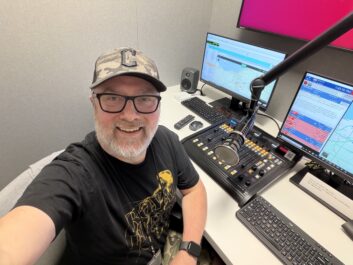
Butler said that Ohio’s Department of Transportation just keeps adding cameras. “There are probably twice as many available now than when I started 20 years ago,” he said.
Perhaps there’s no single go-to choice. But for a traffic reporter today, there are many tools, and that’s what Dildine believes has led to stronger regional awareness of traffic conditions.
Still, the voices behind the microphone are there to sort through it all.
“Long-term success as a traffic reporter hinges on a firm knowledge of the road network, a tolerance for extreme uncertainty, and an ability to quickly secure language that compensates for that uncertainty without a script,” Dildine said.
Part 2 of the series discusses the bottlenecks that each of our intrepid reporters say are the most troublesome, and the most road-snarling event each has had to cover.