As most of our readers know by now, John Bisset passed away in early October. Over the last two months I have been filling in while he was on medical leave. The Workbench column will continue, and I will announce John’s successor soon. Meanwhile please keep your tips and ideas coming. You can send them to me at [email protected] for the time being. Thanks for all of your support.
The Society of Broadcast Engineers chose John-Erick M. Rempillo to receive its Facility Innovation of the Year Award for a project called “Testing Kit on the Go: E-waste Back to Power.”
John-Erick is senior SNG/transmitter technologist for the Canadian Broadcasting Corp. He holds CPBE certification from the Society of Broadcast Engineers and is also a Registered Professional Electronics Engineer in the Philippines.
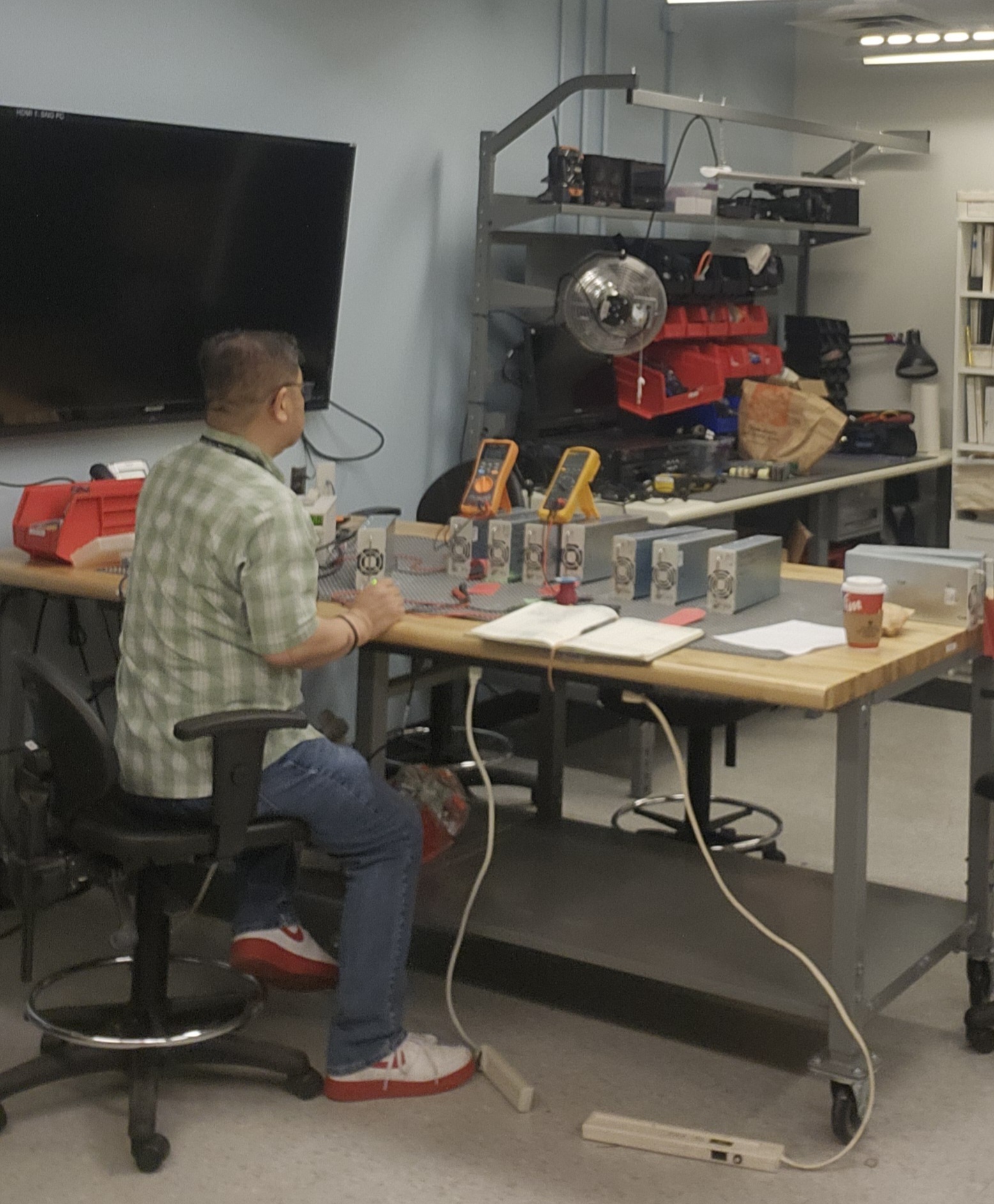
He designed a portable kit to test, troubleshoot and repair switching power supplies in CBC’s NV and VS series Nautel transmitters, without actually needing to go to a transmitter site. Packed in a case, it includes an AC power plug cable, digital voltmeter, interlock circuit and adjustable DC voltage regulator for biasing.
“Testing and troubleshooting switching power supplies at sites can be risky because it may affect critical on-air systems,” he told us. “I realized the need for a safer and more efficient way to diagnose these units before returning them to service.”
The concept and development work were his own. Nautel provided valuable technical reference and guidance.
“The testing kit does not guarantee that every repair will be successful,” he told us.

“There are still limitations, such as complex circuitry, damaged components, parts identification and the experience level of the technician. However, its biggest value is that it empowers engineers and technicians to perform bench-level troubleshooting and fault validation without risking live transmitter systems.”
For example, during fault isolation, the problem might be something simple, such as a blown fuse. Instead of replacing an entire power supply that may cost around $1,500, a simple repair costing less than $25 could bring the unit back to service.
And once the kit became operational, he also remembered several faulty switching power supplies that had been sitting unused in a storage area for years. He wondered, “Instead of allowing them to become e-waste, why not give them a second life?”
He used his portable testing kit to diagnose and restore these units back to working condition.
In 2025, the project restored five modules in Toronto, saving an estimated $7,500 in procurement costs and reducing electronic waste. Congrats, John-Erick!
Tell the factory
On a related note, when you acquire a Nautel transmitter, don’t forget to register it with the factory. That goes for units that you buy used, as well as new ones.
“When a used transmitter is purchased, it may still be registered to the former owner, and that can delay the support process,” said John Wilton, Nautel head of customer service, in a reminder email sent around by the company.
“Likewise, transmitters purchased through dealers may not automatically be registered to the end user. Keeping your ownership information up to date helps ensure we can quickly identify your equipment and provide timely support.”
A form is available on Nautel’s support website to facilitate transfer of registration.
Stay well-grounded
Larry Wilkins, director of engineering services for the Alabama Broadcasters Association, notes that a Texas station recently took a direct lightning strike at its transmitter site, virtually destroying everything inside the building.
“While complete protection is impossible, engineers should take every practical step to keep lightning from reaching station equipment,” Larry wrote in the ABA’s engineering newsletter.
“A ground system is not a one-time installation that can be forgotten. Engineers should inspect the entire system regularly to ensure all connections remain secure and that any additions follow the approved grounding plan.”
He said that a proper ground system involves bonding all the devices such as equipment, racks, transmission lines, etc. in the building together with a 4-inch copper strap. Junctions should be joined with proper solder and then taken outside with one strap to a “master ground rod.”
That rod should be a minimum of 10 feet, driven down below ground level.
“The connection to the ground rod should be made using exothermic welding, often called cad welding,” Larry wrote.
“This process involves creating a permanent bond between metals, typically using a chemical reaction that generates heat, also referred to as thermite welding. Bring the tower ground strap to this same ground point. Never use a compression type of connection on ground systems.”
Larry said it’s best to have a licensed electrician install a properly sized surge protector and power conditioner to the master incoming power feed. The ground from these units should be tied in the master system as well.
“The theory here is that during a lightning surge, the ground can rise to over 5,000 volts. However, when all the equipment is bonded together correctly, the difference in potential between devices is still zero.”
And don’t forget to ground all guy lines properly at a point before the line enters the turnbuckles at the anchors.
Know thy rigging
Engineers should know as much as possible about the towers they work around, even if their employer doesn’t own the steel.
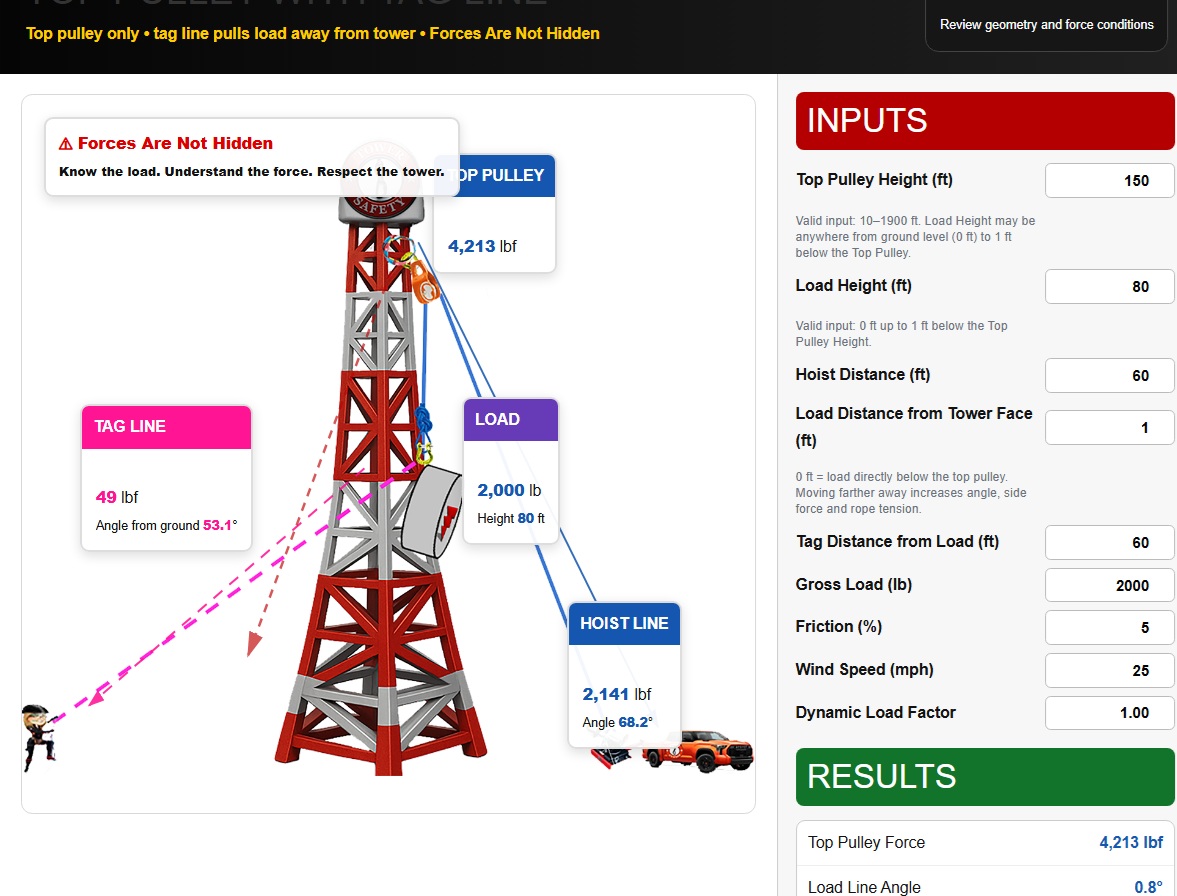
Arizona-based Tower Safety offers instruction and training in rigging, climbing, rescue and installation.
At the website, click on the “Resources” tab to learn about the “Tower Rigging Lab 2.0.” It can help you visualize the physics of safe lifting and understand why forces behave the way they do. It provides simulations to help visualize load paths, vector forces, pulley reactions and resultant loads using interactive engineering models.
Radio World welcomes letters to the editor on this or any story. Email [email protected].