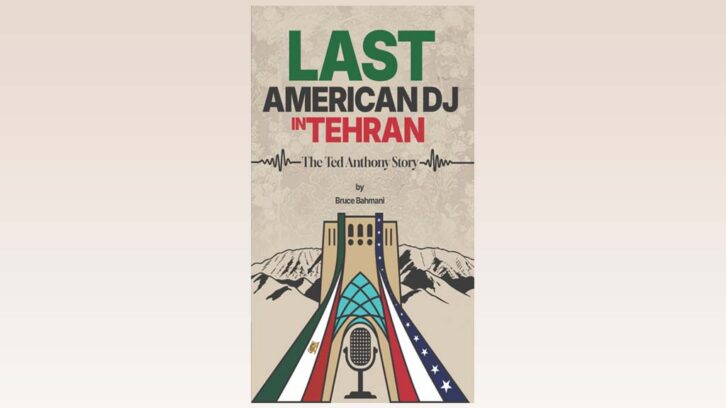
“Last American DJ in Tehran” is a new biography of Ted Anthony, an American radio DJ who became a popular voice in Iran in the years before the 1979 Iranian Revolution.
Author Bruce Bahmani describes Tehran of the 1970s as “a vibrant, cosmopolitan metropolis humming with tension, cultural collisions and unforgettable music.” He says Ted Anthony’s morning show “connected Americans living abroad, introduced international music and culture to Iranian audiences, and provided companionship to a generation that would soon witness one of the twentieth century’s most significant political transformations.”
The book is available in paperback ($26.95) and eBook ($11.99) on Amazon. We asked Bahmani about it.
Radio World: What is this book about?
Bruce Bahmani: “Last American DJ in Tehran” is the true story of Ted Anthony, aka Ted Zawislak, an American radio DJ who became an unlikely cultural ambassador in 1970s Iran, forging friendships and memories that survived revolution, exile and nearly half a century of political division.
Through extensive interviews, historical research, and personal recollections, “Last American DJ in Tehran” reconstructs a vanished world and demonstrates how one radio personality unexpectedly became a bridge between two nations.
RW: What drew you to this story and how did you learn about Ted Anthony?
Bahmani: I was one of the many teenagers living in Tehran when Ted was there. We used to go to school and listen to Ted on the bus radio. At night, we would listen to Wolfman Jack, on weekends Casey Kasem’s Top 40, and we also listened to the late-night “CBS Radio Hour,” the daily comedies “Chicken Man” and “The Tooth Fairy,” and all the wonderful programs Ted curated for the expatriate American and foreign audiences living and working in Tehran then.
RW: What made him successful in that time and context?
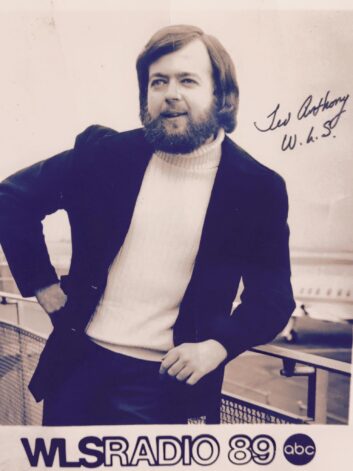
Bahmani: Ted gave Americans and foreigners a taste of home, personalizing the experience of living in a foreign country and making it interesting.
His daily “Fractured Farsi Lesson” taught his audience common and funny Farsi phrases they could use in day-to-day interactions with Iranians. This made the relationship between host and guest much more enjoyable.
Iranian listeners also loved Ted because they knew he loved and cared about their country.
RW: It seems that this work is as much about a place and time as about a person. If Iran is a foreign country for most of our readers, the Tehran of the 1970s may seem impossibly unfamiliar. What should they know about it?
Bahmani: Above all, during the time Ted was there in the 1970s, Iran and especially Tehran was THE place to be in the Middle East.
Iranians and Americans loved each other, and there was none of the stress we have seen since 1979 when the radical shift to the Islamic Republic changed the relationship.
Americans went to steakhouses, pizza parlors, Big Boy, (great) Mexican food, movies and bowling, enjoying what could only be described as a great life — enjoying the best of Iran, and not really missing much from back home.
In my book, you learn about the amenities Americans enjoyed, the U.S.-Iran relationships, and cultural programs like the Iran-America Society putting on Christmas white elephant sales, concerts and musicals, including “The Music Man” and “Godspell.”
Museums curated Iranian and American art together, and even Andy Warhol brought his famous Marilyn exhibit to Tehran. There were five Boy Scouts of America Troops, and kids played all four levels of Little League baseball.
I am one of a very few who completed my Eagle Scout requirements while in Tehran.
RW: How did listeners react to hearing American radio formats and English-language DJ banter in Tehran?
Bahmani: Ted was above all very funny, and made his shows entertaining. His personal touch in connecting with his English-speaking American and foreign audiences also extended to Iranians who understood English and had lived and gone to college in the U.S.
Iran was a very English/American-friendly country. Shops often used English signage, and all Tehran street signs were in English and Farsi. The first foreign language any Iranian wanted to learn was English.

RW: Is the revolutionary period part of the story you cover?
Bahmani: No. The book ends when Ted leaves the country just as the revolution was imminent. I purposely wanted to limit the story to the time before the revolution, because we all know what has happened since, and how things have turned out.
What we don’t know, or have forgotten, is how things were. Precisely because of the way things used to be, I wanted the book to stand as an optimistic testament to how they could be again.
RW: What was the most surprising thing you learned or realized in researching and writing this?
Bahmani: The sheer amount of amazing Americana and American history I researched, to trace Ted’s journey from childhood, through the many radio stations across America where he worked as a radio DJ or host. I think American readers these days will enjoy being reminded about our wonderful past.
I learned about the history of companies that built entire towns for their workers, the significance and scale of the American labor union movement, and how Wrigley became a quintessential American success story from selling chewing gum.
I learned how Westclox brought affordable pocket watches that tamed the Wild West. And then they invented the Snooze alarm! I learned that the “Minute Man” hamburger chain invented the microwave, and the “Happy Meal,” and that the founder flew to Tehran to personally cook the favorite burgers of a young American woman who lived and worked in Tehran, because she wrote her mother that she missed them.
There are many stories like this in the book. With pictures!
RW: What happened to Ted Anthony later?
Bahmani: Ted is alive and well, and lives in Indiana. He is sharp as a tack, and more importantly, his voice still sounds great!
RW: What else should we know?
Bahmani: The book is for anyone interested in what it was like to be a working radio DJ in the US during the 1950s ’60s and ’70s, and how the profession of being a radio personality impacted U.S.-Iran relations in the most positive way anyone could ever imagine.
Read more stories like this in our News Makers section.