How did foreign correspondents during World War II manage to get their reports back to American radio listeners?
Mark Durenberger, a broadcast engineer and longtime member of the Radio World family, has published a 60-page narrative called “Getting Hear From There” that explores the question.
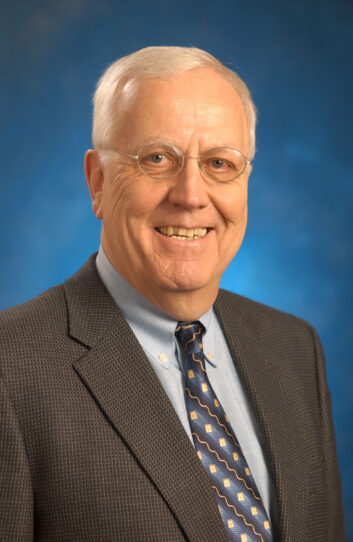
Radio World: What prompted you to take this on?
Mark Durenberger: Curiosity drives me. I had anticipated drafting a Radio World article on wartime shortwave reporting. But as I dug, the drafts got wider, until they became a complete book. It was a delicious experience: Each story I was developing led to other stories.
RW: How did you gather the information and how long did it take?
Durenberger: Reading and browsing. I create audio notes to myself when something strikes me; then I can search for context in which to underline what I’ve written. Notes gathered over several years helped build the narrative’s momentum.
RW: You embedded audio clips, which is a fun way to experience the content as we read along. How did you find and gather those?
Durenberger: Fifty-five years ago I began a collection that now numbers in thousands of radio shows and includes a goodly number of news broadcasts. From that library it became a matter of judgement as to whether a particular audio snip was the best I could find to prove a point. From what I’ve gathered from a peer review, more clips would be good, or they could have been longer. Who knows: maybe a Rev 1+?
RW: There are a number of interesting personalities in the story, some famous and some not so much. Was there one who stood out to you as particularly interesting, and why?
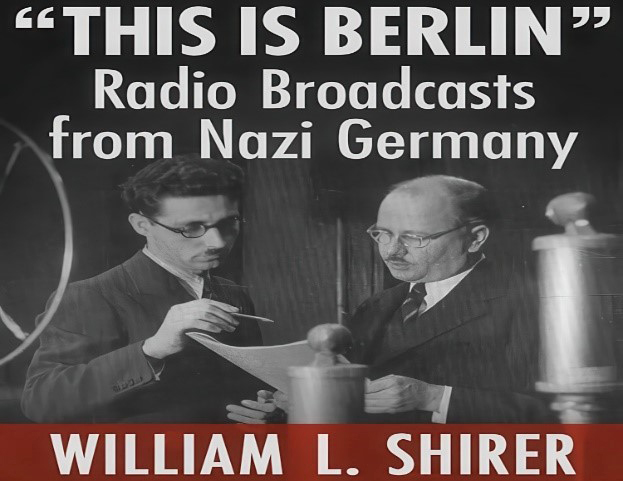
Durenberger: Murrow of course for his work. I would add Cecil Brown: He was a maverick surviving in a judgmental political environment. And I think William L. Shirer was terribly underutilized by CBS. Fortunately we have his memoirs and I’ve quoted liberally from him.
RW: Our readers love technology. What’s your favorite example of how these correspondents used tech of the time?
Durenberger: Two things: the almost-supernatural talent of shortwave transmission engineers to predict the best channels on a given day. And for battle reporting, my hat’s off to the planners who promoted alternatives to the traditional “stylus-n-groove” disc recorders, which were pretty much useless in battle.
RW: You told me that an interesting aspect was setting up the story by talking about the life and the times of radio listeners of the 1930s.
Durenberger: I wondered what it was like to communicate in the 1930s when the telephone call was the only interactive technology. No FM, no TV, no fiber, no satellites. What I was finding made me want to understand the character of Americans who were wrestling with the Great Depression while raising the sons and daughters who would prosecute World War Two.
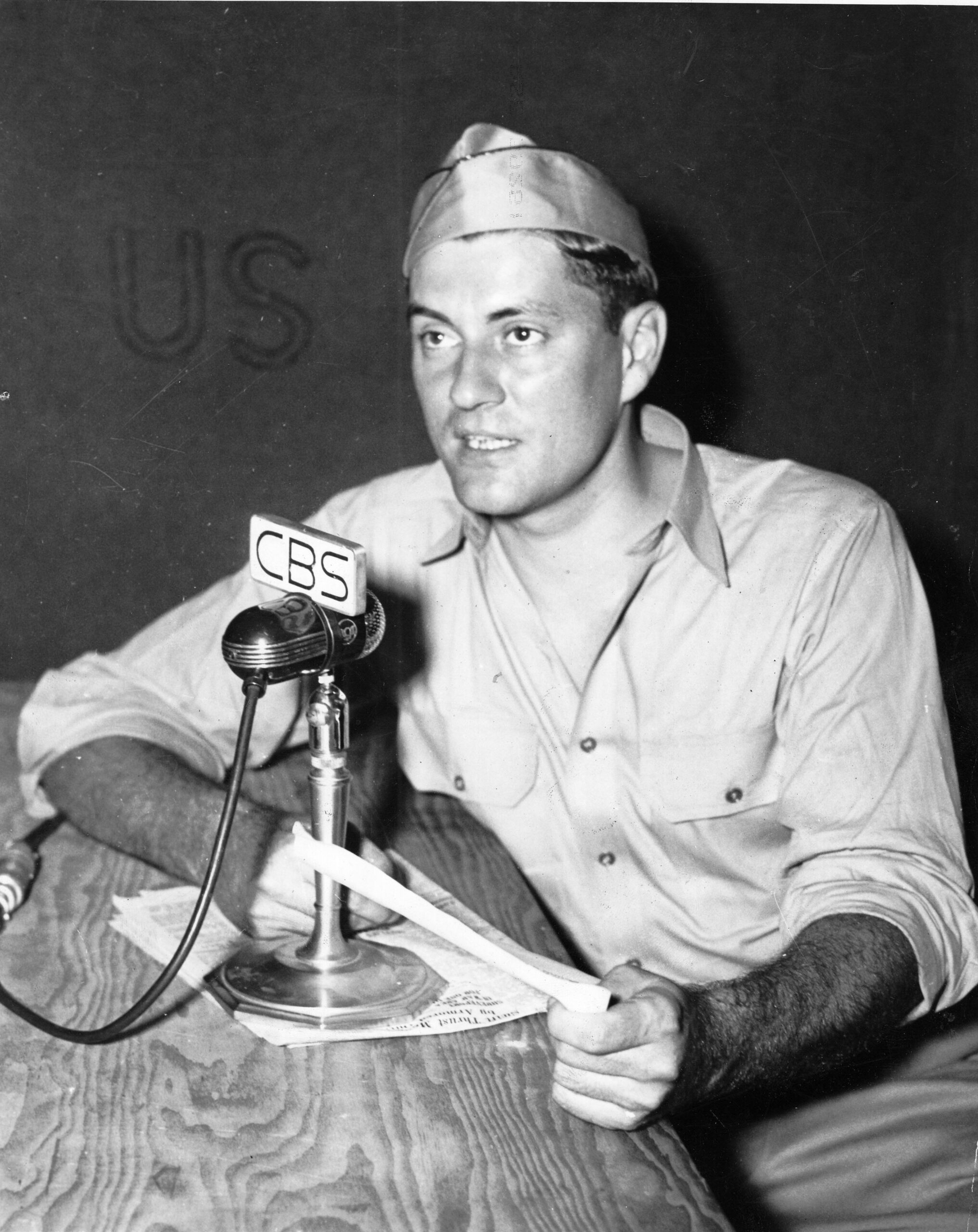
I also wanted to better understand broadcasting’s emerging impact on that character, particularly when the nation went to war. Because it’s a truism that better-educated citizens can make better decisions. Toward that end the growing trust in radio is part of the story.
Radio was such a different creature in the early 1930s. It no longer wore the “magic” of the ’20s; it had become an entertainment factory … with the occasional nod at public affairs.
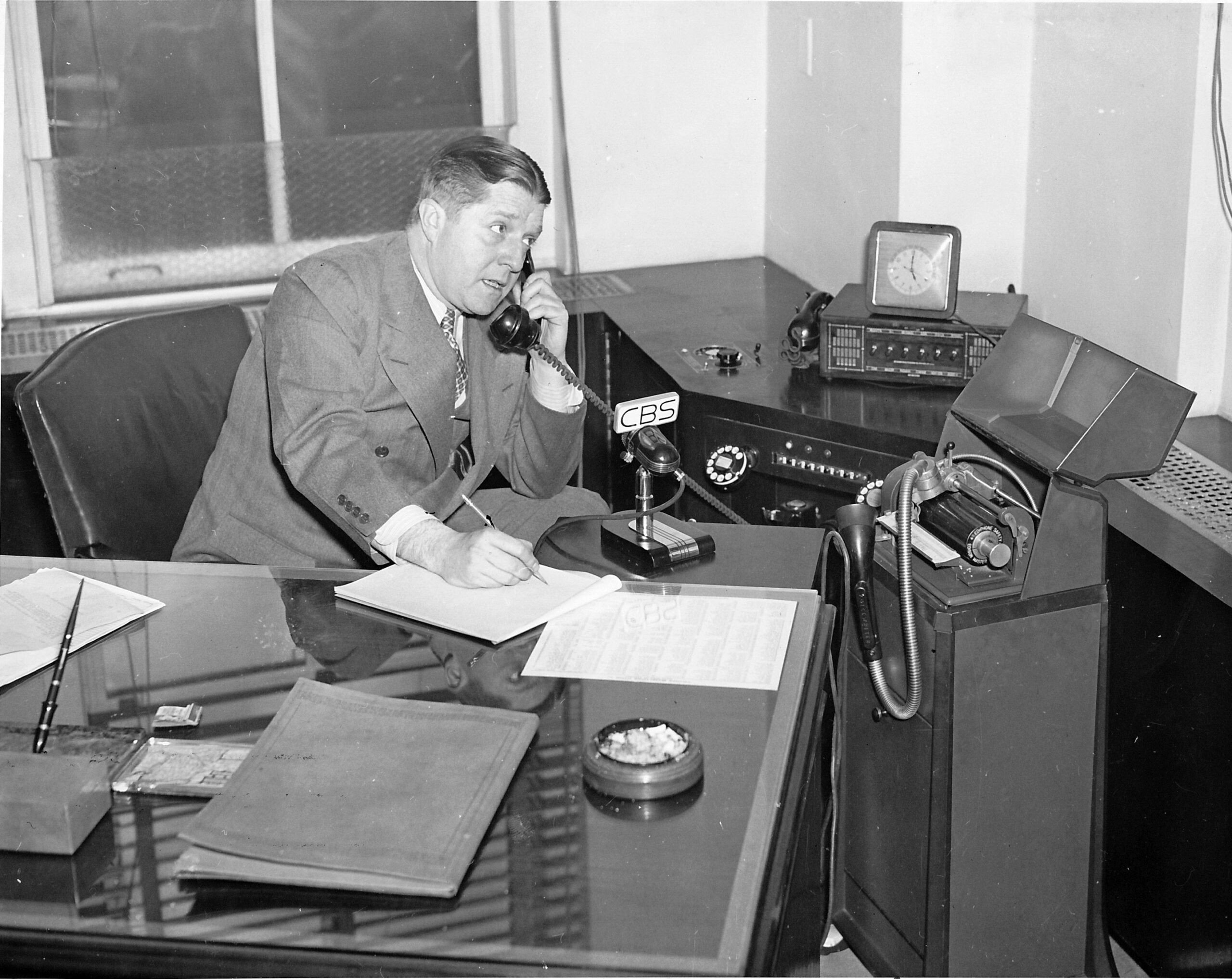
We learned that listeners began to demand more from the networks. The narrative describes the birth of network radio news and the reluctant posting of foreign correspondents, who began by reporting the crises leading to the war.
From the start, the behavior of shortwave transmission played a remarkable role in how that coverage played out through the end of the war. And that led me to an interest in some of the correspondents who gathered and reported those stories. Their failures and successes were worthy of relating and the book contains some good examples.
RW: Many of our readers will know your name as a longtime friend of the magazine and engineer. How are you spending your time these days?
Durenberger: Paul, I retired five times, starting in 2000. A year later, I began an association with the Minnesota Twins to build a radio network and to join the broadcast design team for their playing home, Target Field. I was able to draw on much of what I’d learned in 50 years of OJT. I’m very grateful for that experience. I wish everyone could have such an opportunity after they “retire.”
RW: Where can a reader find the ebook?
Durenberger: It’s called “How We Got ‘Hear’ From There: A Narrative Describing World War Two Reporting” and it’s free.
By the way a seminal book from my misspent years is “Connecting The Continent: AT&T And The Broadcast Networks.” It can be found at www.durenberger.com.