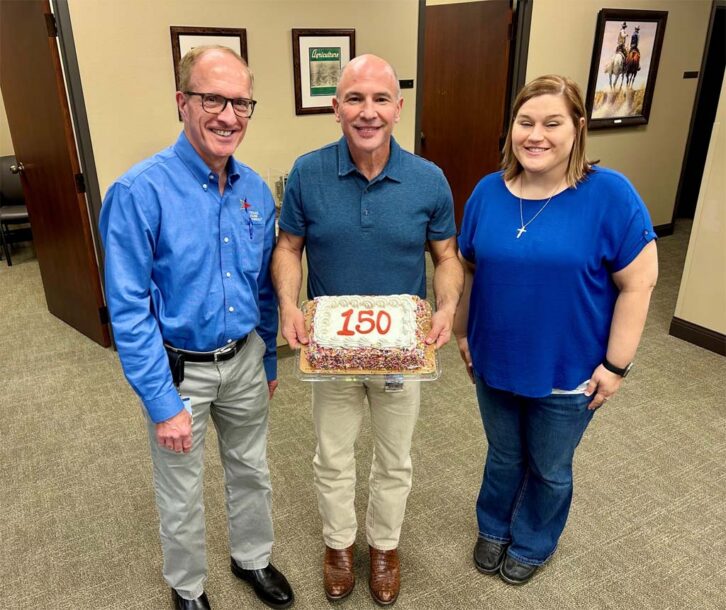
The Texas Farm Bureau Radio Network recently signed its 150th affiliate. That’s the most in the network’s 24-year history and twice as many stations as six years ago.
We love farm radio here at Radio World, so we followed up with Network Manager Carey Martin to learn more about it.
TFBRN is the largest single-state farm radio network in America. Its farm news team includes Martin, Tom Nicolette and Jessica Domel as well as Texas Panhandle reporter James Hunt, livestock auction market reporter Larry Marble, veterinarian Dr. Bob Judd and economist Tim Snyder with Matador Economics.
Radio World: What is the Texas Farm Bureau Radio Network? Who owns and operates it?
Carey Martin: The Texas Farm Bureau Radio Network provides farm programming to 150 radio stations across Texas. It is owned and operated by the Texas Farm Bureau, a nonprofit farm organization based in Waco.
The network was founded in 2002 by Texas Farm Bureau Communications Director Gene Hall and longtime Texas farm broadcaster Curt Lancaster.
We provide daily farm programs ranging from a quick 60-second market update to a 30-minute morning show called “Texas Ag Today.” We also produce “Farm Bureau Roundup,” which is a 15-minute weekend show.
“Farm Bureau Roundup” is the longest-running syndicated farm radio program in America, having been on the air every weekend for the past 72 years.
We’ve expanded our programming in recent years to include non-farm programming. We offer three daily Texas newscasts and Sunday morning gospel programming. We also have a daily energy and financial report.
I’ve provided a programming listing. You can also hear some of our programming here. You can find a lot of information on the history of our network in this video.
RW: How big a role does agriculture play in the state of Texas, and how does the network serve these listeners?
Martin: Agriculture has a profound impact on all people who live and work in the state of Texas and is vital to our state’s health, recreation and economy, as well as our future prosperity.
The economic impact of the Texas food and fiber sector totals about $100 billion, and agriculture employs one out of every seven working Texans.
Texas leads the nation in the production of cattle, cotton and cottonseed, hay, sheep, goats, mohair and horses. More than 230,000 farms and ranches cover 125 million acres of land in the state.
The Texas Farm Bureau Radio Network provides quality programming for farmers and ranchers and has for the past 25 years. The network specializes in programming for the agricultural audience, covering state legislative and regulatory issues, crop and livestock conditions, and market information and analysis, as well as national policy issues from Washington, D.C.
Our purpose is to provide farmers and ranchers with information that improves their farming and ranching operations, helping to keep Texas agriculture strong and profitable.
RW: How would you characterize the relationship between radio and farming in the state today?
Martin: The relationship is still strong, despite the many different information sources available today.
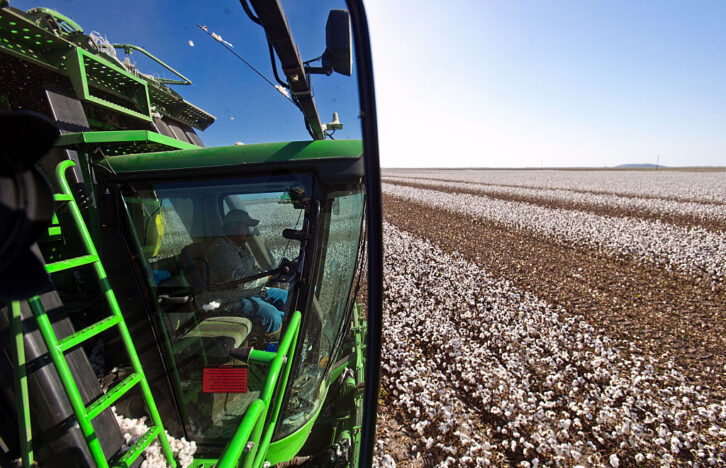
Farmers and ranchers spend a lot of time in their trucks and on their tractors and equipment. They are a captive audience that depends on audio to keep them informed and entertained.
Although they have many sources of audio, AM/FM radio remains a strong and trusted source. Radio isn’t as strong with younger demographics today, but the average age of a farmer or rancher in Texas is 59. That’s an age demographic that still relies heavily on radio for information.
According to the 2025 Ag Media Research Farm Radio Listening Study, the Texas Farm Bureau Radio Network had the largest farm and ranch listening audience in Texas. In any given week, 65% of Texas farmers are tuning into a Texas Farm Bureau Radio Network affiliated station.
And we’re not just on small-market stations. Mid-sized markets like Amarillo, Lubbock, Corpus Christi and Tyler have stations that run our programming. We’re even on a few major- and large-market stations in cities like Houston, San Antonio and the Rio Grande Valley. These stations acknowledge the importance of agriculture in their coverage areas and serve that audience with quality farm programming.
RW: You’ve been growing your affiliate list. To what do you attribute that growth?
Martin: First, you must produce a high-quality product. We heavily invest resources into producing our daily programming. We have three full-time farm broadcasters on staff spending each working day producing the best possible farm radio programming.
We also have five contract broadcasters who provide daily specialty programming for our network. And we are fortunate to have nine regular contributors to our programming, giving us weekly and biweekly reports from their specific region of Texas. That’s a total of 17 different voices you will hear in our programming on a regular basis.
We’ve been honored several times for our programming by the National Association of Farm Broadcasting.
The second reason for our growth is simple. I call it windshield time. There is no substitute for getting in your truck or car and making the drive across the state to visit with potential radio stations.
I still believe that radio is a relationship business. In a day and age of emails and unreturned phone calls, I want to shake a station owner’s hand and look them in the eye. I want to break bread over a meal and learn about the history and purpose of their station. I want to learn about the community they serve.
And usually, we can agree that our farm programming would be a great way to help them fulfill their purpose of serving the farm and ranch community within their coverage area.
Out of the 150 radio stations we work with, I’ve personally visited most of them. There are a few that I haven’t seen, but they are on my list, and I’ll eventually get to them all.
RW: Are the affiliates mostly AM stations? How do the challenges facing the AM band affect the mission of the network?
Martin: The majority of our stations are FMs, but 30% of them are AMs. That is a significant percentage of our listeners. In some rural areas an AM station is all that is available.
We are major supporters of the AM Radio for Every Vehicle Act and are happy that Texas Sen. Ted Cruz was one of the two original sponsors of that bill.
The No. 1-rated station on our network is an AM station, proving that farmers and ranchers are still heavily dependent on the AM band.
RW: Common wisdom is that broadcast radio’s role in American life has declined over time. Are farmers and ranchers following the same patterns of listening more via other audio platforms?
Martin: Yes, there’s no denying that broadcast radio’s role has declined with all the other audio outlets now available. But I’d point you back to the question about the relationship between radio and farming.
Farmers and ranchers are an older demographic that still listens heavily to AM/FM radio.
We don’t ignore the availability of other audio resources. Instead, we have embraced it.
With the growth of podcasts, we launched the “Texas Ag Today” podcast six years ago. It’s the podcast version of our daily 30-minute morning farm and ranch program. Our download numbers aren’t huge, but for a podcast that targets a niche audience in a single state, we have a respectable listener base.
In 2024, we launched our own radio station, KTFB Texas Farm and Ranch Radio. The LPFM broadcasts at 89.3 FM in the Waco market, but from the start we decided that our priority was to build a radio station that every farmer and rancher in Texas would want to listen to through a streaming app.
KTFB is “All Things Texas.” We feature all our farm and ranch programming from the Texas Farm Bureau Radio Network along with top-of-the-hour Texas news headlines, a twice-an-hour Texas Farm & Ranch weather forecast and twice-an-hour farm and ranch market updates.
Then we fill in the holes with Texas country music. Most people aren’t aware that we have our own Texas country music scene that is totally separate from Nashville. We feature independent Texas artists along with the Texas legends like George Strait and Willie Nelson.
Our app downloads and streaming numbers for KTFB have increased every single month since our launch two years ago.
RW: What else should we know?
Martin: We believe that broadcast radio still has a very important role to play in the daily lives of Texas farmers and ranchers. The fact that we have reached 150 affiliates confirms it. Local radio stations believe it too.
There is no more noble profession than producing food, fiber and fuel for all Americans and many others around the world. We consider it an honor to support those farmers and ranchers who work endless hours for low returns, all to put food on our tables, clothes on our backs and fuel in our tanks.
[Do you receive the Radio World SmartBrief newsletter each weekday morning? We invite you to sign up here.]