Orban’s first audio processor for FM broadcasting was launched 50 years ago. To mark the anniversary, the company has sponsored this series of interviews of Bob Orban in conversation with Radio World Editor in Chief Paul McLane. This is the final part; you can read it from the beginning here.
Last time, Bob discussed a new corporate owner, the growth in digital radio and the launch of the Optimod-FM 8400 and 8600 processors. Now we bring the story to today and learn his views on the outlook for our business.
Paul McLane: Bob I want to thank you for spending so much time with me. I’ve learned a great deal. Last time we ended on the Optimod 8600, circa 2010; and we’ve talked about so many other products. Is it still possible to make significant improvements in processing for broadcast? How much further can we go?
Bob Orban: FM is getting harder and harder. I’m not saying it’s impossible, you can always surprise yourself; but when the modulation meter is stuck at 100% you’ve probably gone almost as far as you can go.
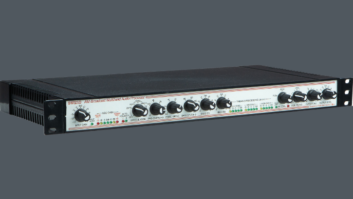
But we surprised ourselves with the XPN-AM. I’m jumping ahead in the timeline, but although we had been making AM processors since the 9000, the XPN-AM was another big step up. It was built on a Windows LTSC platform using an offshoot of the PCn-1600 code. It was our first hardware product that used native code as the DSP.
It uses the MX Limiter technology that I had developed first for the 8600, and customized it for the unique requirements of AM.
McLane: What enabled that significant step?
Orban: We had never used the MX Limiting technology in an AM processor, so until I actually tried it, I didn’t know exactly how much it would buy you.
But it turned out to buy a great deal, to the point where there was market excitement probably comparable to the original 8000s. One would go on in a major market and then everybody would have to have one.
McLane: Yet this was at a time when the band was under increasing business pressures and stress. Over the last 10 years, has there been a meaningful AM market for new processing?
Orban: Yes. We’ve sold several hundred. And people who have a dynamically carrier-controlled transmitter and put the XPN-AM on can save a lot of power. Particularly if you’re a 10 kW or 50 kW station, those savings can add up and pay for the processor,
McLane: Going back to our timeline, I believe the next notable radio on-air processor was the 5700, which came out in 2014.
Orban: It was one in a family of “step-down” products derived from the flagship 8500. It was part of our strategy to let the technology trickle down into the more affordable products as we made improvements at the top end.
For instance the Optimod-FM 5500, introduced in 2005, had been an enormously successful processor for us, and it was basically 8400 technology. We sold those for better part of a decade, and during most of that time it was our top-selling processor.
The compact form factor of the 5700 was a big deal. A lot of our customers were telling us that rack space was at a premium, and if possible, they wanted 1 RU products.
Also, starting around 2012 I embarked on a project to port the DSP code that had been running on the Motorola/Freescale 56K DSP chips to a high-level language. In the port, the DSP was written in a modern version of Fortran and the control part of the software was in C++.
This is what eventually became the Optimod-PCn 1600, our first software-only audio processor.
McLane: That came out in 2015 and was the first Optimod to run natively on a host computer’s Intel x86 processor.
Orban: It was almost a three-year project for me. It was the first time I had personally coded the DSP part of the processing, which previously had been done by other engineers.
It turns out that modern Fortran is a very good language for implementing DSP because it’s basically a scientific and engineering language oriented around efficient computation. That’s exactly what you need in the case of a DSP loop.
Fortran is the oldest high-level programming language, but it has undergone continuous improvement and updates ever since 1957, when it was introduced at IBM. It’s still used for very large-scale compute — supercomputer clusters, weather forecasting, ocean modeling, that kind of stuff.
McLane: With that launch, were you thinking that software-based processing would replace the traditional hardware approach?
Orban: No, it would exist alongside it. There are customers who still prefer the “bulletproof” nature of a dedicated hardware box that’s not subject to the whims of a general-purpose operating system. Everything is tightly locked down.
Rightly or wrongly, people perceive it as more reliable than something that runs on a general-purpose computer. I don’t think that’s necessarily true, but you do have to be careful how you configure the host PC in order for it to have equivalent reliability to a dedicated hardware box.
McLane: I want to come back to that discussion as it pertains to the cloud, but the next important product was the 8700i.
Orban: It was basically an 8600 v4 with the addition of a subharmonic synthesizer and Xponential Loudness, which was developed by an outside vendor and ran on a co-processed platform within the 8700. Additionally, as the 8600 was updated over the years, we improved the bass limiter, added the multipath mitigator phase corrector and made a number of other improvements, all of which were ported to the 8700i.
McLane: Each would be worth a longer discussion, but in that stretch of 2010 to 2020 was there a particular advancement that stands out?
Orban: The big one was the MX Limiter, which uses a psychoacoustic model, sort of like a codec, to detect and control peak limiter distortion. It provides significantly lower distortion, more transient impact and less pre-emphasis-induced high-frequency loss than our previous tech.
The second was the multipath mitigator phase corrector, which reduced the energy in the stereo subchannel to the absolute minimum possible while still preserving the separation. It did that by removing any phase shifts between identical components in the left and right channels. Depending on how the original recording was made, you could get a very substantial reduction in the amount of L minus R energy by using that process. Of course, the stereo subchannel is much more vulnerable to multipath distortion than the stereo main channel, so that was the main benefit.
The subharmonic synthesizer was a nice feature, particularly for people running oldies formats, where you didn’t have a lot of recordings with more modern bass balance. It could put some thump and grunt in that a modern audience would probably enjoy, unless they were purists and wanted to hear the record exactly as they’d originally heard it.
But even there it depends on whether they originally heard it on an AM radio or a jukebox. Those were two entirely different experiences.

McLane: With so much listening now done in the car, and with consumers accustomed to platforms that use compressed audio, how aware do you think the average radio listener is about audio quality?
Orban: The fact that FM gradually overtook AM as the preferred listening medium answers that question. AM was not a full-bandwidth service, a high-fidelity service. And although we had AM stereo for a while, by that time the lion’s share had already gone to FM. Also, AM stereo would never quite have the audio quality of FM stereo.
AM’s advantage is that it’s much less subject to terrain fading, and of course it provides long distances at night.
There is an old concept called “entertainment quality,” which is the minimum technical quality that allows audiences to enjoy the content. Early in the history of streaming, we went through a period where lossy codecs at low bitrates sounded very poor, sometimes below entertainment quality. But modern codecs, like HE-AACv2, deliver better than entertainment-quality audio at bitrates low enough for any use case.
McLane: In 2016 the company was acquired by DaySequerra. Its owner David Day had had his own audio successes coming in. What did this change mean for you?
Orban: It was another small company so it was not much of a cultural shock. David is a bit heavier into the engineering side than Jay Brentlinger was — not to say that Jay wasn’t, but David attends most of our twice-weekly engineering meetings, for example. He’s very hands-on when it comes to product development.
McLane: There was a consolidation of U.S. operations to New Jersey.
Orban: Yes. Now our engineers work from home, around the country. We have three people including me in the San Francisco Bay area, we have a software engineer in Los Angeles, our DSP guy is in the Midwest. We have a couple of engineers in New Jersey, and two engineers at the Orban Europe operation in Germany, along with some technical salespeople who are also processing gurus.
McLane: What about manufacturing?
Orban: It has been done in Europe for a number of years, first in Germany, then Hungary and now back in Germany. We don’t use Asian manufacturing, it’s all Western.
It’s done through contracting, which is a transition we made in the CRL era and brought about by RoHS. That refers to European Union restrictions of hazardous substances in electrical and electronic equipment. You had to get lead out of solder, for instance.
Then there was the transition to surface-mount technology. Our existing equipment was no longer suitable for cost-effective manufacturing at that point.
By contracting out, we also could take advantage of the economies of scale offered by contract manufacturers, including those that are compliant with the ISO 9001 quality management standard.
Global sales is run from Orban Europe, I’m not involved in the day-to-day of that. And when David acquired the company he beefed up our technical marketing and product support presence, including hiring Mike Erickson for the Western Hemisphere. He’s very good at setting up processing as well as doing customer service and our manuals.
We have a bigger staff of technical marketing people than we ever had, which was part and parcel of David’s philosophy. Our products are driven more than ever by customer feedback.
McLane: How did the pandemic affect Orban?
Orban: We saw a sales decline, like most companies, and soldiered through it. Because David’s operation was already pretty efficient, we managed to come out the other side intact and ready to pick up the slack.
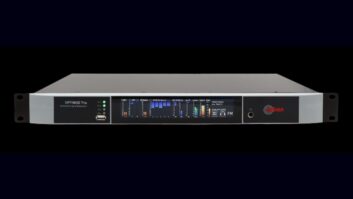
McLane: The current decade has brought several products including the Trio, the 5750 and the 5950.
Orban: These are all part of an effort we call the Orban New Platform, or ONP. It continued to use 56K DSP, but we added a number of Raspberry Pis inside as co-processors.
Customers were looking for things like a streaming encoder for remote monitoring in places where a reliable off-air signal was unavailable. Some wanted to receive streams for use as an STL. Some wanted uMPX and APTMpx, which are compressed FM stereo composite STL technologies. Many needed a built-in ratings encoder, which could be Nielsen, Kantar or Ipsos depending on their location. This was stuff that we couldn’t do on 56K but could do on the Raspberry Pi.
Our hand was also forced because the Elan 586-class control microprocessor that we’d used in products all the way back to the 8400 had become obsolete and basically was impossible to source anymore. We had to move to a new control microprocessor, and again the Raspberry Pi seemed like the logical solution — it was widely available, popular, likely to be around for a while, so what’s not to like?
McLane: And that’s the platform you continue to use?
Orban: Yes. It has three levels. The 5950 is the top of the line, with MX Limiting and new features such as a version with HD-2 processing, which was a first in an Orban hardware processor.
The midline is the 5750, in the lineage of products like the 5700. It is 8500-class processing with the addition of convenience and connectivity features that people are looking for.
Then the Trio is a three-in-one. It can be adapted for AM, FM and streaming. That’s in the lineage of the 5500.
McLane: You’ve continued designing and introducing products when others might have retired. Have you considered that?
Orban: I developed the XPN-AM in my mid-70s when most people might be on the golf course or taking a cruise. I am 80 now. My dad used to say that he’d rather burn out and rust out than rust out. That’s pretty much my feeling about it.
As long as my brain continues to work well — which it seems to so far — I want to continue to be involved in this industry and with this group of people.
McLane: Even more recently you shipped processors with HLS decoding. Why was that important?
Orban: For one thing, you can do HLS lossless encoding and actually use the public internet as a STL if you’re willing to tolerate enough delay to ensure reliability.
Greg Ogonowski was our VP of new product development for a long time, then spun off in 2014 to launch Modulation Index. He has been a proponent of HLS from the early days when it was first developed by Apple, and we fully agree with him and appreciate the advantages of HLS, which, along with MPEG-DASH, is the backbone of modern standards-based streaming.
On the video side, we would not have Netflix, Amazon Prime or other reliable and robust streaming services without that kind of dependable transmission over the internet. HLS basically looks like a bunch of web pages coordinated by a manifest file, and serving web pages was exactly what the internet was designed to handle.
McLane: What should we expect from the company in the future?
Orban: The Orban New Platform runs on Linux for the Raspberry Pi, and without giving too much away, the Linux orientation will continue.
My philosophy is generally the same as that of IBM’s mainframe division: When they announced a product, they were ready to take orders and ship. So we don’t like to tip our hand with premature announcements. But things continue to be in active development, and we continue to listen to our customers and incorporate new products as driven by customer demand.
McLane: We hear much in general about the cloud, about software as a service and products being sold via monthly subscriptions. How do these play out at Orban?
Orban: Some people are running the PCn-1600 in the cloud. But I think there has been a bit of disillusion with the cloud on the public internet, and some organizations are moving back towards local clouds, where they run private servers and use private connections so they’re not impacted by internet outages or excessive traffic.
The cloud was theoretically a wonderful idea. But in practice, people have encountered challenges in terms of reliability and 24/7 uptime, particularly with the ability to move data back and forth with predictably low latency.
McLane: And AI? Are you using it, and how does it change what audio processing does, if at all?
Orban: I consider computer algebra software to basically have changed my professional life in the late 1980s. If you want to think of AI in terms of things like symbolic mathematics software, then yeah, I’ve been using that stuff for a long time.
In terms of the current large language models, there’s a problem because an audio processor is such a multidimensional, nonlinear beast. You’d have to train AI on hundreds of cuts, dozens of presets. And are you going to end up with something that takes so much compute that you need the output of Niagara Falls just to drive the thing?
The advantage of the dedicated audio processing we’re using is that it is extremely power-efficient, it is minimally costly and it is extremely predictable — it doesn’t hallucinate. We’ve had decades of experience in developing these algorithms, and they adapt very well to different types of inputs.
I read AI-oriented papers in the AES Journal from time to time. People are using AI for things like source separation, automatic musical transcription and automated mixing, trying to replace human engineers.
Yeah, sure, if you’re a small act in a club and you want something that’s not a dumb mixer with no operator, an AI mixer sounds like a good idea. But even there, I’m not sure it’s going to replace human judgment in the big arena shows.
So I have mixed feelings about it. I certainly don’t know where it’s going to be in some years. I don’t think anybody does.
Are large language models going to run up against a wall because they’re not intrinsically reasoning models in the same way that humans are? Or are ingenious scientists and engineers in the major AI companies going to be able to improve LLMs or augment them with other technologies so as to get around the intrinsic limitations?
And it’s developing weekly. I don’t know if any prognostications that I admitted at this point would be valid even a year from now.
McLane: We’ve focused so much on products and business, I really haven’t asked you about personal life. What do you do for fun when it’s time to turn off the engineering?
Orban: I have a recording studio in my basement, where I write and produce. I’m also quite into home theater and I have a fairly elaborate setup; but most of my secondary interest is music; that’s my second hat.
I’m into classical music more than anything, but I also got into rock music in the mid-60s. I heard an album called “Shut Down Volume 2” by this surf and car band called the Beach Boys. My ears pricked up and I said, “Holy crap, there is something going on there.” Of course that was Brian Wilson, and that was the first time I took rock and rock seriously as an art form.
I like to think I was a bit ahead of the curve because Brian Wilson didn’t really get his full measure of recognition until “Pet Sounds” several years later.
Then in Princeton at the student radio station, I was involved with engineering their top 40 show once a week. I was the engineer for Rick Rosenthal, whose DJ name was Rick Arnett back then. He eventually ended up with a distinguished career in broadcasting; he was news anchor at WGN in Chicago for many years.
I was music director of the Princeton radio station for a year, so I chose popular music programming. We played standards as well because in the mid-60s, top 40 was a mixed bag. You still had things like Frank Sinatra’s “Strangers in the Night.”
I familiarized myself with the great American songbook and the great composers — Rodgers and Hart, the Gershwins, Cole Porter, Irving Berlin and so forth — in addition to keeping up with what was going on in rock and roll.
McLane: It’s so good that you still have your hands in music,
Orban: Most of the stuff I produce with other people, mostly for fun, is in a rock pop vein. But I have done classically influenced composition more on my own, and synthesizer-based music.
I took three years of the harmony and counterpoint composition tracks for music majors at Princeton, I scheduled that in as my humanities elective, so I got some serious formal compositional training. Yes, I have done counterpoint exercises!
McLane: I’d think that would overlap with a technical and engineering mindset pretty well.
Orban: I agree. What’s called species counterpoint is almost like a puzzle. There are so many rules, and you have to make everything work just so. It was developed by an Austrian in the early 18th century, Johann Fux, and was used to train generations of composers including Mozart and Beethoven.
A goal that I’ve set for myself recently is to learn more about jazz methods and jazz harmony. It’s an art form I respect, and part of modern musical literacy.
McLane: I’ve seen that you are an excellent self-driven student when you put your mind to something.
Orban: I try my best.
McLane: I realize you’re not done developing products, but when you look back, is there one you suspect you’ll be most remembered for?
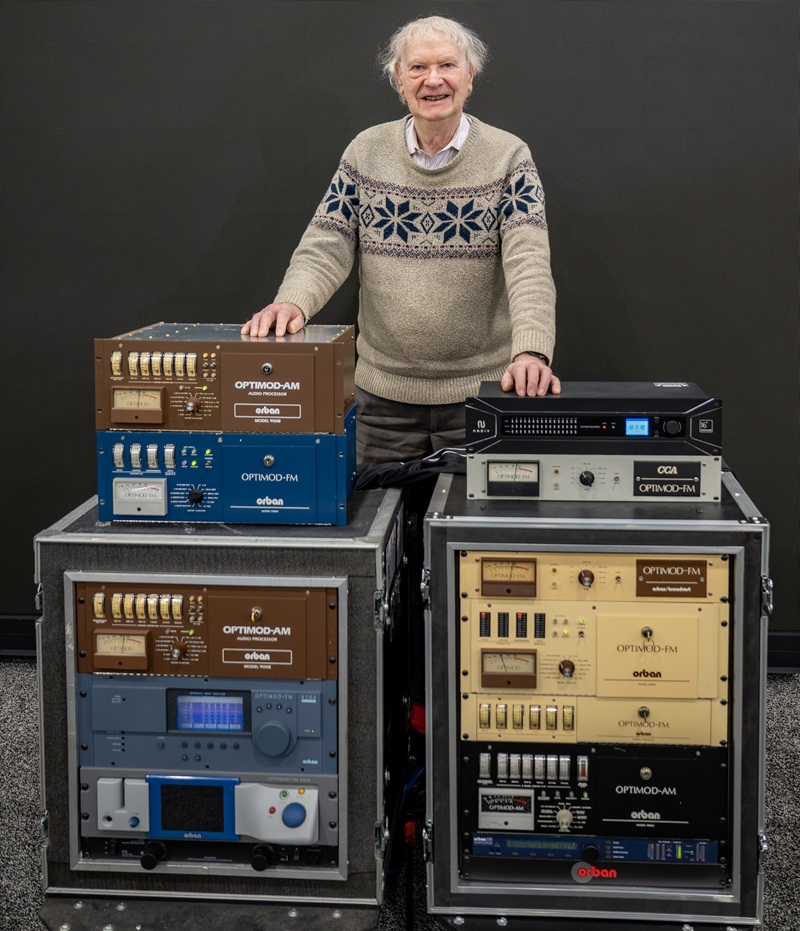
Orban: I think the Optimod 8000, which put Orban on the map and basically revolutionized the industry, is the thing that I’ll be most remembered for. But the 9100 was the AM industry standard for almost two decades. Then the various DSP processors and the algorithms I developed for that. The MX Limiter was important. Multiband distortion canceled clipping, which I developed for the 9100, was important.
The 8000 was the game-changer. But I look back at more than 20 patents. It’s been a continuous process of innovation and discovery over the course of the years.
McLane: I’m glad that journey is still going on. I hope it brings you many more, and a lot of satisfaction.
Orban: I would like to thank the industry for supporting us for over 50 years. We try to give the industry things such as it finds useful, and we greatly appreciate the fact that they do seem to find it useful and have seen fit to keep us in business.
McLane: There’s a lot of people out there who consider themselves Orban fans. Thank you, Bob, for spending time with me.
Orban: Thank you for putting this series together. At my age, it’s nice to be able to look back on my career so far, and who knows what’s going to come up next.
You can read the full series with Bob Orban starting here.