Radio World’s “Guest Commentaries” section provides a platform for industry thought leaders and other readers to share their perspective on radio news, technological trends and more. If you’d like to contribute a commentary, or reply to an already published piece, send a submission to [email protected].

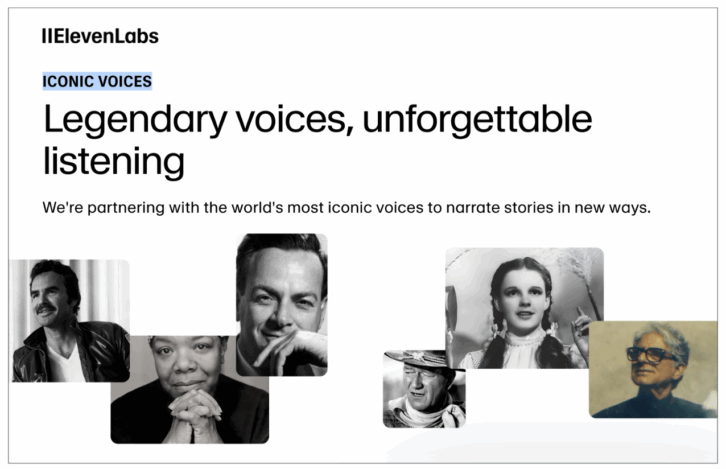
AI audio company ElevenLabs unveiled its “Iconic Voice Marketplace“ on Nov. 11, positioning consent-based voice licensing as the solution to synthetic speech’s ethical crisis. The platform connects brands with rights holders for over two dozen verified celebrity voices, from Michael Caine and Liza Minnelli to archival recordings of Judy Garland, Maya Angelou and Mark Twain. Every voice is cleared, compensated and auditable.
The marketplace addresses a legitimate concern. Unauthorized voice cloning has triggered lawsuits and regulatory scrutiny. ElevenLabs CEO Mati Staniszewski framed the launch as “a true breakthrough for ethical sourcing and licensing of celebrity content” that demonstrates “how AI can responsibly expand opportunities for studio and talent.” To gain voice rights, the company partnered with CMG Worldwide, which manages estates of both living and deceased celebrities, to formalize licensing infrastructure.
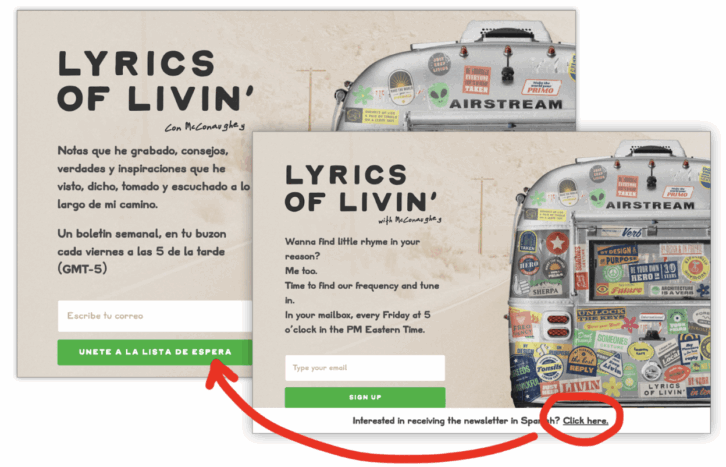
Matthew McConaughey joined as both investor and customer, using ElevenLabs technology to launch a Spanish-language audio version of his Lyrics of Livin’ newsletter in his own voice. Michael Caine summed up the pitch: “It’s not about replacing voices; it’s about amplifying them.”
The announcement drew mixed reactions. While some fans celebrated the technology’s creative potential, others criticized the actors for legitimizing AI voice cloning amid broader Hollywood resistance.
Directors Guillermo del Toro and Emma Thompson have publicly condemned AI in creative work, and SAG-AFTRA fought a 118-day strike in 2023 to secure AI protections. The marketplace positions consent-based licensing as the ethical path forward, but the tension between technological opportunity and workforce displacement remains unresolved.
How It Works
The Iconic Voice Marketplace operates as a two-sided platform. Brands request access to specific voices for film, TV, advertising, games, audiobooks, podcasts or educational content. ElevenLabs connects them with rights holders, formalizes licensing terms and synthesizes the voice.
The roster includes actors (John Wayne, Michael Caine, Burt Reynolds), athletes (Babe Ruth, Rocky Marciano), cultural figures (Maya Angelou, Judy Garland, Liza Minnelli), scientists (Alan Turing, J. Robert Oppenheimer) and historical figures (Thomas Edison, Mark Twain, Amelia Earhart). The list will likely expand rapidly, similar to Cameo’s celebrity marketplace.
Get Consent, Avoid Lawsuits
ElevenLabs is betting that consent-based licensing will become the industry standard. It’s a smart bet. The alternative is chaos.
Unauthorized voice cloning fuels deepfake scams, virtual kidnapping schemes and reputation damage. Search “Steve Harvey voice clone” to see the problem. Harvey’s team constantly fights to remove dozens of unauthorized clones. Performers and estates face a choice: license proactively or fight infringement reactively.
Licensing wins. It monetizes intellectual property that would otherwise be stolen, provides control over usage and creates revenue streams for estates, and living performers whose voices remain commercially valuable. CMG Worldwide’s rights management experience combined with ElevenLabs’ synthesis technology offers brands a turnkey solution without legal risk.
The Commoditization Problem
Consent solves the ethical problem. It does nothing to solve the economic problem.
Voice synthesis technology is commoditizing. Anyone with basic technical skills can clone a voice from seconds of audio. What ElevenLabs offers today, competitors will offer tomorrow at lower cost.
The company raised $180 million in January 2025 at a $3.3 billion valuation, with revenue projections reaching $207 million to $220 million in 2025 and $1.5 billion to $2.4 billion by 2030. Those projections assume sustained differentiation in a rapidly standardizing market. Basic text-to-speech services face profit margin compression as quality converges. And ElevenLabs’ competitors are closing the gap quickly.
As voice synthesis commoditizes, value concentrates in three areas: licensing infrastructure, distribution and integration.
ElevenLabs is building the first major licensing infrastructure platform. Rights clearance, estate management and brand safety protocols create defensible moats.
Distribution determines who reaches audiences at scale. Platforms like Spotify, iHeartMedia and Audible control listener access and began piloting AI voice cloning for select podcast hosts in late October 2025.
Platform partnerships will matter more than standalone tools. Enterprise customers want seamless integration connections to content management systems and production pipelines. Standalone voice generation is a feature. Integrated workflows are a product.
What This Means For You
Voice licensing marketplaces represent new revenue for intellectual property that has been difficult to monetize. Archival audio from interviews, broadcasts and recordings can be licensed for synthetic speech applications. For example, legendary talent from a station’s history can return via AI in promos and other creative audience marketing efforts.
But the window for premium pricing is limited. Early movers who establish licensing infrastructure now will capture value, while late entrants will compete in a crowded, low-margin market. The ethical framework matters too. Consent-based licensing builds trust, while unauthorized voice cloning erodes it. Media companies that prioritize transparency and fair compensation will differentiate themselves as the AI audio industry matures.
For radio hosts, commercial voice actors and voice production talent, ElevenLabs’ Iconic Voice Marketplace represents both validation and threat. Voices have commercial value worth protecting. But if Michael Caine’s voice can be synthesized and licensed at scale, what types of work remain for talent without household celebrity status?
In July 2025, Saga Communications replaced voiceover talent across all 113 of its radio stations with AI-generated voices. CEO Chris Forgy promised that “AI will never replace our on-air personalities,” but the distinction between imaging talent and on-air talent is narrowing as the technology improves. iHeartMedia began testing voice cloning in 2022 to translate podcasts into multiple languages. One recording session now generates infinite variations across languages, accents and contexts.
SAG-AFTRA secured AI protections requiring performer consent, fair compensation and opt-out rights. In July 2025, members ratified a new Interactive Media Agreement after a year-long strike. But these protections only cover union work. The broader commercial market remains vulnerable.
The Value of Human Voices
Human voices still matter. Audiences can distinguish between authentic human delivery and AI-generated audio, particularly in emotionally complex content. People can tell the difference between human-created content and AI audio slop. The nuance, timing and emotional intelligence that professional voice talent brings to a script remains difficult for AI to replicate convincingly.
But that advantage is quickly eroding. AI voice quality has improved dramatically in just two years. As the technology continues advancing, the gap between human and synthetic performance is fading away. How soon until the difference becomes commercially irrelevant for most applications?
“The rate at which AI quality improves is accelerating, including voice quality, which means we’ll use it more,” says Sheryl Worsley, vice president of podcasting at Bonneville International. “But we need to be willing to try while also being careful. The technology can deliver real efficiencies, but audiences still know the difference between human authenticity and AI-generated content.”
From Production to Supervision
The future for working voice talent may not only be in performing the work, but being more involved in supervising how their AI-powered intellectual property gets used by customers. High-profile personalities can license AI replicas for ongoing revenue, becoming IP owners rather than hourly workers. Matthew McConaughey’s Spanish-language newsletter demonstrates this model. One recording session generates infinite variations across languages and contexts, with McConaughey controlling usage terms and collecting licensing fees.
“AI voice technology delivers real operational efficiencies that radio can’t ignore, but we need to be thoughtful about where and how we deploy it,” says Leonard Wheeler, president of Wheeler Media. “The right balance preserves what makes human voices irreplaceable while using AI to handle tasks that don’t require that human touch. We’re still figuring out where that line is.”
This shift transforms voice talent from service providers to rights holders. The work changes from performing scripts to managing how AI clones perform scripts. Talent with distinctive voices should explore licensing their own AI replicas now, while they control the terms. Platforms like Voices.com already offer AI voice licensing alongside traditional marketplaces.
“You can’t deny AI audio quality is improving rapidly,” says Bonnie Optekman, a voiceover actor in New York City. “It’s reasonable to clone your own voice as self-protection and to expand opportunity. But synthetic voices can’t replicate what a director needs in major commercial or narration work — a whisper of a breath, less of a smile, a different interpretation. That human nuance in audio still matters.”
For most media companies, the calculation is just math. AI voice technology reduces production costs, accelerates turnaround times and eliminates scheduling constraints. A synthetic voice costs pennies per use. A human voice actor costs hundreds or thousands per session. Voice talent cannot stop this technology. They can only decide whether to participate in shaping its deployment or be displaced by it.
Disclosure: Wheeler Media and Bonneville International are clients of Ordo Digital.
Jon Accarrino is a media executive and AI innovator. He is the founder of Ordo Digital.
[Also from this author: “How AI Is Reshaping Radio and Podcasting“]