Radio World’s “Guest Commentaries” section provides a platform for industry thought leaders and other readers to share their perspective on radio news, technological trends and more. If you’d like to contribute a commentary, or reply to an already published piece, send a submission to [email protected].
The author is CEO of the National Federation of Community Broadcasters, which has been serving the nation’s community radio stations since 1978. NFCB commentaries are featured regularly at Radio World.
The Aspen Institute’s Knight Commission on the Information Needs of Communities in a Democracy put it plainly: “Informed communities are essential to democracy.” The commission argued that sustaining democracy requires three things: credible information, the capacity of individuals to engage with it and opportunities for meaningful community connection.
As public media shifts into a post-Corporation for Public Broadcasting environment, one thing is clear: audiences want something different.
A national “Researching Unmet Needs” study, based on 30,000 respondents, shows Americans are asking for three things above all else:
- Trust: stories about their city, town or neighborhood.
- Solutions: journalism that highlights how communities are responding, not just what’s wrong.
- Connection: music and culture that help people feel part of something bigger.
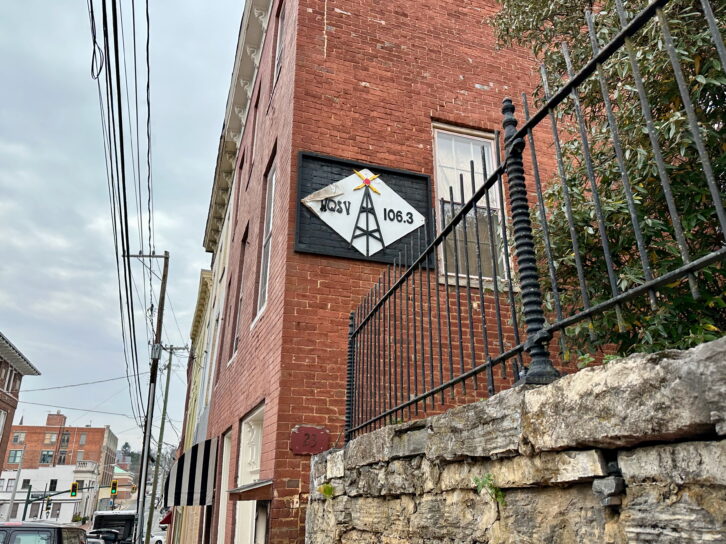
This is not a new agenda for community radio. It is what our stations have been doing for decades. In rural towns, urban neighborhoods, Tribal lands and immigrant communities, community radio has always been the trusted partner for hyper-local news, cultural connection and civic engagement.
Filling the local journalism gap
Trust is democracy’s foundation. In the 2024 Public Radio TechSurvey by Jacobs Media, NFCB member station respondents cited a stronger sense of connection with their local stations at the hyper-local community level compared to National Public Radio station respondents.
The level of trust matters even more given the collapse of local journalism. Since 2008, newsroom employment has dropped 26% nationwide, and the U.S. has lost 75% of its local journalists since 2002 — from about 40 local reporters per 100,000 residents to just 8 today. The decline is reshaping civic life: fewer watchdogs, fewer local stories and fewer trusted voices.
The RUN study found the top unmet news need is “stories about my city, town or neighborhood.” Community radio stations fill that gap every day by producing local stories grounded in relationships and relevance — often through volunteers and small staffs.
Journalism with impact
Audiences also want more than reporting on what’s broken. They want solutions-focused journalism — coverage that shows how communities are responding, innovating and building resilience.
Community radio has long been a natural home for this kind of work. Our public- and community-affairs shows prioritize community impact over journalism as product. Success is measured not by ratings or clicks, but by whether a story helps neighbors take action, inspires civic engagement or brings people together to solve shared challenges.
That’s why community radio doesn’t always fit neatly into legacy journalism circles. Traditional outlets often overlook hyper-local stories, but it is those stories that are at the heart of community radio and — according to the data — exactly what audiences want most.
NFCB is helping stations strengthen this approach through partnerships with the Solutions Journalism Network. And this year, we served on the advisory work group giving feedback to Brown University and the Listening Post Collective on the next iteration of the Civic Health Index, due later this fall. The index offers communities a way to assess not just their access to information, but their broader civic health — an essential tool for the future of informed communities.
The shift is already happening. In Alabama, WLRH(FM) dropped NPR shows like “Morning Edition” and “All Things Considered” after CPB cuts and rising national program fees, pivoting instead to a “community-driven focus” with a new local morning show and expanded local programming.
For other public broadcasters facing similar financial and audience pressures, partnering with community radio — which already specializes in hyper localism — offers a ready and proven solution.
News, music and culture
Community radio is more than media — it is infrastructure for connection. Stations provide emergency alerts, public service announcements, community calendars and cultural programming that knit civic life together, particularly in rural and underserved regions where they are often the last local outlet to do so.
The Knight Commission emphasized that building community connection is as important to democracy as providing information. Community radio delivers both.
The RUN study also highlighted unmet needs in music and culture. Two-thirds of U.S. adults listen to music daily, and community radio is a trusted source for discovery and cultural connection. Our stations provide soundtracks, preserve cultural heritage, highlight local artists, and build bridges across differences. In doing so, they meet another core audience need that commercial and national outlets increasingly overlook.
The paradox of inclusivity
Yet journalism still faces a paradox. Many outlets speak the language of inclusivity, but communities of color continue to find their stories absent or misrepresented.
As Omega Douglas wrote in the LSE British Politics and Policy blog, diversity efforts often remain superficial — focused on optics or market goals rather than systemic change. In the U.S., the imbalance is stark: 76% of journalists are white, while only 6% are Black and 8% Hispanic. That shapes newsroom agendas and perpetuates exclusion.
Community radio flips this script. For us, inclusivity isn’t a strategy — it’s foundational. Stations elevate Black, Brown, Indigenous, immigrant, rural and working-class voices, not as tokens but as essential participants in shaping civic narratives.
Meeting the moment
The evidence is clear. UNESCO and the Knight Commission warned that strong democracies depend on trust, solutions,and connection. The RUN study confirms this is exactly what audiences want.
And this is what community radio has always done.
As public media redefines itself in a post-CPB era, funders, civic leaders and station managers should make room for community radio as partners in programming, content development, audience outreach, civic engagement and public safety.
Community radio is the OG hyper-local hub of public media — the original community centered space where trust is built, solutions are surfaced and connection thrives. In this moment of disruption, America cannot afford to lose it.
Comment on this or any article. Email [email protected].