The author is the former technology editor of Sound & Vision Magazine, senior editor of Popular Science and a tech/media columnist for USA Today.
Like most of us, I was born after the Golden Age of Radio.
Nor did I work for CBS Radio or its storied news division. But like millions of listeners, I have a story to tell.
If it had not been for CBS Radio,
During the sixties my family would have been forced to talk to each other at the dinner table.
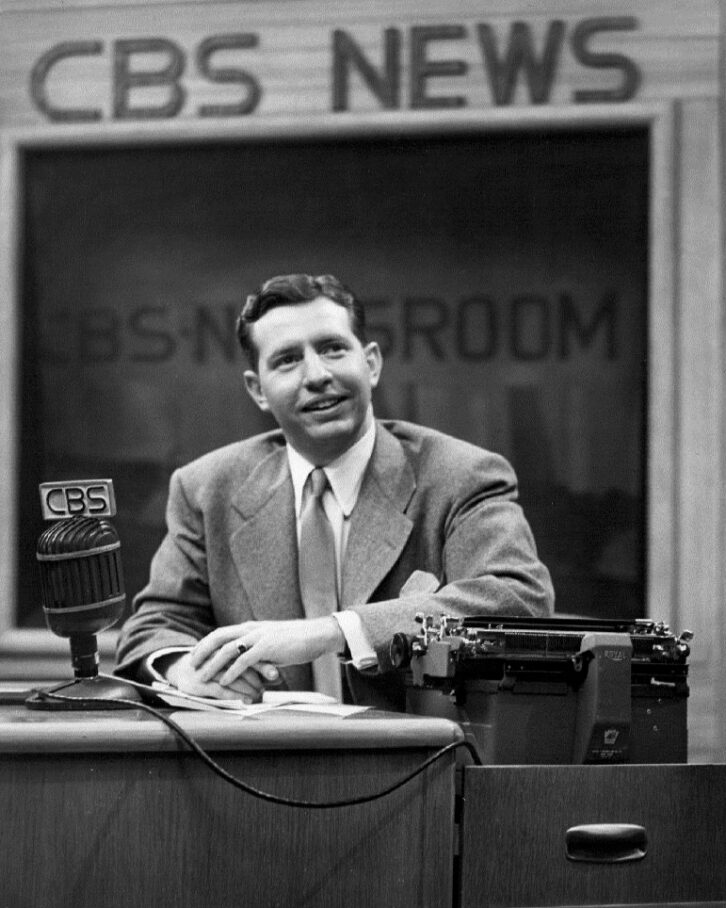
Instead, we chewed while listening to Douglas Edwards deliver “The World Tonight.”
The radio was conveniently located in the adjacent room, but the TV was downstairs in our split-level home and out-of-range to our ears.
When not doing homework, I wrote and tape-recorded “radio” plays with neighborhood friends.
In the early 1980s, I had the opportunity to watch Edwards use one hand to cuff an ear while reading from a script in the other, on the other side of the glass at the CBS Broadcasting Center.
In the mid-eighties, my father was in the hospital watching daytime TV. When Edwards came on for a news break, he couldn’t believe how much he had aged. (My dad hadn’t seen him on TV in nearly 30 years.)
Of course, what my dad didn’t realize was that he had aged as well.
If it had not been for CBS Radio,
I would not have had a college thesis.
Fortuitously, as I was looking for a theme for my American history class, the Columbia Broadcasting System’s retired playwright and director, Norman Corwin, donated 20 boxes of his papers and recordings to Syracuse University, where I was ensconced.
As the first student to examine the material, I ended up focusing on Corwin’s years working for the U.S. government during the Second World War.
I analyzed how this consummate wordsmith created unabashed propaganda to motivate the home front where his plays were beamed. Decades later, I turned around a remembrance for the Columbia Journalism Review on the same day that I heard of his death at the age of 101 as reported, fittingly, on the “World News Roundup.”
If it had not been for CBS Radio,
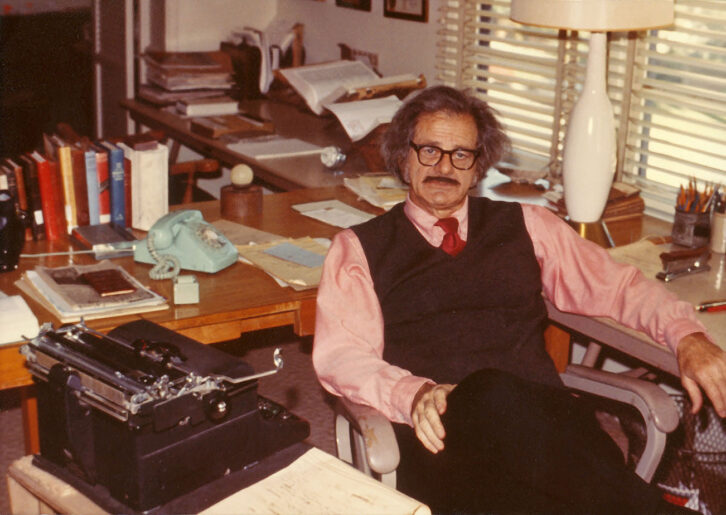
I wouldn’t have been able to hang out with Himan Brown, the director/producer in the control booth of the “CBS Radio Mystery Theater,” a seventies throwback to the Golden Age.

I was on assignment for Rolling Stone. Would the magazine’s pre-Lennon assassination readers care about middle-aged actors reading from scripts into microphones on a sound stage on East 52nd Street?
The answer was no, because the magazine didn’t run the piece, and the studio was turned into a Duane-Reade drugstore.
If it had not been for CBS Radio,
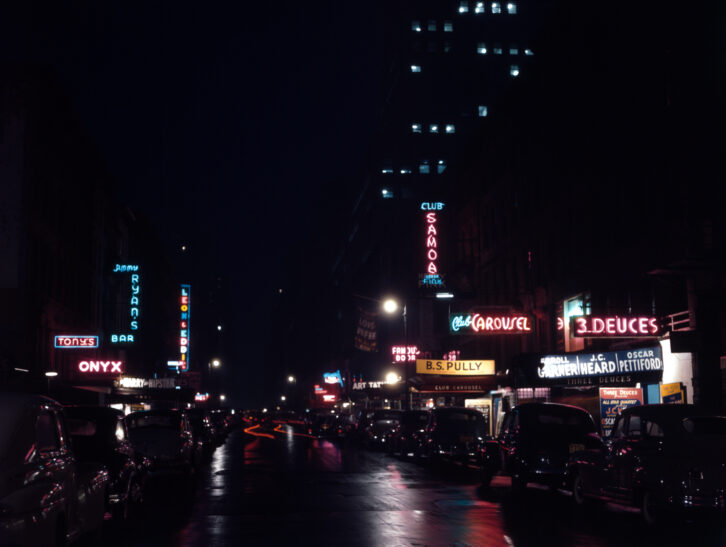
I wouldn’t have proposed leading a block-by-block Jane’s Walk street tour called “Walk Back in Time” using a portable Bluetooth speaker and an iPhone playing excerpts from the 1938 broadcast, Crosstown Manhattan.
The docudrama performed entirely in studio takes listeners on a river-to-river tour along 52nd Street, juxtaposing the harsh contrast of fabulous wealth side by side crushing poverty.
Alas, my tour never happened due to a co-conspirator’s illness and the fact I wasn’t brave enough to lead the walk alone. By the way, the same year that nobody tuned into “Crosstown Manhattan” (being up against Bing Crosby on NBC), CBS scared the nation with “War of the Worlds” and also invented the format of a news anchor bringing in reporters and experts from around the globe as heard on what became the inaugural broadcast of The World News Roundup on March 13, 1938.
If it had not been for CBS Radio,
The Los Angeles-based ad salesman for “Sound & Vision” wouldn’t have heard me during the “World News Roundup” on his car radio driving to work.
Identified as the magazine’s technology editor, I appeared several times on the Roundup, sounding off on such topics as the unveiling of a new HD-DVD format and the 50th anniversary of color television — you can hit the play button below to hear the latter — I prerecorded the segments over the phone from my office at Hachette Filipacchi Media.
On my desk was a stapler sporting a CBS logo, a remnant from the magazine group’s previous owner once removed, CBS Magazines.
Of course, I kept it.
Listen to the clip:
If it had not been for CBS Radio,
I wouldn’t have worn out the screen capture function on my computer to preserve the many faces of newscasters when, for a brief period, their broadcast booths were fitted with webcams and the video simulcast over the internet on what was then called CBSN.
USA Today strung together the images as a slideshow set to thunderous music and headlined the multimedia extravaganza as Radio with Pictures.

If it had not been for CBS Radio,
I wouldn’t to this day have a preset on my car radio tuned to 880 AM, the New York City frequency assigned to what once was WCBS NewsRadio 88, flagship station for the CBS Radio Network.
I suppose I should reset it, but I keep it as a reminder over how much I detest sports. In August 2024, the frequency was given in a local marketing agreement over to an all-sports station. All that remained were New York Mets games, which I always resented because when they were carried by WCBS(AM), the news stopped for hours.
[Related: “The Newsroom May Be Dark, but the Light of WCBS Lives On”]
Did they really need to do a Mets pregame and an postgame show, too?
If it had not been for (the renamed) CBS News Radio,
I wouldn’t have scrambled since losing WCBS just in time each morning to tell a smart speaker to play an out-of-town affiliate (WBBM Chicago, at 8 eastern or KCBS San Francisco, at 10 Eastern) in order to hear the “World News Roundup.”
What a hassle!
If it had not been for CBS Radio,
I wouldn’t have turned the “Weekend Roundup” into the Weekend Workout.
As I listened to the weekly podcast in the park, my routine was to jog in 8-minute spurts, then take a short break to stretch. Sadly, the network ended the long-running, long-form program at the end of 2025.
Alas, I’m now forced to listen to music.
If it had not been for CBS News Radio,
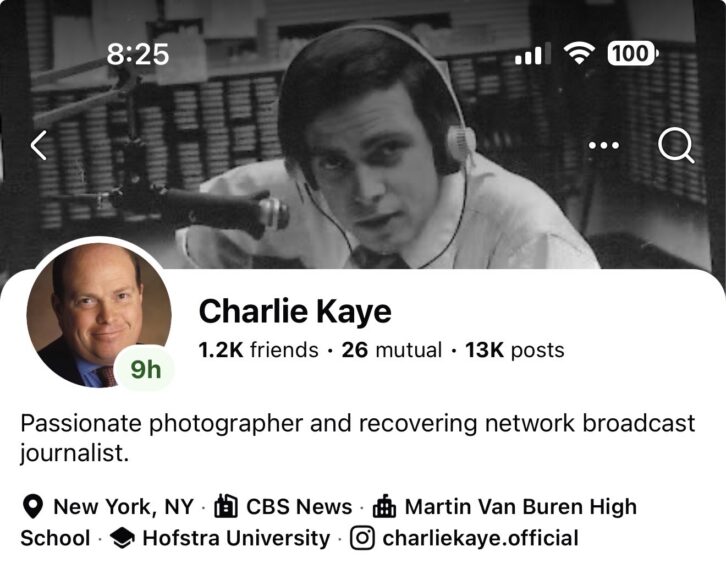
I might not have struck up a conversation with Charlie Kaye, the network’s executive producer, on a press bus at the Consumer Electronics Show in Las Vegas during the nineties.
As a passionate listener, I confessed to him how much I owed to radio, especially to his network. That casual conversation led decades later to continuing lunches in and around Manhattan in which we review restaurants, discuss news and politics, suffer memory lapses together (the name Joe Franklin was on the tips of both our tongues) and trade never-to-be-repeated puns.
I should stop before bleeding into the next hour.
Suffice it to say, my body rhythms will change now that I have less reason to lean into a device at the top of the hour. Also, I’ll have diminished justification to use the word “network” as a verb — that is, networking between radios in the bedroom, bathrooms and kitchen to pick up what I left behind listening in another room.
The night before CBS News Radio is set to go dark, the same network, albeit the TV one, terminates “The Late Show With Stephen Colbert.” As an avid viewer, I’m sad, even outraged, to see it disappear. Still, its nearly 11-year-run pales by comparison to the many decades I’ve spent living with CBS Radio.
The static on all my radios — my Saturn dashboard, BOSE Wave, Sony water-resistant units, Alexa and Hey Google smart speakers, desktop PC and iPhone — will be palpable.
So, thank you, CBS Radio, for a lifetime of listening that I couldn’t help but experience personally.
Radio World welcomes letters to the editor on this or any story. Email [email protected].