A Radio World ebook, “Global Radio Update,” explores trends across the industry and in various countries. This article is a companion piece.
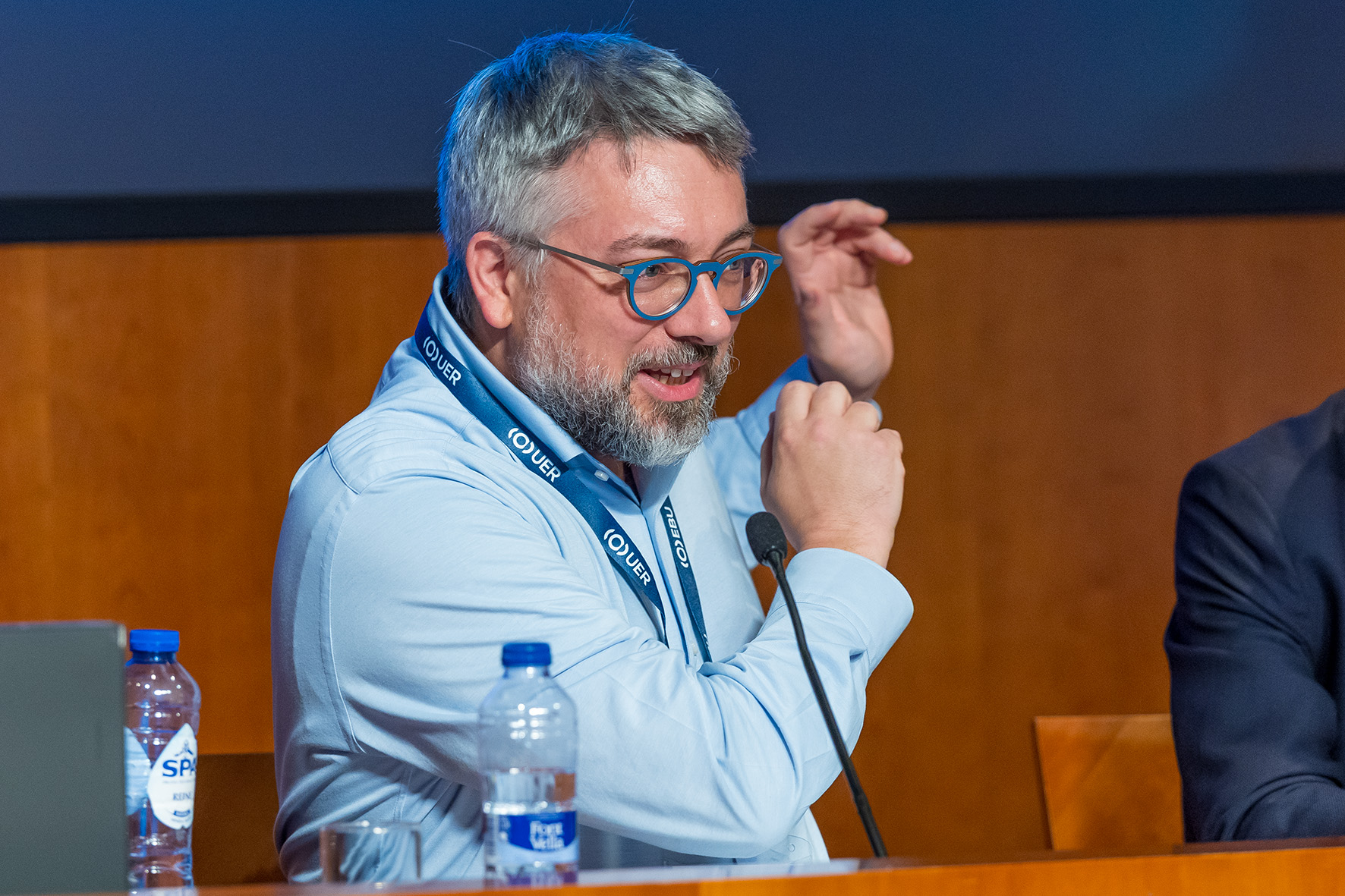
Vincent Sneed is senior EU policy advisor at the European Broadcast Union. The organization is among those that want the EU to require that new vehicles include analog and digital broadcast radio receivers.
Radio World: Briefly, what is the EBU and what role does it play in radio?
Vincent Sneed: The European Broadcasting Union is the world’s leading alliance of public service media, or PSM. We have 115 member organizations in 57 countries and have an additional 33 associates in Asia, Africa, Australasia and the Americas.
Our members operate nearly 2,000 television, radio and online channels and services, and offer a wealth of content across other platforms. Together they reach an audience of more than 1 billion people around the world, broadcasting in 153 languages. We operate Eurovision and Euroradio services.
RW: The EBU has called on European Union lawmakers to ensure the availability of broadcast radio in vehicles and safeguard broadcasters’ access to spectrum. What is the Digital Networks Act and how would EBU want to assure these outcomes?
Sneed: The Digital Networks Act or DNA is a draft legislation aiming at centralizing all of the EU’s telecom-related laws. It is currently in the “proposal” phase, so it is still being debated by EU lawmakers. It still needs to be adopted by the EU institutions, which will happen, at the earliest, towards the end of 2027.

In terms of what the DNA covers, it is a broad-based legislative file that goes far beyond radio in cars and spectrum allocation. For instance, it ensures there is competition in the telecom sector, so that the people of the EU can enjoy cheap access to high quality internet connectivity.
However, this text also establishes rules for all means of distribution for public service media, including the presence of broadcast radio in vehicles.
Currently, the rule in the proposal for a DNA says: “If there is a radio receiver in the car, it must include digital broadcast radio reception.” This text reproduces the current rules contained in the European Electronic Communications Code, one of the texts to be codified by the DNA.
When that text was adopted a few years ago, and until recently, it wasn’t thinkable that a car could come without broadcast radio installed. But we are now seeing some models being tested on the market — even though people still expect a radio receiver in their car, as noted in a WorldDAB-commissioned study. This is what has convinced the EBU members to ask for an amendment to the DNA so that “all vehicles must include analog and digital broadcast radio receivers.”
Access to broadcast radio in cars is also a concern for crisis preparedness, such as in Spain and Portugal during the blackouts in 2025, where broadcast radio via their car was the only option for people to get news and information as the blackouts persisted.
The EBU is currently advocating this amendment with members of the European Parliament and with EU member states’ governments, so that the people of the EU can have constant access to trustable information even in cases of crisis, as broadcast radio is the last remaining means of communicating to the public in cases of manmade or natural disaster. Examples were showcased at the European Parliament in October 2025. Besides, broadcast radio cannot be taken down by third-party platforms.
This message is not only carried by the EBU. Commercial radio broadcasters from all across the EU also voice the same position, via the Association of European Radios or AER. There is alignment across the industry on this.
RW: Do individual countries have mandates that cars should include radio? Which ones?
Sneed: I am not across all the laws of EU member states, so I cannot speak for every country. However, I was struck recently by the exchange between Italy and the European Commission.
Italy had put forward a law on the basis of the EECC, the current EU rules, requesting that “All equipment enabled with an internet connection and/or equipped with hardware devices capable of playing sound content, installed on board new category M and N vehicles and new L6e and L7e category quadricycles and made available on the market for sale or rent, must also be suitable for receiving sound broadcasting in order to allow the user to receive and play radio services provided through analog and digital terrestrial DAB+ broadcasting,” it read.
“Manufacturers, assemblers, developers and importers, when placing such equipment on the market, shall ensure that it includes a functionality that allows the user to modify its configuration freely and easily, at any time, and shall also ensure the proper reception of digital radio, including when carrying out firmware and software updates.”
To establish this, Italy had to send a notification to the European Commission, as it is guardian of the treaties and EU rules. The European Commission validated this notification.
So we can see that not only one of the biggest economies in the EU supports the continued existence of broadcast radio in cars, but also that the European Commission seems to agree to it.
RW: When you look at the state of radio globally, what are the most important macro changes in transmission and technology platforms?
Sneed: Currently, the biggest technological change affecting radio, as any medium, is AI. However, this doesn’t affect distribution of radio. Actually, when it comes to transmission technologies, the situation is pretty stable: Even though a lot of radio listening takes place online, most of radio listening in the EU is still done via terrestrial broadcasting, either FM or DAB+. Much of that listening is done in the car.
RW: Is digital radio broadcasting expanding? If so, where?
Sneed: One thing for sure is that the EECC enabled the EU to go from one European country with more than 95% of new cars sold with DAB+ in 2018–2019 to 19 countries in the first half of 2025. So the EECC provision on radio in the car had an impact. And we hope the DNA will also have a positive impact.
RW: We’ve seen a few instances where countries are moving away from FM broadcasting. Do you feel this trend will continue?
Sneed: More concretely, what I’ve notice on this is that the only two countries in Europe that announced or enacted an FM switch-off are non-EU countries: Norway and Switzerland. When it comes to the EU, the situation is very varied, so I would hesitate to call it a trend in EU countries.
RW: What other major changes are pending in how European countries manage their broadcast radio spectrum?
Sneed: There are many discussions related to the DNA’s impact on spectrum management, but this relates mainly to spectrum for telecom operators. The importance and specificities of broadcasting are recognized in the DNA proposal. This is key as broadcasting is crucial to protect media pluralism and cultural diversity. We will keep a close eye on this during the adoption of the DNA.
RW: Will broadcasting itself still be relevant in the long term? What makes you think so, in the age of proliferating alternative channels?
Sneed: For radio, most of the listening is done via broadcasting, be it FM or DAB+ in the EU. The figures we have for TV is 40%+ of households still use digital terrestrial TV to watch TV across the EU. The situation varies from one country to another, but it is still the most used means across the EU to watch TV. The future of the band used for TV (UHF) will be discussed in 2031 at the ITU World Radiocommunication Conference.
More generally, broadcasting remains the only option for distribution that combines resilience, free-to-air, independence from third-party platforms, and is present everywhere.
Public service media, to fulfill their mission to provide all the people with high quality content wherever they are, uses all distribution paths including broadcasting, satellite, cable online and AI for technology frontrunners and to make sure they leave no one behind. They will use broadcasting as long as possible.
RW: What else should we know?
Sneed: You might be interested in knowing that we have a Radio Committee, coordinated by Wouter Quartier. See www.ebu.ch/groups/committees/radio.