The author chairs the Digital Radio Mondiale Consortium.
The DRM Consortium and its members believe that a decision to remove broadcast radio receivers from vehicles, even when this is presented as a means of reducing the cost of an entry-level car, overlooks the much wider role that radio plays in public safety, resilience and universal access to information.
A radio receiver in a car is not simply another entertainment feature. It is part of a resilient communications ecosystem that can continue to deliver trusted information when other networks are congested, disrupted or unavailable.
This remains so despite the often-vehiculated ideas that the connected car can dispense with an actual radio or that EV cannot deal with AM or FM (chipset solutions for overcoming this obstacle exist already).
Emergencies can happen anywhere and at any time. The principle behind resilient public warning should be simple: Plan for emergencies before they happen, rather than trying to construct an alternative communications system after normal networks have failed.
During major emergencies, natural disasters or other crises, the mobile networks and internet-based services, the whole telecommunications infrastructure, network capacity and connectivity can become damaged or unavailable.
Broadcast radio provides an important, possibly last additional layer of resilience.
A single terrestrial transmitter can simultaneously reach very large numbers of people over a wide geographical area. Reception is free-to-air and does not require an individual mobile subscription, data plan or connection to a cellular network.
For people travelling by car including those who happen to be in rural, remote or underserved areas, maintaining access to broadcast radio provides an important independent route to authoritative information and emergency warnings.
No single technology should be expected to work everywhere, for everyone, under every circumstance.
A resilient warning and public-information system should be capable of:
- reaching very large populations rapidly, including people in remote and underserved areas;
- remaining available when normal telecommunications networks are congested, disrupted or unavailable;
- disseminating authoritative information over large geographical areas; sometimes in several languages simultaneously
- providing multilingual information in audio, text and other accessible formats;
- complementing mobile, satellite and internet-based warning systems as part of an interoperable, multi-channel approach; and
- supporting people with disabilities and others with specific communications requirements.
Broadcast radio provides many of these capabilities inherently and independently.
It is also important not to view today’s broadcast receiver as simply the traditional analogue car radio. Connected cars should provide drivers with more ways to receive trusted information, not fewer.
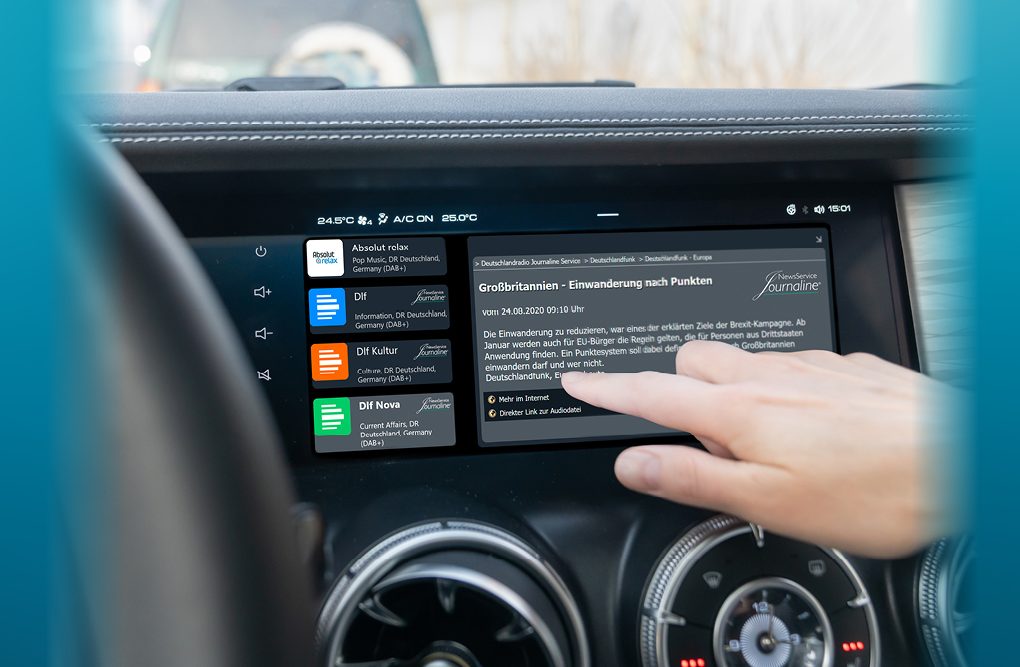
Modern digital broadcasting technologies such as Digital Radio Mondiale (DRM) can combine audio with text, images like maps and data. DRM’s Emergency Warning Functionality can support the transmission of emergency information and can provide multilingual and accessible information without requiring an internet, mobile connection and even electricity.
This makes digital broadcast radio particularly relevant to the connected car: broadcast and IP technologies can complement one another rather than one replacing the other.
India demonstrates that digital radio in cars is already a mass-market technology and provides an important example of what has already been achieved.
Almost 14 million cars on Indian roads are equipped with DRM digital radio receivers, following the introduction of factory-fitted DRM receivers. The DRM receiver industry in India and internationally has invested millions of dollars in developing digital radio technology for the Indian automotive market and globally.
Removing radio receivers from future vehicles risks moving in the opposite direction just as countries, broadcasters and manufacturers, have invested substantially in modernizing radio and developing the next generation of digital services.
The international direction is towards protecting access to radio and the importance of broadcast radio in vehicles is being recognized internationally, as the AM Radio for Every Vehicle Act was passed by the U.S. House of Representatives. In Europe, there are similar calls for EU rules to ensure that broadcast radio reception remains available in new vehicles.
These developments demonstrate that retaining broadcast radio in vehicles is not an isolated concern of the radio industry or a Trojan horse for a particular technology. It is increasingly being considered as an issue of consumer access and public safety.
The DRM Consortium recognizes and supports the automotive industry’s efforts to make electric vehicles more affordable and accessible, but affordability should not come at the expense of resilience.
The future vehicle will undoubtedly be increasingly connected. Radio should be part of that future, not excluded from it.
For the DRM Consortium and its members, the issue is greater than whether drivers still want to “listen to the radio.”
It is about ensuring that every person in a vehicle retains access to trusted public information and emergency warnings when everything else like the internet or mobile networks might not be available.
As a standard for all bandwidths DRM and its feature DRM Emergency Warning Functionality delivers audio and multimedia over wide areas or directly to the affected area from outside the disaster region where all communication towers might be down.
When it comes to public warning and emergency communications, resilience is crucial and should not be sacrificed for margin profits. The principle should be very simple: Plan for emergencies before they happen, rather than trying to construct an alternative communications system after normal networks have failed.
[Do you receive the Radio World SmartBrief newsletter each weekday morning? We invite you to sign up here.]